

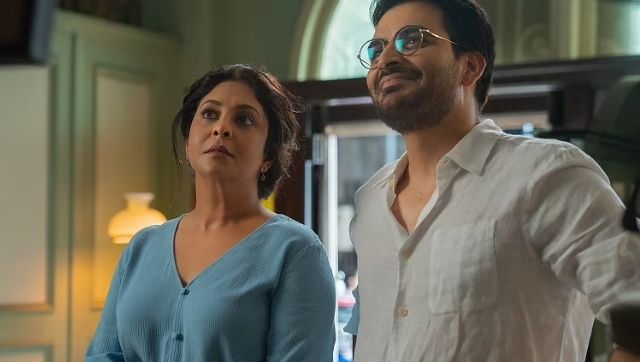
 "Ajeeb Daastaans movie review: Neeraj Ghaywan gets KJo’s Dharma to acknowledge caste unequivocally")
Language: Hindi One of the most upsetting remakes ever made by the Hindi film industry is Dharma Productions’ _Dhadak_ (2018), a retelling of Nagraj Manjule’s Marathi blockbuster _Sairat_ (2016). The original was about a caste-related murder. Sairat was different from most films on atrocities against Dalits because it came packaged in all the elements commercial Indian cinema demands: attractive actors, pretty visuals, one of the decade’s best soundtracks and fun dances. Dhadak lifted the masala from Sairat but erased the conversation on caste that was crucial to that film. Dharma, which is celebrity producer Karan Johar’s company, partially redeems itself this week for what it did to Sairat. This partial redemption comes with Geeli Pucchi, the segment directed by Neeraj Ghaywan in the four-film anthology Ajeeb Daastaans produced by Dharma’s digital arm, Dharmatic Entertainment.
Marginalisation and intersectionality are the threads running through this compilation set in north India.
Ajeeb Daastaans (Hinglish for: Peculiar Stories) opens with Shashank Khaitan’s Majnu. Jaideep Ahlawat here plays Babloo, the scion of a wealthy family forced to marry a woman of his father’s choice because the old man did not approve of his lover. He has been treated unjustly, but he does not stop to think of how he, like his Dad, is using his socially sanctioned power to keep another person – in this case, his wife Lipakshi (Fatima Sana Shaikh) – enchained. [caption id=“attachment_9534991” align=“alignnone” width=“640”] Jaideep Ahlawat, Armaan Ralhan and Fatima Sana Shaikh in a still from Ajeeb Daastaans. Image from Twitter[/caption] You might imagine that this curtain-raiser would lead into a feminist film, but Babloo’s failure to recognise his privileged conduct is mirrored by Majnu’s own seeming unawareness of how it reduces the woman to a pawn in the hands of even the ‘nice’ guys. Some unexpected developments involving a third party make Majnu interesting but it remains incomplete with its partial understanding of gender and its focus on class alone in a circumstance where caste would most likely have been a factor, an overriding factor, in real life. Neither loophole comes as a surprise since writer-director Khaitan helmed Dhadak and before that,
_Badrinath Ki Dulhania_ with its deeply problematic handling of a violent man-woman equation. Majnu is a vast improvement on those two films, but gender and class here come across as mere tools with which to create suspense rather than issues towards which the writer feels any degree of commitment. The feeling persists with Khilauna (Toy) directed by Raj Mehta and written by Sumit Saxena. This account of a domestic worker in a posh urban neighbourhood is no doubt suspenseful, piling horrifying plot turns into its climax, but it never sits comfortably in its chosen milieu. The women of the locality seem oddly oblivious to the manner in which the sexy household help (Nushrratt Bharuccha) flashes her curves around town. Odder still is the otherwise-worldly-wise leading lady’s naïve confidence that a particular man will be satisfied with merely leering at her, although he has his tongue hanging all the way to the ground every second that she is around. Saxena too avoids any overt reference to caste_. Khilauna_ is certainly ajeeb but it lacks empathy for the under-represented social groups under the spotlight here – women and the poor. This comes across in the unsympathetic writing of the heroine and her little sister (Inayat Verma) and in the heroine’s extreme unprovoked antagonism towards a childless woman she encounters. From the first two films in the anthology, it appears that the brief was: illustrate how members of marginalised communities can be flawed through weird tales with wacky twists. This is a strange goal to have since the social groups portrayed in Ajeeb Daastaans get limited space in Indian cinema in any case and dominant groups tend to highlight their flaws wherever possible in real life. It goes without saying that every community has its good and bad, wise and foolish people, and that there are those among the marginalised who play along with the exploitation of their own people, but what does it reveal about your attitude that while portraying this exploitation you choose to zero in on jerks, enablers and fools to such an extent that you end up either eliciting sympathy for the exploiter or dislike for the exploited? Majnu and Khilauna do precisely that, while the fourth film of the quartet, Ankahi, is a mixed bag. Directed by Kayoze Irani, Ankahi (Unspoken) is about Natasha (Shefali Shah), a mother whose child (Sara Arjun) develops a disability, her husband (Tota Roy Choudhury) growing distant during this difficult phase, and her friendship with an artist called Kabir (Manav Kaul). The extensive use of sign language in this short, the writing of those dialogues and the way they are blended with the background score are almost poetic. The conversations in sign language are also, often, funny. In the end though, an important individual’s selfishness is abruptly chucked into the script – co-written by Irani and Saxena – with no concern for the fact that it is inconsistent with the characterisation of this person until then as being kind and thoughtful. The one who ends up consequently hurt is beautifully written – more’s the pity. The only director who adheres to Ajeeb Daastaans’ theme without being detached from his characters or writing them unevenly is Neeraj Ghaywan who has steered Film No. 3 in the set, Geeli Pucchi (Wet/Sloppy Kisses, co-written with Saxena). Konkona Sensharma here plays Bharti Mandal, a Dalit factory worker who finds an unexpected friendship with her Brahmin white-collar colleague, Priya Sharma (Aditi Rao Hydari). Geeli Pucchi actually uses the word D-a-l-i-t that Dhadak was so afraid of. It also points out the co-existence of class and caste bias, a reality that the Hollywood production
_The White Tiger_ , which is set in India, tried to wipe away. [caption id=“attachment_9535031” align=“alignnone” width=“640”]
Konkona Sensharma (left) with Aditi Rao Hydari in a still from Ajeeb Daastaans. Image from Twitter[/caption] Blatant casteism, patriarchy and homophobia are fitted smoothly into Geeli Pucchi. So is a hierarchy in the prejudices involved, demonstrated by the lines a significant, supposedly open-minded character refuses to cross. Ghaywan’s nuanced handling of delicate issues here is reminiscent of the intelligence and sensitivity he displayed in his debut film
Masaan. Neither Bharti nor Priya is a saint. Their weaknesses though are believable, not contrivances jammed into the script for shock value, nor designed to conjure up compassion for the oppressor although no group is tarred with one brush. Sensharma is near perfect in this segment. Her chameleon-like turn as Bharti is so subtle that it is hard to describe in words. The other outstanding performance in Ajeeb Daastaans comes from Kaul who follows up his recent genius in
_Nail Polish_ with the charm and poignance he brings to Kabir. It is nice to see Hydari in a speaking role that taps her talents after such a long time. Verma (who recently starred in
_Ludo_ ) has the natural ease of a seasoned artiste in her portrayal of an unnervingly precocious child. Armaan Ralhan who appears in Majnu is an emerging talent to watch out for. There are several solid performances in Ajeeb Daastaans, which is why Bharuccha’s unconvincing attempt at playing a poor, subjugated woman sticks out. Ahlawat, who is still reaping accolades for his remarkable acting in the streaming series Pataal Lok, looks handsome and regal in Majnu, but struggles in a romantic scene – when he tells a potential lover, “Arrey, don’t call me Bhaiyya,” he sounds unwittingly farcical. There is a kernel of an idea in Ajeeb Daastaans that is definitely worth exploring: the marginalised should not have to be perfect to deserve support against injustice. Most of the writing though comes from a place of blinkered privilege. The film can’t be dismissed outright, however. I would revisit Ajeeb Daastaans for a chance to rewatch Ghaywan’s Geeli Pucchi, the sign language scenes in Ankahi, and for Konkona Sensharma and Manav Kaul in full flow. Ajeeb Daastaans is now streaming on Netflix Rating: 2.75 (out of 5 stars)

 "Charlie Kirk, shot dead in Utah, once said gun deaths are 'worth it' to save Second Amendment")
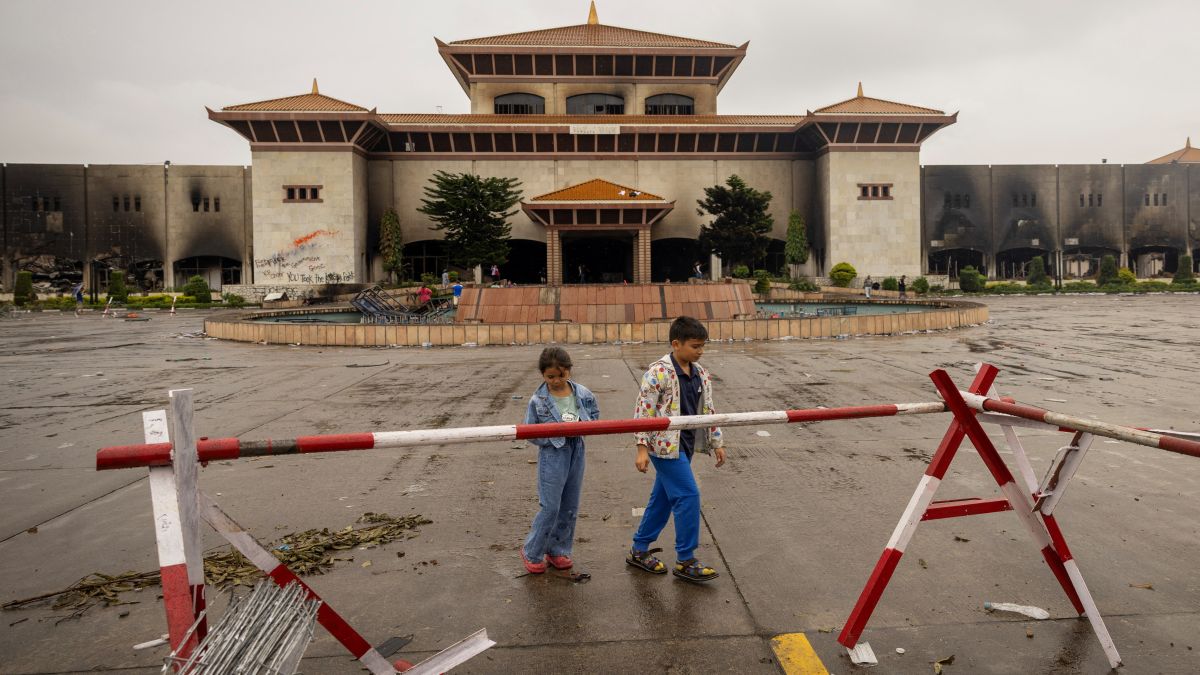 "From governance to tourism, how Gen-Z protests have damaged Nepal")
 "Did Russia deliberately send drones into Poland’s airspace?")
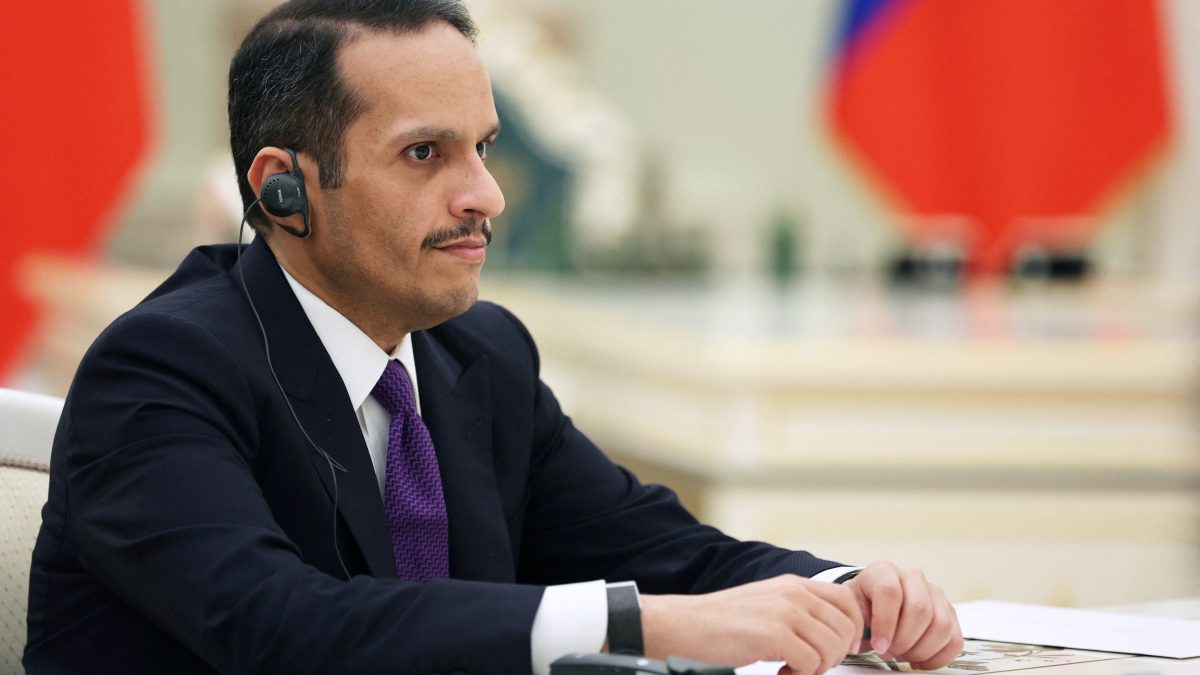 "Netanyahu ‘killed any hope’ for Israeli hostages: Qatar PM after Doha strike")
 "Charlie Kirk, shot dead in Utah, once said gun deaths are 'worth it' to save Second Amendment")
 "From governance to tourism, how Gen-Z protests have damaged Nepal")
 "Did Russia deliberately send drones into Poland’s airspace?")
 "Netanyahu ‘killed any hope’ for Israeli hostages: Qatar PM after Doha strike")



