

 "Worse & worse: 10% inflation, slow growth, costly money")
Dealing with inflation just got harder. The much anticipated increase in petrol prices in May, and now in diesel, kerosene and LPG, means that the economy will be contending with even higher inflation levels.
Firstpost projections show that headline inflation, as measured by the Wholesale Price Index (WPI), is expected to increase by about 0.8 percentage points. The impact on the Consumer Price Index (CPI) will be about 0.3 percentage points.
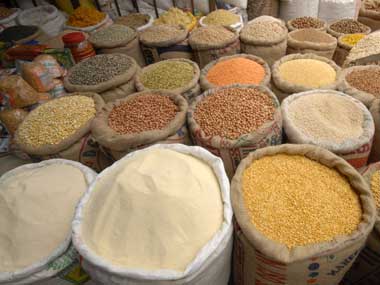
[caption id=“attachment_31977” align=“alignleft” width=“380” caption=“Your meal just got costlier. Krishnendu Halder/Reuters”]  [/caption]
In other words, double-digit inflation is here. And here to stay for a while.
Since fuel is a crucial input for other industries as well, an increase in fuel prices has second round effects on other inflation components, which can get passed on to the consumer.
Higher inflation will have a three-fold impact.
One, the Reserve Bank of India’s (RBI’s) fire-fighting will likely get more aggressive and we can thus expect more interest rate hikes going forward.
Second, the consumer’s budget will get impacted at the margin, since fuel forms the non-discretionary component of spending. Discretionary, or non-essential, spending will decline.
Third, the rise in the RBI’s interest rates and their transmission into the broader economy, as well as lowered capacity for discretionary spends, could impact consumer demand for sectors like autos and consumer durables as well as services sectors like banking. Borrowing to buy homes will become more difficult now.
Impact Shorts
More ShortsIn short, we have the worst of all worlds - higher inflation, slower growth, rising interest rates, and less money in the pocket due to all of the above.
What will be the impact on inflation indices?
A part of the impact of the increase in fuel prices has already been passed through, with the hike in petrol prices coming in May itself. But this hike was a small part of overall WPI inflation. With a weight of just 1.01% in the index, even a Rs 5 increase in petrol prices has a much smaller impact on overall inflation than what we expect from the latest diesel, kerosene, and LPG price hikes.
Diesel alone accounts for a weight of 4.7% in the WPI, though kerosene and LPG have much lower weights of 0.74% and 0.91% respectively. The total weight of the three taken together then is as much as 6.3% of WPI.
Firstpost estimates that the impact of the prices of petrol, diesel, LPG and kerosene is likely to contribute 0.8 percentage points to headline inflation. So, if we assume that inflation in June will be the average level seen over the past 12 months (9.3%), we can now expect 10.1% inflation. The data will confirm it later, but we are probably already into double-digit inflation right now.
The Chairman of the PM’s Economic Advisory Council, C Rangarajan, has already gone on record to say that July inflation figures will be in double-digits.
An impact on the Consumer Price Index for Industrial Workers (CPI-IW) is also likely, though by a smaller amount of 0.3 percentage points as a result of the increase in cumulative prices of fuel. This means that if the CPI-IW was at 9.4% in April, the fuel price hikes alone would have pushed it higher to 9.7% - if not more.
The difference in impact on the two inflation indices is because of two factors: One, the cumulative weight of all fuels whose prices have been increased is 7.41% in the WPI, while the weight of the comparable ‘Fuel and Light’ component in the CPI-IW is a whole percentage point lower at 6.4%.
Second, the absolute level of the WPI is slightly lower at 150.6 as compared with the CPI’s 186 for April 2011, the latest figure available for CPI.
And this is just the first round impact.
Since fuel is a crucial input in a number of products in the economy, particularly for transport of goods, we will see a second round impact of fuel price hikes as higher cost prices are passed on to the end consumer.
A report in BusinessLine says truck freight rates could rise 4-7% due to the hike in diesel and other prices, which is sure to make double-digit inflation a certainty. When transport costs rise, prices of all commodites have to rise.
According to some studies, a Re 1 increase in the prices of petrol and diesel alone is enough to result in a 0.5 percentage points increase in the inflation index. And here we have a Rs 5 increase in petrol prices and Rs 3 in diesel prices.
Firstpost has earlier argued that food prices, in particular, will be on a rising trajectory, pointing to a number of factors, including immediate ones like expectations of a ‘below-normal’ monsoon, leading to projections of lower foodgrain output and consequent hoarding and increase in minimum support prices of staple foods by 8-14% for the winter crop of 2011.
We have also argued on longer-term factors like the rising gap between food output and requirements, and the fact that India is right now in a wage-price spiral. Speculation in commodities and diversion of agricultural lands are other factors impacting food prices.
The fuel price hike will literally add fuel to the fire of food inflation as transportation costs (among other costs) of food articles will increase. This, in turn, implies, that not only will overall inflation rise uncomfortably above 10% now, but it may remain at these levels over the coming months as the pass-through is completed.
What will be the impact on interest rates?
The RBI has been clear that curbing inflation is its priority, even though it does concede that its recent interest rate moves have had a detrimental impact on economic growth. With inflation now expected to rise further, we can expect more hikes in the repo rate, the main policy rate.
The repo rate, currently reigning at 7.5%, is the rate at which the RBI lends to commercial banks or injects liquidity into the system. It has already been hiked 10 times in the past 15 months.
We can expect more rate hikes in the coming months, barring a serious dip in economic activity, even though the central bank does differentiate between demand side and supply side pressures in its recent policy statement. The press release for the statement states clearly that the RBI is expected to “contain inflation and inflationary expectations by reigning in demand side pressures”.
There are two reasons for this. One, in the past, we have seen the RBI react to inflation even though demand side pressures remained relatively muted. Demand side pressures are most often measured using core-inflation, which essentially looks at movements in prices after stripping the effect of food and fuel price increases.
Two, core inflation itself is on the rise now. The Finance Ministry, after the last increase in interest rates, came out in support of the RBI’s decision mentioning that core inflation was steep.
While the latest fuel price increases will increase the headline inflation, the second round impact that comes through when higher input prices are passed on to the end consumer will start reflecting in the core inflation measure as well. Thus, rather than it being genuinely demand-driven, core pressures might themselves emanate from higher fuel prices.
How does the consumer and the broader economy get impacted?
The consumer is hit in more ways than one with rising inflation.
The first is clearly that the standard of living is likely to take a hit at the margin for the average consumer. Why? Consider the average consumer’s consumption basket, which is split into components like food, paan, supari etc, fuel & light, housing, clothing and footwear and services (covered under ‘miscellaneous’).
Components such as food, fuel and light are relatively non-discretionary, or essential, items. Fuel and light has a 6.4% weight in the CPI-IW, which for the sake of simplicity we have assumed to be the spending on this component as well.
Now, even with an average of at least 10% increase in overall fuel prices (since fuel price indices have increased between 7% and 17%), the spending on the fuel and light component rises to 7.2%.
Therefore, if the consumer earlier had 93.6% of her budget to spend on other items, now she has 92.8%. Since food is an essential item, with a weight of 46.2%, expenditure on this item is not expected to change.
Hence, it is other items like housing, clothing and footwear and services that will get impacted. Moreover, higher spending on essential items means that the average consumer will also save less at the margin to maintain a standard of living.
Rising interest rates due to higher inflation also impact the consumer’s ability to borrow. The country’s largest lender - State Bank of India (SBI) - expects credit growth to slow down in the remaining part of the current fiscal year as interest rates are increased. The bank expects its own credit growth to slow down to 16-19% from the 22% projected earlier, as its base rate has increased from 8.5% to 9.25%.
The economy is currently running on consumption expenditure, which accounts for 57% of the total Gross Domestic Product (GDP). In the fourth quarter of 2010-11 (January-March, 2011), this component showed strong growth of 8% over the previous year, even as investments, which account for about 30% of GDP, faltered, showing a barely-there growth.
A slowdown in consumer spending will spill over to industrial production and services growth. Industrial production has already been slowing down, and the twin impact of the lower ability to spend and higher interest rates will impact sectors such as autos and consumer goods the most since they are discretionary spends as well as dependent on interest rates.
This, in turn, translates to lower credit growth, as evident from the SBI now cutting down its credit growth forecast, suggesting less economic activity is anticipated in this crucial sector for the economy as well.
So batten down the hatches. The ride will be rough from now on.

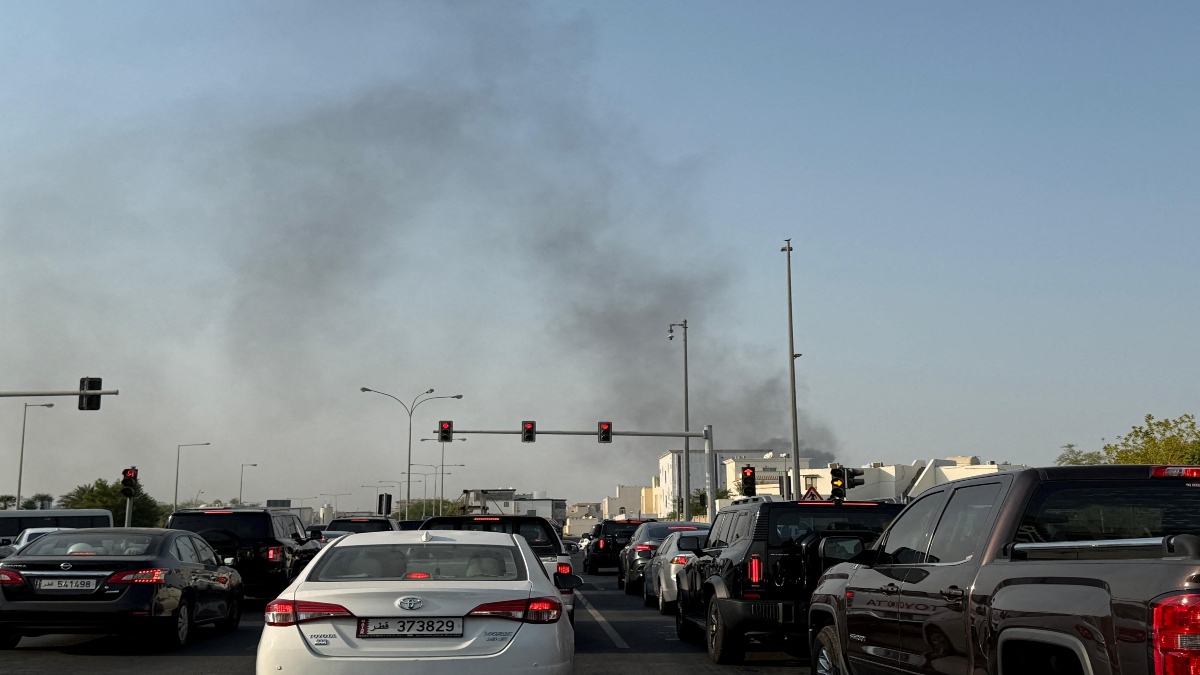 "Israel targets top Hamas leaders in Doha; Qatar, Iran condemn strike as violation of sovereignty")
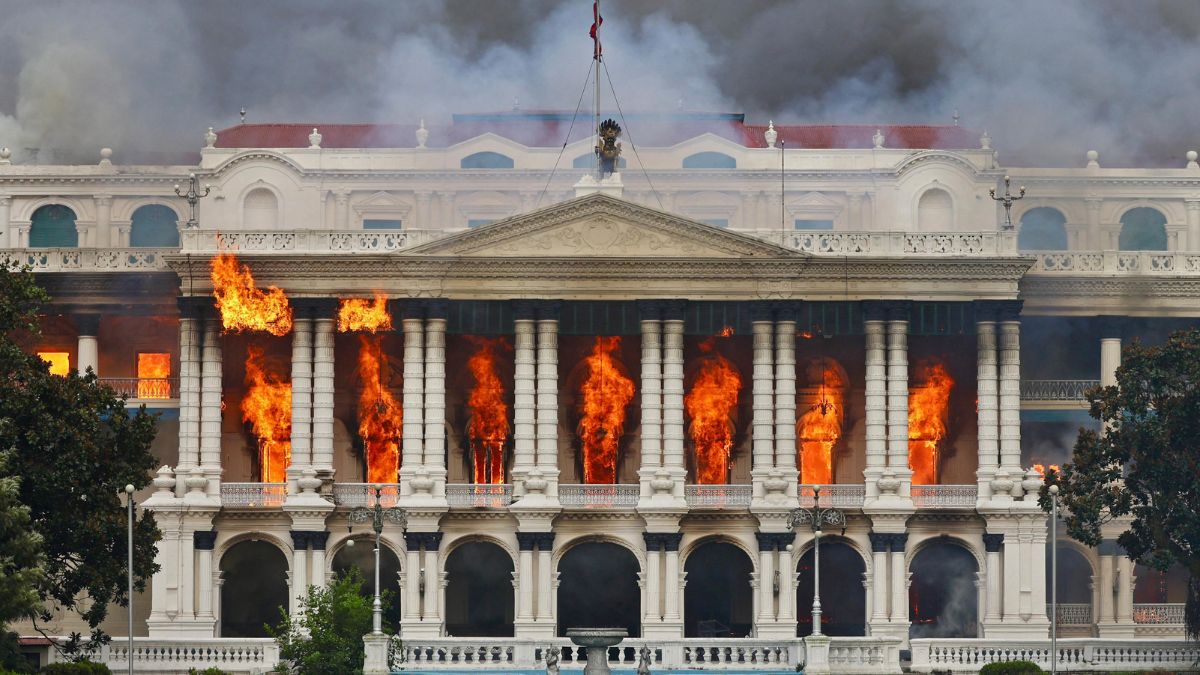 "Nepal: Oli to continue until new PM is sworn in, nation on edge as all branches of govt torched")
 "Who is CP Radhakrishnan, India's next vice-president?")
 "Israel informed US ahead of strikes on Hamas leaders in Doha, says White House")
 "Israel targets top Hamas leaders in Doha; Qatar, Iran condemn strike as violation of sovereignty")
 "Nepal: Oli to continue until new PM is sworn in, nation on edge as all branches of govt torched")
 "Who is CP Radhakrishnan, India's next vice-president?")
 "Israel informed US ahead of strikes on Hamas leaders in Doha, says White House")



](https://images.firstpost.com/wp-content/uploads/2011/06/food380.jpg)