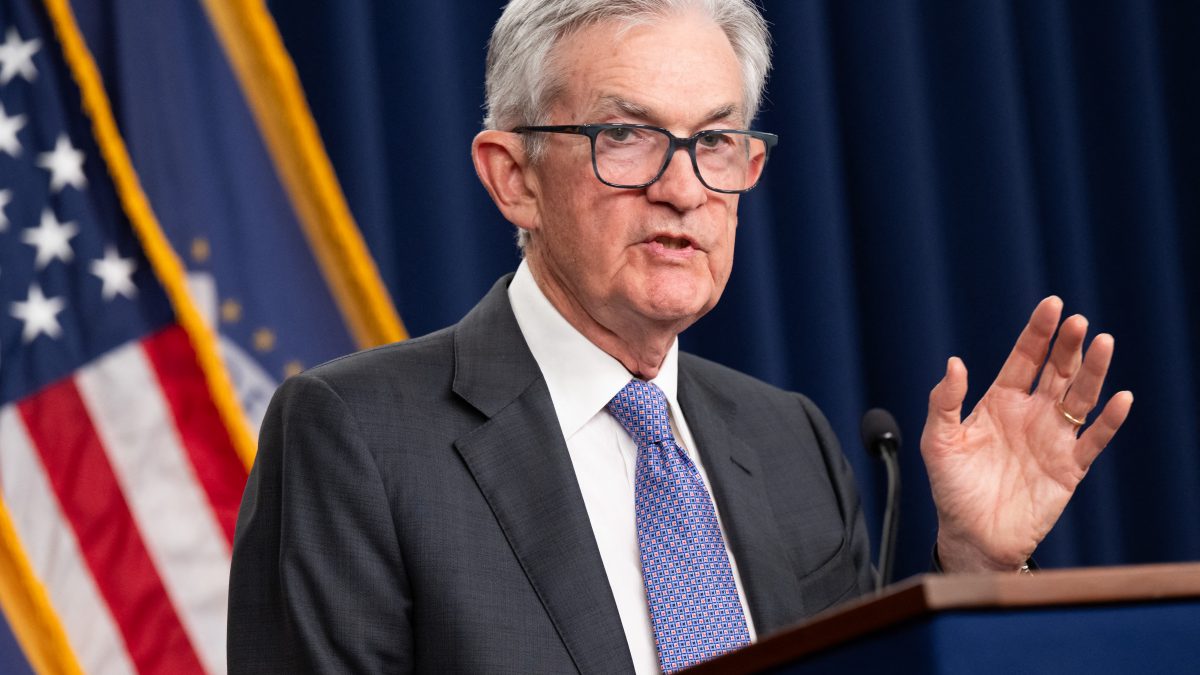
 "Powell backs ‘wait-and-see’ as Iran war muddies inflation outlook. File/AFP")
US Federal Reserve Chair Jerome Powell on Monday signalled a cautious, “wait-and-see” approach to monetary policy, as the central bank assesses the uncertain economic fallout of the ongoing Iran war — particularly its implications for inflation and growth.
Speaking during a question-and-answer session at Harvard University, Powell said the Fed is under no immediate pressure to adjust interest rates despite a fresh surge in energy prices. Policymakers, he noted, typically look through temporary shocks unless they risk becoming entrenched.
“We feel like our policy’s in a good place for us to wait and see how that turns out,” Powell said, referring to the evolving inflationary impact of the conflict.
Energy shock adds new uncertainty
With the Iran war entering its fifth week, volatility in global oil markets has pushed US gasoline prices to around $4 a gallon, complicating the Fed’s inflation outlook.
“We’re getting now an energy shock: no one knows how big it will be. It’s way too early to know,” he said.
The remarks come at a time when US inflation has remained above the Fed’s 2 per cent target for nearly five years — initially driven by pandemic-era supply-demand imbalances, and more recently by tariffs and geopolitical tensions.
Fed caught between inflation and jobs
Powell underscored the central bank’s increasingly delicate balancing act as it navigates competing risks to its dual mandate of price stability and maximum employment.
“There’s downside risk to the labour market, which suggests keeping rates low, but there’s upside risk to inflation, which suggests maybe not keeping rates low,” he said. “You’ve got tension between the two objectives.”
Quick Reads
View AllEven so, he stressed that longer-term inflation expectations remain broadly anchored — a key factor allowing the Fed some room to hold rates steady for now.
Earlier this month, the Fed left its benchmark rate unchanged at 3.50 per cent–3.75 per cent following a meeting of the Federal Open Market Committee, signalling a preference to wait for clearer evidence that tariff-driven price pressures are easing before reacting to war-related shocks.
Labour market shows early signs of strain
While inflation remains the dominant concern, Powell flagged emerging softness in the labour market, particularly for new entrants.
Hiring has slowed in recent months, making it harder for graduates to secure jobs — a trend that could weigh on broader economic momentum if it persists.
‘Stick to what we’re doing’
Addressing questions on the Fed’s independence, Powell emphasised the need to remain focused on statutory goals and insulated from political pressure.
“We’re not trying to work against any politician or any administration, but we have to be careful to stick to what we’re doing,” he said.
His remarks come amid renewed criticism from Donald Trump, who has repeatedly attacked the Fed for maintaining elevated borrowing costs. Trump’s reported nominee to succeed Powell, Kevin Warsh, is seen as favouring lower interest rates.
Powell, whose term as chair ends on May 15, declined to offer specific advice to his potential successor, but reiterated the importance of policy discipline and institutional credibility.
Outlook hinges on inflation expectations
Ultimately, Powell indicated that the Fed’s next move will depend heavily on how inflation expectations evolve in the months ahead.
While some surveys point to a rise in short-term price expectations, market-based indicators remain relatively stable — giving policymakers time to assess incoming data before making any decisive shift in policy.
With inputs from agencies.