

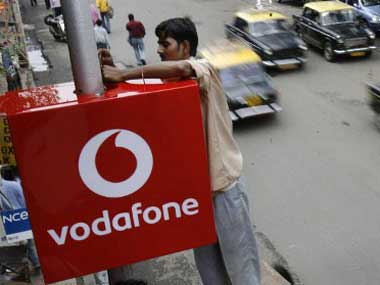
 "The Voda tax: Why India can't be a pushover in taxation")
It is never a great idea to make a law retrospective. This is the reason why one can oppose the finance minister’s decision to make taxation of offshore deals in underlying Indian assets backdated to 1962. The Union budget proposed changes in the tax law after the Supreme Court upheld Vodafone’s appeal against the taxman in its purchase of Hutchison Essar in 2007.
However, it may be time to revise this view. Reason: there is simply too much at stake for the country. And we cannot afford to be seen as a soft state on taxation anymore. It is one thing to not become unpredictable in taxation by being whimsical or having wishy-washy laws, quite another to let everyone believe that they can get away with murder. This is why I have recanted. (I had earlier opposed the retrospective taxation of Vodafone, read here ).
Ever since Pranab Mukherjee proposed his tax change, every passing foreign dignitary has leaned on us to tell us that we are wrong to tax Vodafone. The British Chancellor of the Exchequer George Osborne did so - even though the UK has done its share of retrospective taxation. The International Chamber of Commerce (ICC) has weighed in on the issue. And so has the Business and Industry Advisory Committee of the Organisation of Economic Cooperation and Development (OECD), the upper income countries’ club.
According to The Economic Times, the ICC and the OECD arms have sent a joint letter to Mukherjee stating the following: “We are concerned the recent introduction of retroactivity is not only unwelcome for the future of India’s investment climate, it will also send a signal to other countries that retroactivity is an acceptable route.”
The underlying tone is clear: change the law, or else…
[caption id=“attachment_271042” align=“alignleft” width=“380” caption=“India cannot afford to play namby-pamby in this global fight for tax revenues. We have to become the bad cops - like everyone else. AFP”]  [/caption]
Impact Shorts
More ShortsIt is time we stopped kowtowing to foreign investors - whether it is on portfolio investments or direct investments in industry.
The general atmosphere of complete policy confusion at the top in the UPA has given everyone the impression that we can be pushed around, and that intense lobbying will get them what they want. The same is true for the other tax avoidance measure - the General Anti-Avoidance Rule (GAAR), which is intended to tax foreign investors operating out of post-office addresses in places like Mauritius.
Foreign investors, who don’t pay any short-term capital gains tax, have been busy muttering under their breaths about GAAR, and India’s spineless market operators have been peddling this line. The point is simple: if Indians can pay short-terms capital gains tax, why can’t foreign institutional investors (FIIs)? Why should we bend over backwards to give them tax breaks?
The same logic should apply to Vodafone - however unfair it may sound. The fact is there are simply too many deals involving Indian assets being struck offshore - and it is time to tell these people that they can’t do this anymore. The principle should be: if you want our assets, pay our taxes.
For example, when Kraft took over Cadbury in 2012, the Indian subsidiary went with it. Should it be taxed or not? The changes in law will now apply to such deals.
In 2009, reports The Indian Express, Sanofi Aventis bought a controlling stake in Shantha Biotech for $783 million through a specially-created offshore special purpose vehicle.
Similarly, Mitsui sold a 51 percent stake in Sesa Goa to the UK-listed Vedanta Group through a UK-based company called Finsider. The newspaper goes on to list General Electric’s sale of Genpact to private equity companies in the US, and SAB Miller’s overseas purchase of the Indian arm.
All these deals will receive the taxman’s notices once the Finance Bill is passed.
The tax pickings in each case are too rich to be ignored. Also, a pattern is emerging where even Indian businessmen are buying Indian properties through offshore deals (the Sesa Goa purchase is one example). And the buzz is that half the investment coming through participatory notes (P-notes) into Indian stocks is really Indian illegal money round-tripping to make money on trading.
Take all these facts together, and it is clear that everyone and his aunt is in the business of evading Indian tax - and for this reason alone we need to take a tax bite on Vodafone, even though retrospective taxation is a bad idea in general. We should avoid it in future.
And it’s also worth recalling that Vodafone is being taxed only by proxy. The company that really has to pay the tax on the transfer of assets is the one that made a gain on the sale to Vodafone - which is the Hongkong-based Hutchison group. Isn’t it time we targeted that company?
The Finance Bill changes only affect Vodafone, which had to deduct the tax. Vodafone might have to chase the former for the same, but maybe India should keep tabs on Hutchison - in case it ever wants to make a re-entry into India at any time in the future.
When it comes to taxation, countries tend to become immoral. The US arm-twisted Swiss banks for information on its nationals who held Swiss accounts. The French used a stolen list of Swiss bank account holders (which it shared with us) to extract taxes from them. Germany and UK have agreements with Switzerland to directly tax the accounts of its nationals and remit the same.
India cannot afford to play namby-pamby in this global fight for tax revenues. We have to become the bad cops - like everyone else.


 "Israel targets top Hamas leaders in Doha; Qatar, Iran condemn strike as violation of sovereignty")
 "Nepal: Oli to continue until new PM is sworn in, nation on edge as all branches of govt torched")
 "Who is CP Radhakrishnan, India's next vice-president?")
 "Israel informed US ahead of strikes on Hamas leaders in Doha, says White House")
 "Israel targets top Hamas leaders in Doha; Qatar, Iran condemn strike as violation of sovereignty")
 "Nepal: Oli to continue until new PM is sworn in, nation on edge as all branches of govt torched")
 "Who is CP Radhakrishnan, India's next vice-president?")
 "Israel informed US ahead of strikes on Hamas leaders in Doha, says White House")



](https://images.firstpost.com/wp-content/uploads/2012/04/vodafoneindia-afp1.jpg)