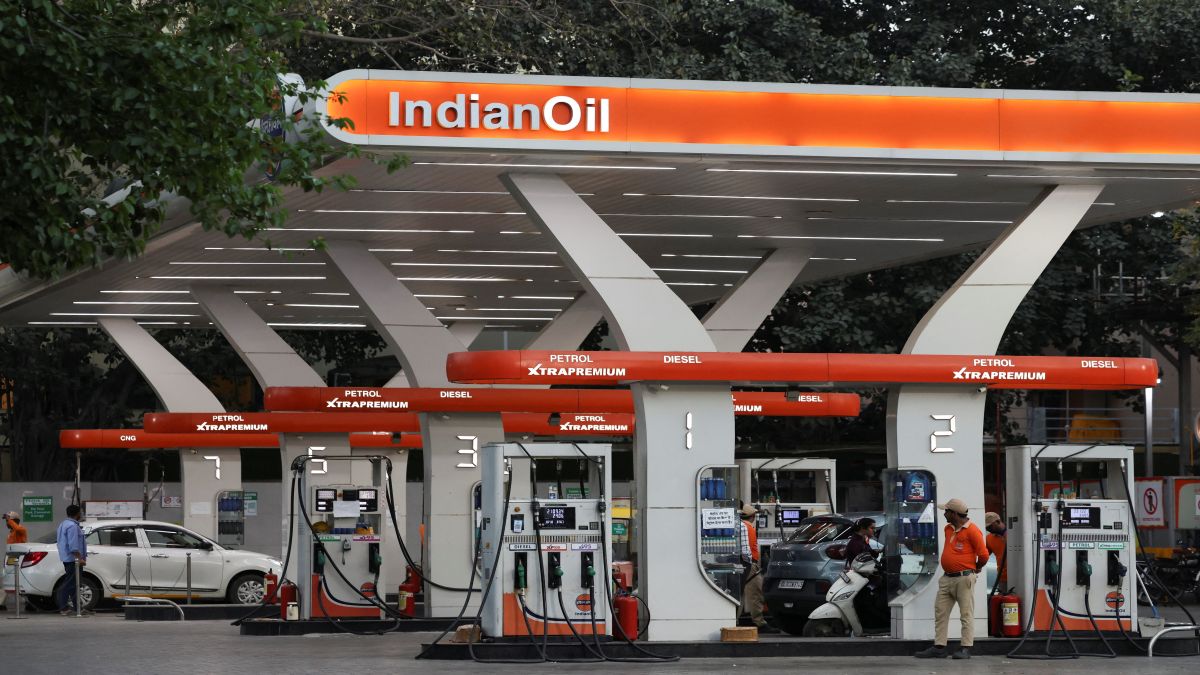
 "Oil tumbles over 6% after Trump signals possible de-escalation in West Asia conflict. File/Reuters")
Oil prices plunged more than 6 per cent on Tuesday after US President Donald Trump suggested the conflict involving Iran could end soon, easing fears of a prolonged disruption to global crude supplies following a sharp surge a day earlier.
Brent crude futures fell $6.51, or 6.6 per cent, to $92.45 a barrel, while US West Texas Intermediate (WTI) crude declined $6.12, or 6.5 per cent, to $88.65 in early trading.
The decline came after oil prices had surged past $100 a barrel on Monday, with Brent and WTI briefly touching session highs of about $119.50 — their highest levels since mid-2022 — as supply disruptions intensified amid the expanding US-Israeli conflict with Iran.
Prices later retreated after Russia signalled efforts to mediate a potential settlement. Russian President Vladimir Putin held a call with Trump and shared proposals aimed at quickly resolving the war with Iran, according to a Kremlin aide, calming concerns about an extended supply shock.
In a CBS News interview on Monday, Trump said the campaign against Iran was progressing faster than expected.
“I think it’s very complete,” Trump said, adding that Washington was “very far ahead” of his initial four- to five-week timeline for the conflict.
Iran warning and policy moves
Despite the drop in prices, tensions in the region remain high. Iran’s Islamic Revolutionary Guard Corps warned that Tehran would decide when the conflict ends and threatened to halt regional oil exports if US and Israeli attacks continue.
State media quoted an IRGC spokesperson as saying Iran would not allow “one litre of oil” to be exported from the region under such circumstances.
However, markets were also pressured by reports that Trump is considering easing oil sanctions on Russia and potentially releasing crude from emergency reserves to help cool global energy prices amid the conflict.
Quick Reads
View AllSupply cuts add to volatility
Oil markets have been extremely volatile as disruptions spread across major producers in West Asia.
Producers in the Gulf have begun cutting output as the war has disrupted shipping routes and infrastructure in the region. Iraq reduced production at its main southern oilfields by around 70 per cent to 1.3 million barrels per day over the weekend, while Kuwait Petroleum Corporation declared force majeure and started reducing output.
According to a report by Reuters, Saudi Arabia has begun trimming production.
Analysts expect crude prices to remain highly volatile in the near term.
“Taking the events of the past 24 hours into account, I expect crude oil to remain highly volatile, trading within a wide range between $75 and $105 in the sessions ahead,” Tony Sycamore, a market analyst at IG, told Reuters.
G7 watching oil markets
Meanwhile, leaders of the Group of Seven (G7) said they are ready to take “necessary measures” to address surging global oil prices but stopped short of committing to release emergency reserves.
The group said it was closely monitoring energy markets and stood prepared to act if supply disruptions worsen.
The dramatic swings highlight how sensitive global oil markets remain to geopolitical developments in West Asia, with traders closely watching diplomatic signals that could either escalate or ease the conflict.