When second-best options are the norm in India’s political culture, the NDA government’s decision to amend the Land Acquisition Act to make it easier to purchase land for defence, rural roads, electrification, affordable housing, industrial corridors and infrastructure projects (including public private partnerships) is certainly welcome. What the ordinance will help avoid is the hassle in obtaining permissions from 70-80 of farmers for acquiring their land. For the projects specified, there will also be no need for a social impact assessment (SIA). What stays is the compensation of four times market price for rural land, and two times for urban land. What the ordinance essentially does is reduce a potentially four- or five-year land acquisition process to something that can be achieved in months, with huge implications for the viability of sensitive infrastructure projects. Second-best options have thus been used to achieve second-best purposes. The changes were brought through the second-best ordinance route yesterday (29 December), when no one in his right mind will proceed with a project unless these changes are finally legislated. The ordinance, at best, signals the government’s earnestness in pushing reforms through. The acid test will come in the budget session, when the ordinance has to be passed by both houses of parliament. The benefits of the ordinance will thus accrue only after the budget session. So the ordinance itself is of only symbolic value. [caption id=“attachment_2022227” align=“alignleft” width=“380”]
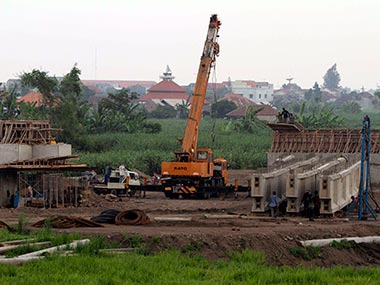
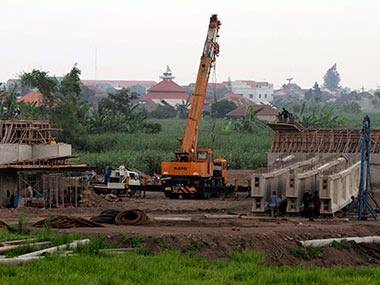 Reuters image[/caption] The changes proposed are also second-best, for the truth is that the Right to Fair Compensation and Transparency in Land Acquisition, Resettlement and Rehabilitation Act, 2013, is fundamentally flawed in its approach to giving land-owners a fair deal. We can say the intent was noble, since farmers were to be the beneficiaries, but one can wonder whether tweaking laws in haste to win an election can be considered all that noble when the law had the potential to retard growth. The real reason why farmers get a rotten deal – even after the Act is implemented - is change in land use after acquisition. Their land, when used for agricultural purposes, has low value, so four times low value will still be low value. The value of the land soars once it becomes designated for industrial or infrastructure use. Then its value could rise even 10-15 fold. The only way to give farmers a fair deal is by pricing the land after its end-use is determined. At that time, the market price alone will be good enough. The other way to compensate fairly is to give farmers slightly more than current market prices and, additionally, a significant equity stake in the developed property – or a regular annuity based on future values or by buying back their equity at high valuations at a later date. But we have to thank the government for small mercies, since the ordinance certainly makes land acquisition a viable proposition now for industry and housing. Since the rest of the package – compensation levels and rehabilitation and resettlement of those affected – remains intact, and the new rules will apply even to land acquired under 13 other acts (the Railways Act, National Highways Act, etc), the provisions will now be uniform on the compensation aspect. A
Mint
story quotes former National Advisory Council member NC Saxena as welcoming the efforts to ease procedures, even while criticising the compensation aspects. He told the newspaper: “What Jairam Ramesh (the former rural development minister, who piloted the bill) did was lot of committees and delay. What he did was, to acquire one acre of land, the file needs to go through 300 hands and five years’ time, So it was anti-industry and anti-farmer. What this government has done is eased the procedure and made it pro-industry, but the farmers’ compensation remains same.” This is not an unfair assessment, for, as I have noted before, the issue of fair compensation depends on changes in land use, and this is wholly missing in the ordinance. Saxena would have been happier if compensation had been raised to six times market price instead of four, but this would be as arbitrary as before. The only way to do it right is to give the land-owner a fair value after determining its end-use and (possibly) an equity stake in the project as well. Maybe, these changes can be incorporated when the ordinance comes up for discussion in parliament. However, the Modi government will face a tough time passing the bill –
not because any state would really oppose the growth-inhibiting previous version
- but because of the confrontation brewing between government and regional political parties. The government will have to cool down the atmosphere of confrontation before it can get the bill through. Maybe, that’s what explains the second-best nature of the bill. In politics, the best option is seldom the one most adopted.
Reuters image[/caption] The changes proposed are also second-best, for the truth is that the Right to Fair Compensation and Transparency in Land Acquisition, Resettlement and Rehabilitation Act, 2013, is fundamentally flawed in its approach to giving land-owners a fair deal. We can say the intent was noble, since farmers were to be the beneficiaries, but one can wonder whether tweaking laws in haste to win an election can be considered all that noble when the law had the potential to retard growth. The real reason why farmers get a rotten deal – even after the Act is implemented - is change in land use after acquisition. Their land, when used for agricultural purposes, has low value, so four times low value will still be low value. The value of the land soars once it becomes designated for industrial or infrastructure use. Then its value could rise even 10-15 fold. The only way to give farmers a fair deal is by pricing the land after its end-use is determined. At that time, the market price alone will be good enough. The other way to compensate fairly is to give farmers slightly more than current market prices and, additionally, a significant equity stake in the developed property – or a regular annuity based on future values or by buying back their equity at high valuations at a later date. But we have to thank the government for small mercies, since the ordinance certainly makes land acquisition a viable proposition now for industry and housing. Since the rest of the package – compensation levels and rehabilitation and resettlement of those affected – remains intact, and the new rules will apply even to land acquired under 13 other acts (the Railways Act, National Highways Act, etc), the provisions will now be uniform on the compensation aspect. A
Mint
story quotes former National Advisory Council member NC Saxena as welcoming the efforts to ease procedures, even while criticising the compensation aspects. He told the newspaper: “What Jairam Ramesh (the former rural development minister, who piloted the bill) did was lot of committees and delay. What he did was, to acquire one acre of land, the file needs to go through 300 hands and five years’ time, So it was anti-industry and anti-farmer. What this government has done is eased the procedure and made it pro-industry, but the farmers’ compensation remains same.” This is not an unfair assessment, for, as I have noted before, the issue of fair compensation depends on changes in land use, and this is wholly missing in the ordinance. Saxena would have been happier if compensation had been raised to six times market price instead of four, but this would be as arbitrary as before. The only way to do it right is to give the land-owner a fair value after determining its end-use and (possibly) an equity stake in the project as well. Maybe, these changes can be incorporated when the ordinance comes up for discussion in parliament. However, the Modi government will face a tough time passing the bill –
not because any state would really oppose the growth-inhibiting previous version
- but because of the confrontation brewing between government and regional political parties. The government will have to cool down the atmosphere of confrontation before it can get the bill through. Maybe, that’s what explains the second-best nature of the bill. In politics, the best option is seldom the one most adopted.
Land Acquisition ordinance: NDA opts for second best option, will face trial by fire in RS
R Jagannathan
• December 30, 2014, 12:44:19 IST
The ordinance to amend the UPA’s Land Acquisition Act is a huge improvement on the latter, but it will still need changes and have to pass through a hostile Rajya Sabha in the budget session
Advertisement
 "Land Acquisition ordinance: NDA opts for second best option, will face trial by fire in RS")