 "Iran war, oil and inflation: Commodity traders hiring spy consultants as gold loses safe-haven shine")
The escalating Iran war is reshaping global commodity markets in unexpected ways, forcing traders to rely on shadow intelligence networks even as traditional safe-haven assets like gold lose their shine amid surging inflation fears.
Commodity traders are increasingly hiring security consultants with on-ground Gulf sources and tapping tanker fleets to track disruptions, as the fast-moving conflict creates critical information blind spots, the Wall Street Journal reported.
Fog of war disrupts market visibility
The rapid escalation of strikes on energy infrastructure across West Asia has left traders struggling to assess real-time damage, with battlefield conditions shifting faster than data can keep up.
Oil and gas markets are now being driven by battle damage assessments rather than traditional supply-demand signals. With satellite imagery delayed and signal interference widespread, even sophisticated tanker-tracking systems have become unreliable.
As a result, traders are building informal intelligence pipelines—leveraging shipping contacts, local sources and private security networks—to piece together fragmented information on port closures, refinery hits and export disruptions.
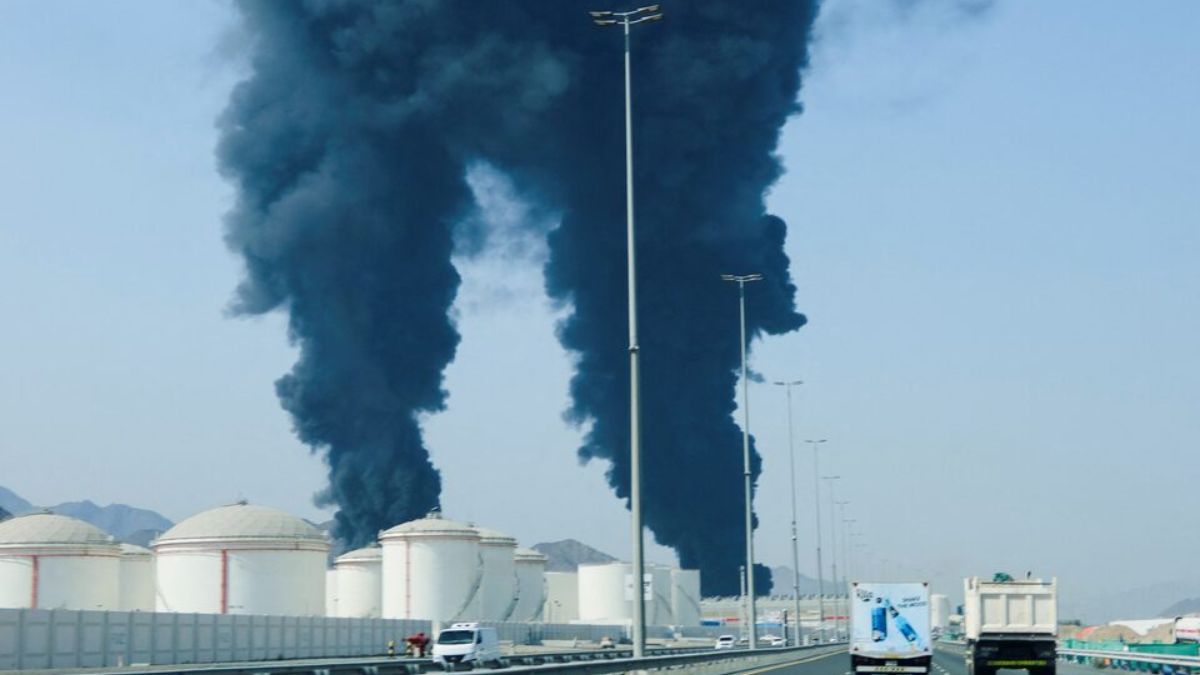
The uncertainty has injected extreme volatility into energy markets, with Brent crude briefly surging close to $119 per barrel this week after strikes hit key infrastructure in Saudi Arabia and Kuwait, while European natural gas prices spiked sharply following damage to Qatar’s Ras Laffan facility.
Oil shock fuels inflation spiral
The disruption to energy supplies is reinforcing fears of a prolonged inflation shock, with higher oil and gas prices expected to feed into global costs.
A sustained hit to infrastructure—unlike temporary shipping disruptions—could take months to repair, raising the risk of structural supply shortages even if the Strait of Hormuz reopens.
This has become a central concern for policymakers, with major central banks flagging upside risks to inflation and signalling that interest rates may need to stay elevated for longer.
Quick Reads
View AllGold fails as safe haven
In a sharp break from historical trends, precious metals have failed to act as a refuge during the crisis.
Gold, silver, copper and palladium all declined this week, with spot gold falling over 3 per cent to around $4,650 an ounce, while silver tumbled as much as 10 per cent in one of its steepest recent declines.
The sell-off reflects a combination of factors. Rising inflation expectations are pushing bond yields higher, increasing the opportunity cost of holding non-yielding assets like gold. A stronger US dollar has also weighed on prices.
Market participants say investors are increasingly liquidating gold positions to raise cash amid broader market stress, reversing the metal’s traditional safe-haven appeal.
Central banks, funds drive selling
Analysts point to additional pressure from institutional flows, including potential central bank selling to shore up liquidity as financial conditions tighten.
At the same time, leveraged funds and financial investors—who have become dominant players in gold markets—are cutting exposure as borrowing costs rise and volatility spikes.
Supply shocks ripple across industries
Beyond financial markets, the war’s impact is cascading through the real economy.
Damage to critical facilities such as Qatar’s Ras Laffan—one of the world’s largest liquefied natural gas hubs—has tightened global gas supplies, triggering bidding wars among Asian and European buyers.
Industries reliant on natural gas, including aluminium and semiconductors, are already feeling the strain, while major importers such as India, Japan and China face rising energy costs.
A new playbook for commodity trading
The unfolding crisis is forcing a structural shift in how commodity markets operate.
With reliable data increasingly scarce and geopolitical risks dominating price action, traders are moving beyond traditional analytics to intelligence-gathering strategies more akin to security operations.
As the conflict drags on, markets appear set to remain driven less by fundamentals and more by fragmented, real-time assessments of a war that continues to redraw the global energy map—and challenge long-held assumptions about safe-haven assets.

 "Israel-Iran war live: IRGC spokesperson killed in strikes hours after warning US-Israel")
 "Canadian police chief gives clean chit to India: ‘We don’t have intel on any interference’")
 "Why are US 'Warthogs' being used to secure the Strait of Hormuz?")
 "The NIA crackdown exposes a global shadow network: Intel tip-off came from Russia")
 "Israel-Iran war live: IRGC spokesperson killed in strikes hours after warning US-Israel")
 "Canadian police chief gives clean chit to India: ‘We don’t have intel on any interference’")
 "Why are US 'Warthogs' being used to secure the Strait of Hormuz?")
 "The NIA crackdown exposes a global shadow network: Intel tip-off came from Russia")