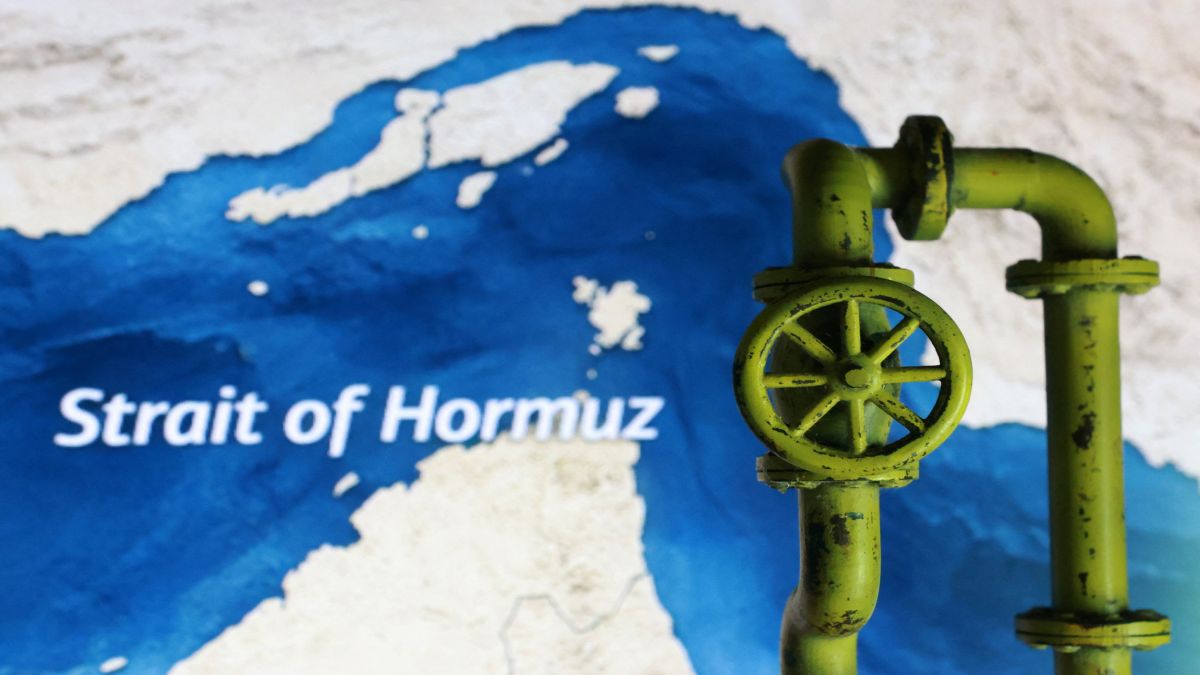
 "From MRI to chip labs: Inside the silent helium crisis unfolding through Hormuz")
The ongoing conflict in the Middle East and the blockade of the Strait of Hormuz are rapidly evolving into a global supply shock that extends far beyond oil and gas. While attention has largely focused on disruptions to crude shipments, a parallel and less visible crisis is unfolding in the helium market, one that could have far-reaching consequences for technology, healthcare and advanced industries.
According to industry assessments, the current disruption is among the most severe supply shocks in recent history. However, unlike oil, which can be mitigated by strategic reserves, helium poses a unique challenge due to the absence of significant buffers.
Qatar’s shutdown and a one-third supply loss
At the centre of the crisis is Qatar, which produces roughly 30–33 per cent of the world’s helium supply as a by-product of liquefied natural gas (LNG) processing. Attacks on key gas infrastructure and the closure of export routes through the Strait of Hormuz have effectively brought a large portion of global helium production to a halt.
This disruption has exposed the fragility of supply chains that depend on a small number of geographic sources. Unlike diversified commodities, helium production is concentrated and closely tied to natural gas extraction, making it particularly vulnerable to geopolitical shocks.
Semiconductors face production risks
One of the most immediate concerns is the impact on semiconductor manufacturing. Helium is a critical input in chip production, used for cooling during high-precision fabrication and for maintaining ultra-clean environments necessary for advanced lithography.
Leading chipmakers, such as TSMC, Samsung, and Intel, rely on helium across multiple stages of manufacturing. A sustained shortage could force manufacturing plants to halt operations, potentially disrupting global supplies of processors used in smartphones, data centers, and artificial intelligence systems.
Quick Reads
View AllGiven the already tight supply-demand dynamics in advanced chips, any disruption could have cascading effects across the global technology ecosystem.
Healthcare systems under pressure
Helium shortages also pose a significant risk to the healthcare sector. MRI (magnetic resonance imaging) machines depend on liquid helium to cool superconducting magnets to extremely low temperatures. Without helium, these machines cannot function.
Past supply disruptions have already led to rationing of MRI scans in some regions. A prolonged shortage could significantly affect diagnostic capabilities, delaying treatment and increasing pressure on healthcare systems worldwide.
Medical imaging accounts for a substantial share of global helium consumption, underscoring the sector’s vulnerability to supply fluctuations.
Aerospace and research at risk
Beyond semiconductors and healthcare, helium plays a crucial role in aerospace, scientific research and industrial applications. It is used to pressurise rocket fuel systems, detect leaks, and create controlled environments in manufacturing processes such as fibre optics and welding.
Space agencies and private launch companies rely on helium for mission-critical operations. A sustained shortage could disrupt launch schedules, satellite deployments and research activities.
In scientific infrastructure, including particle accelerators and quantum computing systems, helium is essential for maintaining ultra-low temperatures required for operation.
A resource that cannot be stockpiled
What makes the current crisis particularly challenging is helium’s physical nature. Unlike oil or grain, helium cannot be stored for long periods. It continuously evaporates, even in specialised containers.
Industry estimates suggest that the global helium supply chain operates with a buffer of around 45 days. Beyond that, stored helium dissipates into the atmosphere and becomes unrecoverable.
This means that even short-term disruptions can quickly translate into acute shortages, leaving little room for mitigation.
Limited alternatives and rising prices
Alternative producers, including the United States, Algeria and Russia, contribute to the global helium supply. However, none are currently positioned to fully offset the sudden loss of Qatari output.
Efforts to reroute supplies through neighbouring countries face logistical challenges and capacity constraints. At the same time, more than 200 specialised containers used to transport helium remain stranded in the region, further tightening availability.
Spot prices have already begun to rise, with analysts warning that limited supplies may be prioritised for higher-paying industries such as semiconductor manufacturing. This could leave healthcare providers and research institutions struggling to secure adequate supply.
A wake-up call for global supply chains
The helium shortage highlights a broader structural gap in global supply chain planning. While countries have built strategic reserves for oil and gas, there are limited safeguards for critical materials like helium that underpin modern technology and healthcare systems.
The blockade of the Strait of Hormuz has once again highlighted the risks posed by geographic chokepoints, not just for energy markets, but for a range of essential resources that are less visible but equally vital.
As geopolitical tensions persist, the helium crisis is emerging as a key test of global supply chain resilience. Its impact could extend well beyond the current conflict, shaping how industries and governments approach resource security in an increasingly interconnected world.


 "Iran Israel War Live News: Kuwait's desalination plant, oil refinery hit by drones as Iran vows 'crushing attacks' on infra")
 "From ‘India Out’ to ‘India please’: How New Delhi is aiding neighbours amid Iran war")
 "One year of Liberation Day tariffs: US trade deficit rose, manufacturing boom never arrived")
 "Iran drafts a ‘hit list’ of Gulf bridges for retaliatory strikes after US destroyed its largest")
 "Iran Israel War Live News: Kuwait's desalination plant, oil refinery hit by drones as Iran vows 'crushing attacks' on infra")
 "From ‘India Out’ to ‘India please’: How New Delhi is aiding neighbours amid Iran war")
 "One year of Liberation Day tariffs: US trade deficit rose, manufacturing boom never arrived")
 "Iran drafts a ‘hit list’ of Gulf bridges for retaliatory strikes after US destroyed its largest")