

 "Supreme Court's mining ban is ruinous for our economy")
By Rajiv Kumar
The Supreme Court of India seems to have created a crisis after imposing a large-scale ban on iron ore mining in the Bellary district of Karnataka.
Although the Supreme Court has subsequently allowed the public sector entity National Mineral Development Corporation to continue operations, its imposition of a ban on iron ore mining in Bellary remains an extreme step. The decision was meant to demonstrate the Court’s anger and disappointment at the gross violation of rules and environmental laws by miners in the Bellary region, show the Court’s resolve to bring these rapacious and illegal operators to book, and push the government into taking corrective steps.
The economic losses resulting from the continuation of the ban on private sector units could be enormous and aggravate the slowdown that has already gripped the Indian economy. Nearly 21 million tons of steel-making capacity located in Karnataka is dependent on local iron ore supplies. Of the total production in Karnataka, which provides 24 percent of the country’s iron ore output, 75 percent comes from the Bellary-Hospet region. Shutting down the Bellary mines will force a closure of the steel plants located in Karnataka, as they can neither use the low-grade ore from Goa, nor bring in the required quantities from Jharkhand or Chhattisgarh as the transports costs are too high.
[caption id=“attachment_51622” align=“alignright” width=“380” caption=“The mining ban will have disastrous consequences for the Indian economy. Reuters”] 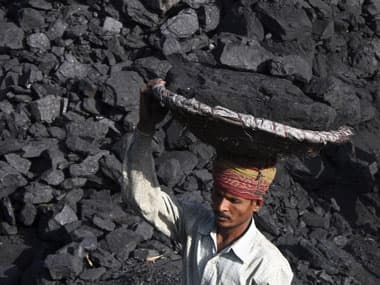 [/caption]
The closure of Karnataka’s steel plants will result in huge commercial losses to these companies, but the far bigger impact will be on the loss of production and employment in downstream industries such as automobiles, consumer durables, machine tools and engineering products. The direct employment loss alone could cost around 80,000 jobs, with hundreds of thousands of other jobs being jeopardised in downstream industries.
The government stands to lose thousands of crores in revenues and commercial banks could suffer an asset deterioration of a bigger magnitude. Even after excluding other relatively minor losses to railways, state governments and utilities, the negative economic impact of a continued ban on mining in Bellary may be too large for the economy to absorb at this stage given that investors’ sentiment is already frail and global conditions are uncertain. The ban, if continued, will bring the Indian economy to the edge of an avoidable precipice.
In imposing the ban, the Supreme Court is presumably acting on the basis of its past experience. The Court saved Delhi from choking to death from noxious transport exhaust fumes by insisting on a cut-off date for the introduction of compressed natural gas in public transport vehicles. This created a mini-crisis with Delhi’s transport system grinding to a halt for a few weeks. The necessary executive action then followed.
The Court realises that India follows a practice of ‘management by crisis’. Far from acting in anticipation of emerging situations, action is postponed until time has virtually run out. This creates avoidable pressures and incurs unnecessary costs.
But given the predominant culture of management by crisis, the Court, acting on practical logic, has again decided to create a crisis - one which is far larger in its coverage and impact than stopping the Delhi public transport system in its tracks. Executive action will hopefully follow.
Can we afford it?
Can India really afford such repeated crises? And are they really a necessary condition for generating the required policy response and action?
The impending crisis will extend to all mining, including iron ore, coal, bauxite, copper and other minerals. This would result in India foregoing the use of its very large reserves of these natural resources that are essential for industrialisation and growth. Such an outcome would be disastrous. India would have to import massive volumes of these minerals, putting unsustainable pressure on its balance of payments, rendering its industries uncompetitive and generating a massive loss of employment.
The Court would do well to put together a group of relevant experts and industry personnel to find a way out of this impending disaster. There are two practical steps that could be taken. First, immediately establish three technically-competent and independent regulators, one each for iron ore, coal and other minerals. These regulators, by drawing up the necessary regulations and enforcing them strictly, will de-politicise the sector and minimise violations of environmental laws and the rights of indigenous peoples.
Second, the government has to ensure that its policy framework attracts large, organised, technologically well-equipped and socially- and environmentally-conscious mining companies which are more susceptible to public pressure and less prone to corrupt and illegal business operating practices. Such companies could effectively develop those mineral reserves which lie either under forest cover or lands populated by indigenous peoples without causing environmental or social damage.
There are some elements in the draft mining law, as it exists today, which could have the unintended effect of driving out large and organised miners from the sector and encouraging those who are rapacious and have zero concern for indigenous peoples rights or the environment. As it stands, the law will only result in India being unable to take advantage of its own natural resources. This will effectively deny India its natural advantage simply because of an inability to jettison the culture of management by crisis.
Rajiv Kumar is Secretary-General of the Federation of Indian Chambers of Commerce and Industry. Republished with permission from East Asia Forum.

 "Israel targets top Hamas leaders in Doha; Qatar, Iran condemn strike as violation of sovereignty")
 "Nepal: Oli to continue until new PM is sworn in, nation on edge as all branches of govt torched")
 "Who is CP Radhakrishnan, India's next vice-president?")
 "Israel informed US ahead of strikes on Hamas leaders in Doha, says White House")
 "Israel targets top Hamas leaders in Doha; Qatar, Iran condemn strike as violation of sovereignty")
 "Nepal: Oli to continue until new PM is sworn in, nation on edge as all branches of govt torched")
 "Who is CP Radhakrishnan, India's next vice-president?")
 "Israel informed US ahead of strikes on Hamas leaders in Doha, says White House")



](https://images.firstpost.com/wp-content/uploads/2011/08/mining1.jpg)