

 "How India is signing away its industries' future with the EU FTA")
by KM Gopakumar and Ranja Sengupta
The Government of India is currently engaged in an advanced stage of negotiation with the European Union (EU) to conclude a Bilateral Investment and Trade Agreement (BITA), commonly known as EU India Free Trade Agreement (FTA). According to some news reports, the government of India and EU are set to conclude the negotiations during the upcoming meeting between the Minister of Commerce and Industry Anand Sharma and the EU Trade Commissioner Mr. Karel de Gucht on 14-15 April at Brussels.
This FTA is said to be the mother of all FTAs India signed so far, both in coverage of tariff lines as well as in scope. The FTA reportedly covers more than 95% of agricultural and industrial goods for full import duty elimination. In scope, the FTA goes way beyond the coverage of goods trade to include services, intellectual property, investment, government procurement and competition policy etc. Thus the scope of this FTA goes beyond subject matter currently under World Trade Organization (WTO) and also involves WTO plus liberalisation in all areas covered.
Trade and development experts, have for some time, expressed reservation about FTAs between developed and developing countries (North-South FTAs). The Trade and Development Report (TDR) 2007 stated that “it is likely that they will considerably reduce or fully remove policy options and instruments available to a developing country to pursue its development objectives”.
[caption id=“attachment_699198” align=“alignleft” width=“380”] 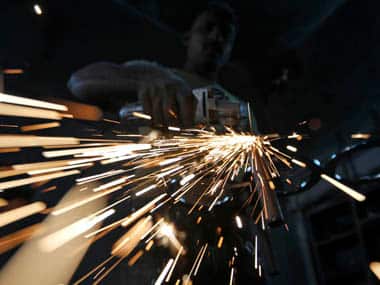 Will the FTA only affect Indian industry growth? Reuters[/caption]
Regarding the potential benefits of North South FTAs, the TDR observed, “In sum, bilateral North-South FTAs have the potential to provide the developing-country partner with considerable new trading opportunities. However, preferences negotiated by one developing country with a developed partner may quickly be eroded if the same developed country also concludes FTAs with other developing countries”.
The EU is currently negotiating FTAs with a large number countries and therefore there is no guarantee that the increased market access, if any, will continue to be there for a long time. However, even a cursory analysis of the various chapters and provisions makes it clear that the loss of policy space is certain.
Moreover, the process of negotiations remains hazy and suffers from democratic deficit. The parliament, state governments and people are kept in the dark regarding the potential costs and benefits of the FTA. There is no government document in public domain explaining the costs and benefits of the FTA and the trickled down information shows that the EU India FTA may sign away the future of India’s economic development, especially development in the manufacturing sector. In addition, it may further worsen the current economic instability.
This FTA is expected to retard India’s effort to improve its manufacturing sector, especially growth in high technology segments. Even after 20 years of the implementation of liberalisation project, the share of manufacturing sector in GDP is roughly 15% and the share of employment in manufacturing is 11%.
According to Economic Survey (2012-13, Page No. 202) “India is one of the top ten manufacturing countries though its share in total manufacturing value added (MVA) is only about 1.8 per cent…. Analysis of the sub-group level MVAs shows sharp differences between India vis -a -vis other major manufacturing countries. The production of machinery and equipment, one of the key segments of the capital goods sector, has been growing at faster rate in the United States, Canada, China, Malaysia as compared to the deceleration in India’s case”.
In the five fastest-growing sectors of office accounting and computing; radio, TV and communication equipment; electrical machinery and apparatus, other transport; and basic metal, the report states that India’s performance has been lagging behind. “Other than basic metal all these sectors are medium and high technology activities. India’s performance in recent years has been dismal in some of these fast moving sectors” (Economic Survey 2012-13, Page no.202 )
This clearly shows that policy measures during the last 20 years, including the opening up of almost all sectors for FDI in manufacturing, contributed little to improve the growth and maturity of these industries. This situation demands strategic and well-planned use of industrial policy tools to improve the performance of the manufacturing sector. Trade and investment policy, IPR policy, finance policy, must all be subservient to this industrial policy. However, reduction of substantial percent of tariffs through this FTA will take away a well-proven policy tool of industrial development. Projections for this FTA show no benefit for India in high technology industry and benefit is restricted only to saturated sectors like gems and jewelry, leather and textiles.
Further, this FTA also opens up government procurement of central and PSUs market to EU companies and thus eliminates the favorable treatment for national manufacturing enterprises. Though the government says that the policy of MSME preference will continue, such s cannot be effectively restricted to Indian MSMEs alone and must include EU MSMEs in the absence of an explicit reservation. This would again affect the favorable treatment for large high technology national enterprises.
Another important policy tool at the disposal of the government is the investment protection, which is not fully under the multilateral trade framework at present. India moved away form its original stand of de-linkage of trade and investment, and started signed comprehensive economic cooperation agreements with South Korea, Japan, Singapore and Malaysia with investment provisions. Apart from signing FTA India also signed more than 82 Bilateral Investment Protection Agreements (BIPA). Provisions of investment protection treaties substantially reduce the policy space for regulation of the foreign investor to align the activities with national development objectives. BIPAs also expose India to international arbitrations, which are often rigged to favor the investor. Facing more than six such arbitrations or threat of arbitrations government is currently reviewing BIPA provisions. However, an investment chapter is going to be an essential part of the proposed EU-India FTA. In fact the investment chapter under this FTA may give higher market access to EU companies and also dilute the performance requirements that India imposes on FDI such as mandatory technology transfer and export requirements.
Lastly, the leaked text shows that EU is demanding intellectual property protection beyond the requirement of WTO’s TRIPS agreement. This would erect barriers for industrial catching up and technology up-gradation of the Indian industry.
The current macroeconomic condition of the country does not support the conclusion of an FTA with EU. According to the latest Economic Survey 2012-13, “the widening of the trade deficit to more than 10 per cent of GDP and the CAD crossing 4 per cent of GDP in 2011-12 and the first half of 2012-13 have been matters of concern”.
Further it states that “the room to increase exports in the short run is limited, as they are dependent upon the recovery and growth of partner countries, especially in industrial economies. This may take time”. Thus the rational way of curbing trade deficit is by curbing imports.
Trade deficit of India with EU in 2011-12 was around 35 USD billion. It is certain that substantial reduction of tariffs would result in a surge of imports from EU. India’s exports to EU are not expected to increase substantially because at present 65 percent of the agricultural goods and 67 percent of the industrial goods from India are already enjoying duty free entry into the EU market. This apprehension is also borne out in the light of surge of imports from EU to Korea after the conclusion of FTA with EU. South Korea witnessed a 37% surge in imports from EU against a 1 percent export gain to EU market.
Thus the untold story of EU-India FTA is its potential to kickoff de-industrialisation and lock in low value specialization. Clearly, the government should think twice before signing away India’s future in terms of becoming a buoyant industrialized nation.

 "Russian drones over Poland: Trump’s tepid reaction a wake-up call for Nato?")
 "As Russia pushes east, Ukraine faces mounting pressure to defend its heartland")
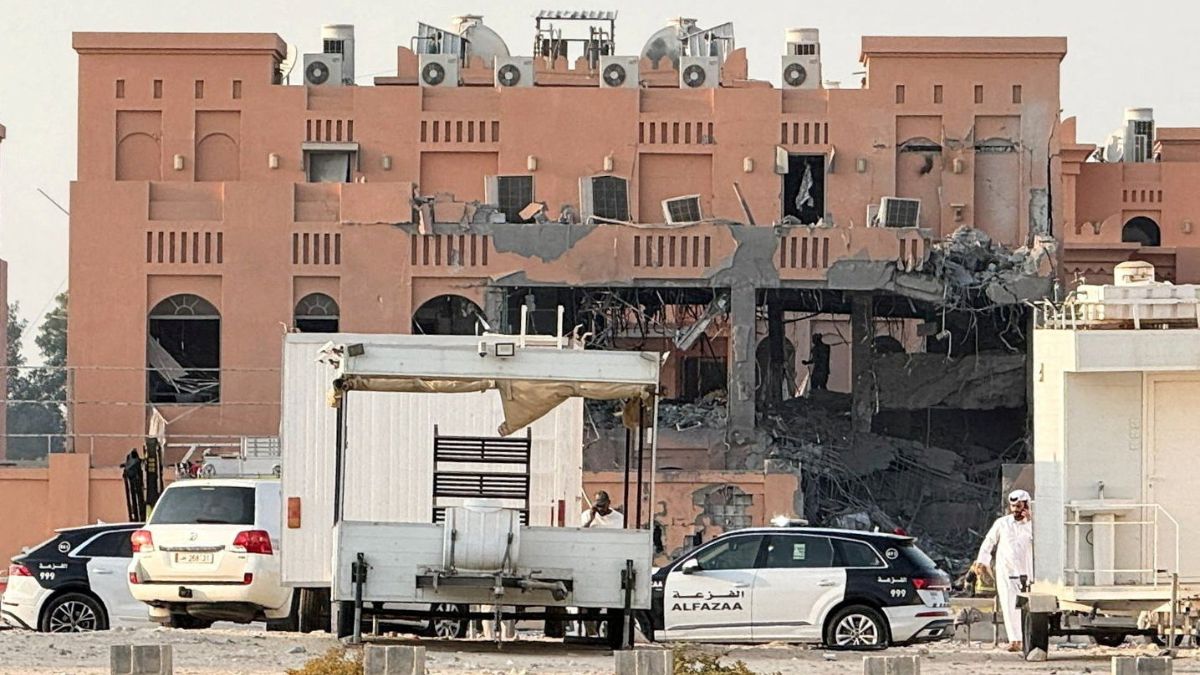 "Why Mossad was not on board with Israel’s strike on Hamas in Qatar")
 "Turkey: Erdogan's police arrest opposition mayor Hasan Mutlu, dozens officials in corruption probe")
 "Russian drones over Poland: Trump’s tepid reaction a wake-up call for Nato?")
 "As Russia pushes east, Ukraine faces mounting pressure to defend its heartland")
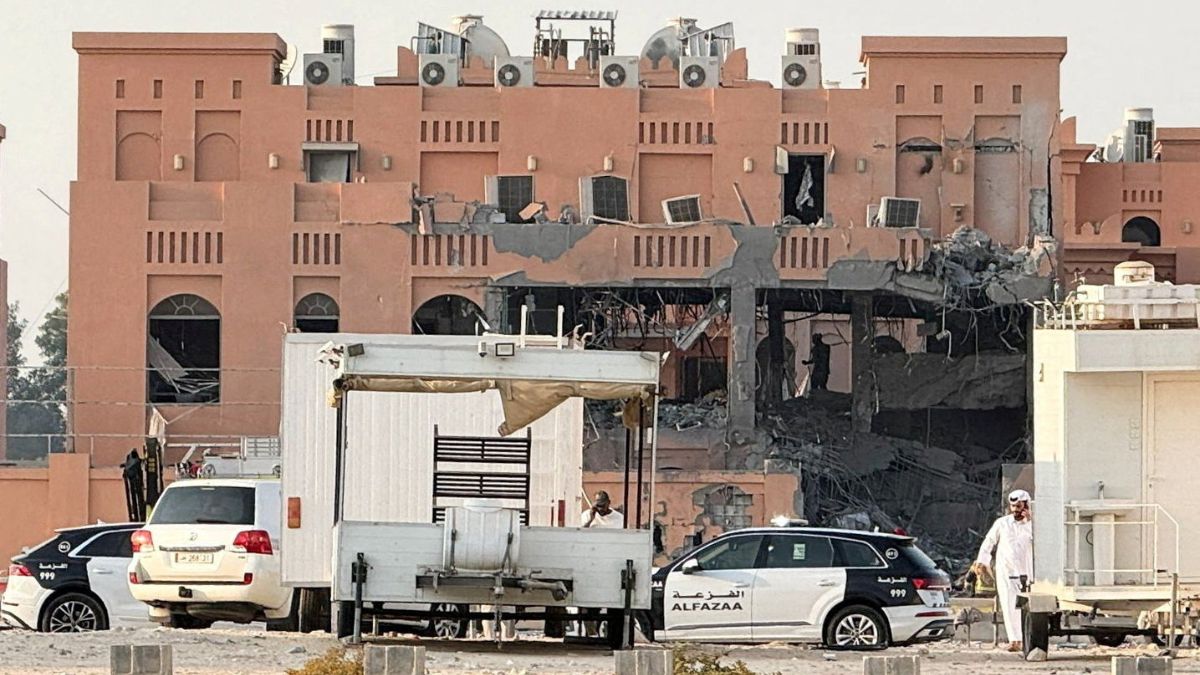 "Why Mossad was not on board with Israel’s strike on Hamas in Qatar")
 "Turkey: Erdogan's police arrest opposition mayor Hasan Mutlu, dozens officials in corruption probe")



