

 "Five bumps that could impact the Indian economy this year")
By Madan Sabnavis
There has been a flurry of data in the last two weeks, some pertaining to last year, and others to the current one. Together they provide a picture of the current state of the economy.
The red flags raised by the data relate to (1) the rising proportion of short-term debt in external borrowings, (2) untamed inflation, (3) slowing industrial and economic growth, (4) a growing budgetary imbalance, and (5) the possibility of a weak monsoon blighting food production this year.
[caption id=“attachment_36513” align=“alignleft” width=“380” caption=“Manufacturing has gone in India. Babu Babu/Reuters”] 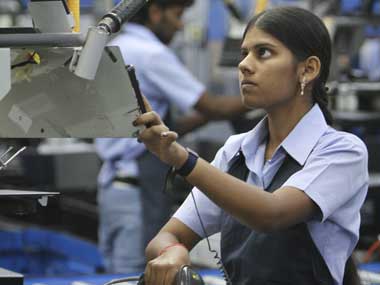 [/caption]
Let us first look at last year’s data points. Two releases on balance of payments and external debt show a mixed picture. The balance of payments position was better than that of the previous year, meaning there was finally a net accretion to foreign exchange reserves.
There is reason to be happy that the current account deficit-the gap between foreign exchange earnings and expenditure that has to be financed with capital inflows-is lower at 2.6%. But the interesting thing is that the ratio is lower not because the deficit has declined (in fact it has increased by $6 billion), but because the GDP at current prices has grown. And the current GDP has been up due to high inflation!
The question is whether this can be sustained in future. Trade data released last Friday showed that export growth continued to be buoyant for the first two months of the year and hence the trade deficit could be under control, especially since import growth could slow down if industry does not grow at 8-9%.
The invisibles account-largely earnings on services exports-is going to be crucial here as it has provided support though software export receipts and remittances. This has to be monitored as there are no indications as to how they would behave in future. Therefore, even if the current account deficit stays manageable below 3% of GDP, we will need capital inflows to balance this deficit.
Foreign direct investment (FDI) and foreign institutional investment (FII) flows have been buoyant in the last year, with nearly $50 bn coming in. The course of growth in the global economy will drive these inflows. But one factor that will play a key role is external commercial borrowings (ECBs).
ECB inflows were nearly $12 bn last year, which is a good sign. However, the external debt is bloating, and the overall level has crossed $300 billion to match foreign exchange reserves. The RBI has raised the overall ECB limit for the year to $30 bn, which is significant because it actually offers scope to companies to borrow from overseas markets at much lower interest rates. Given that there will not be a major change in the upward movement of interest rates in the west, this will be a cheap source of funding.
But even if external debt is a good source of cheap funding, the disturbing facet is the high share of short-term debt at a little over 20%. This is hot money which can be destabilising if there is a crisis. While one does not expect a crisis, there is need to control the growth of this component as it has deeper ramifications for the economy.
On the whole, the external sector’s balance looks good with the only red flag relating to its short-term composition.
How about the domestic economy? Here there are some contrasting signs. The latest data released on infrastructure industries shows that growth was just 5.3% in May, which cumulates to 4.9% for two months. This is disturbing news because infrastructure industries, with the exception of cement, should be growing irrespective of the slack season effect. Now, these industries account for around 38% in the Index of Industrial Production (IIP), which actually means that the industrial sector could be slowing down.
To top it all, industry has been complaining of high interest rates affecting its prospects, and there are signs that sectors where sales are driven by credit, such as automobiles and consumer goods, are in the midst of this phenomenon.
On the other hand, last Thursday’s news on inflation is quite encouraging, with food inflation coming down to less than 8%. One cannot be sure if this is the beginning of a trend or a one-off case. But an easing of inflation means that the RBI may be less inclined to increase rates further. The squeeze in global growth also means that the prices of metals and crude oil are looking downwards instead of up.
But there are two other jokers in the pack that can upset calculations. The first is the monsoon. Here the Indian Meteorological Department (IMD) came up with a conservative estimate of a below-normal monsoon. This is an early warning signal that the kharif crop can be affected. The progress so far has been satisfactory, but the possibility of a shortfall means that farm output can be upset and we would be back to the same inflation lane once again. The consolation is that the IMD’s initial projections have in the past been off the mark.
The other factor is the approach to fuel prices. Last week, the Ministry of Petroleum took a bold decision to increase the price of diesel, cooking gas and kerosene. Any economist would support this decision because cash subsidies through the budget are not sustainable. But then, in inflationary times, when fuel prices are already up by double-digits, this will impact inflation by at least 0.6-.0.7% directly, and by another 0.5% indirectly once transport costs rise across all goods. Therefore, are we really making things easier for us on inflation? Probably not.
Where does this leave the government? Data released on Thursday shows that in the first two months of 2011-12, we have already crossed 30% of the projected fiscal deficit mark. The relief provided on fuel products through duty rollbacks will set the government back by another Rs 50,000 crore or so, which will add another 1% to the fiscal deficit.
To top it all, the expected slowdown, however marginal it may be, will upset tax collection assumptions, in which case the government will once again be struggling to keep the fiscal deficit under check as it moves from 4.6% (projected in February) to 5.6% (adding this revenue loss) to a possible 6%.
What all this shows is that the picture is getting nebulous and it will definitely not be smooth sailing for us. The next few months until harvest times will be critical as we will see more defined trends emerge. Agriculture, industry, inflation, monetary policy and fiscal balances will all remain volatile variables for the viewer as they pose progressively greater challenges for our policy makers.
Madan Sabnavis is Chief Economist at Care Ratings. These views are personal and not that of his organisation.

 "Israel targets top Hamas leaders in Doha; Qatar, Iran condemn strike as violation of sovereignty")
 "Nepal: Oli to continue until new PM is sworn in, nation on edge as all branches of govt torched")
 "Who is CP Radhakrishnan, India's next vice-president?")
 "Israel informed US ahead of strikes on Hamas leaders in Doha, says White House")
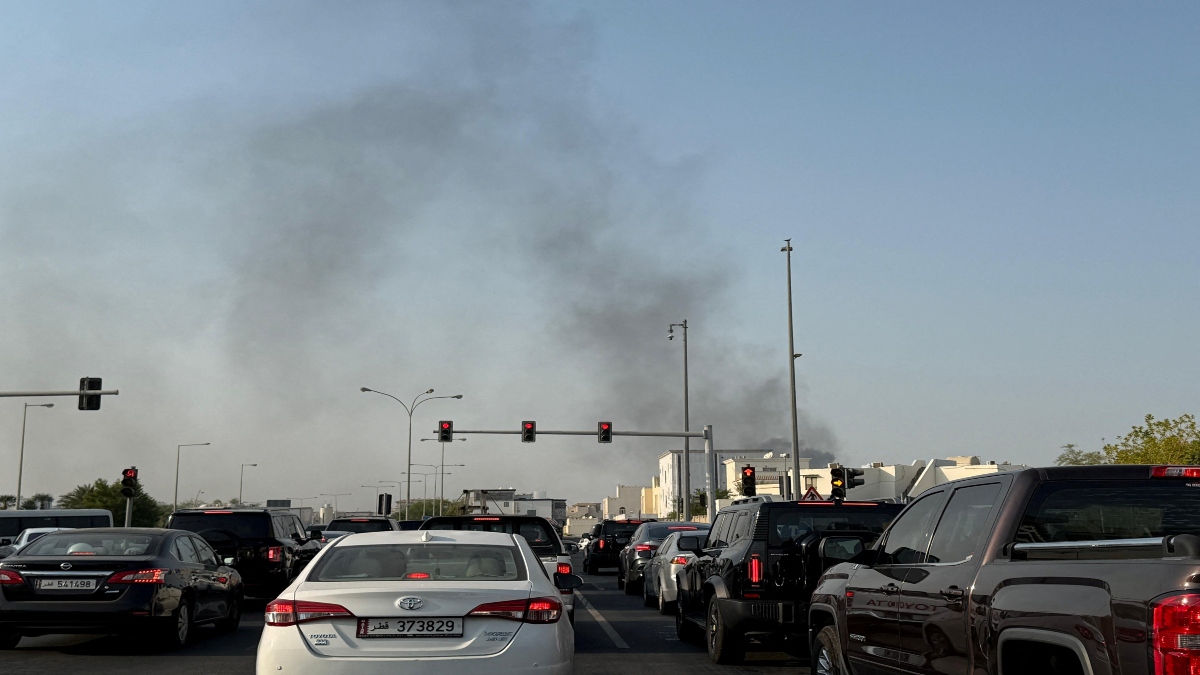 "Israel targets top Hamas leaders in Doha; Qatar, Iran condemn strike as violation of sovereignty")
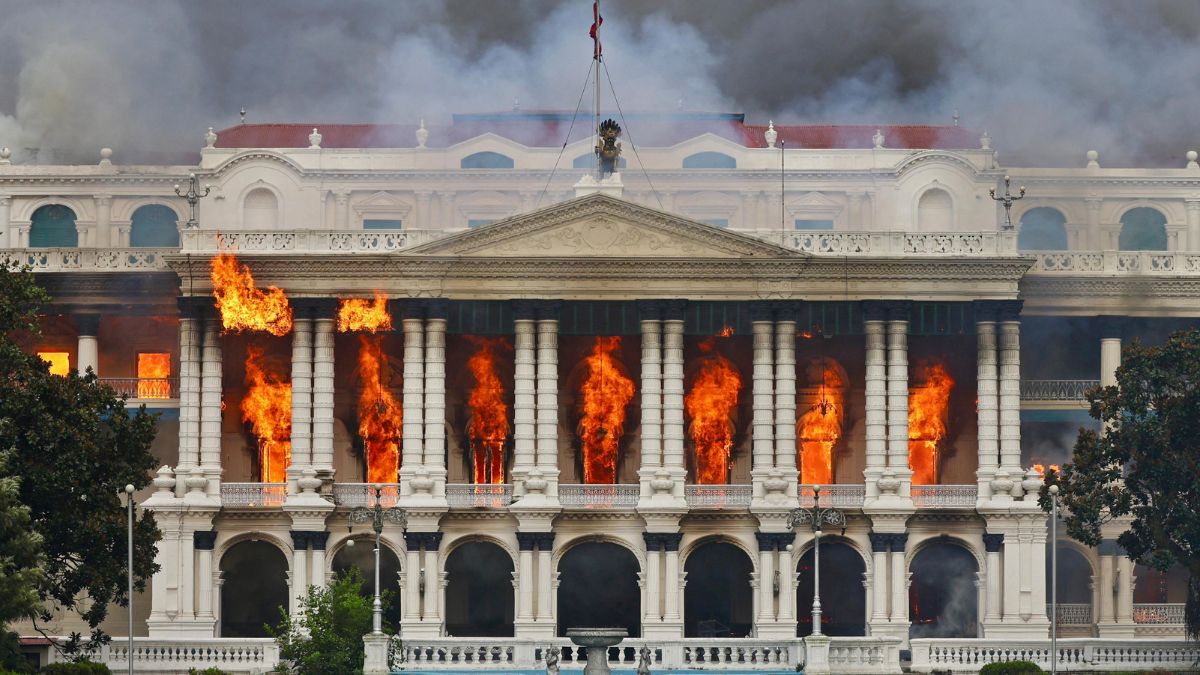 "Nepal: Oli to continue until new PM is sworn in, nation on edge as all branches of govt torched")
 "Who is CP Radhakrishnan, India's next vice-president?")
 "Israel informed US ahead of strikes on Hamas leaders in Doha, says White House")



](https://images.firstpost.com/wp-content/uploads/2011/07/factory380.jpg)