 "No winner's curse: Spectrum auction will separate men from boys in telecom")
Now that the spectrum auctions for 900 MHz and 1,800 MHz bands are over, the breast-beating has begun. Talk of the winner’s curse - where operators bid high and then struggle to make ends meet - has begun.
Everyone thinks the high bid prices will show up as excess debt on mobile companies’ balance-sheets. Marten Pieters, CEO, Vodafone India, is quoted by BusinessLine as saying, “We have opened the door to the next generation of mobile technology, 4G, but much of it (bid amount) will end up as debt on the balance sheets of the mobile operators. Such high industry indebtedness will hurt operators’ ability to invest in the rollout of new technologies and invariably result in higher prices and reduced service levels for consumers.”
Others are also hinting darkly at higher tariffs. Rajan Mathews, Director General of the Cellular Operators’ Association of India, says “the total bid amounts seem to be very high,” and “would have an impact on the operators’ margins…”. When operators talk of margins, it means they will probably hike tariffs to pass on costs.
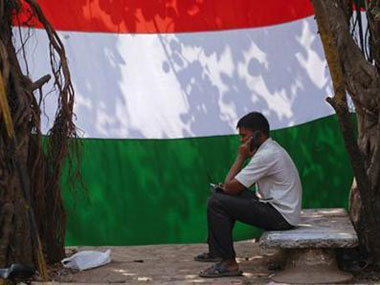
[caption id=“attachment_76361” align=“alignleft” width=“380”]
 Reuters[/caption]
While no one can rule out a short-term impact on balance-sheets and tariffs, let’s be clear: there will be no long-term winners’ curse or big tariff hikes just because of this auction. If there is a curse, it will be one resulting from faulty financial planning by some telecom companies, not because of the prices of spectrum.
The top four bidders - Bharti Airtel, Vodafone, Idea Cellular and Reliance Jio - between them bid for nearly Rs 60,000 crore worth of spectrum , as against the total of Rs 61,162 crore received. All of them are financially strong and long-term players. While Reliance Jio, part of Mukesh Ambani’s Reliance Industries, need not raise debt at all as the parent is sitting on Rs 90,000 crore of moolah, Vodafone, Bharti and Idea have enough depth to raise the resources they need.
What the auction has really done is set the stage for an industry shakeout - with the non-bidders and weak players set to be bought out or bow out. The winners will, thus, face not a curse, but the prospect of consolidation and growth with lower competition - and presumably better quality of services.
The second reason why there will be no winner’s curse is the stretched out payment system offered by the government. Of the nearly Rs 60,000 crore the Big Four bid for, they will have to pay upfront less than Rs 18,000 crore this year. The rest can be paid over 10 years. This is hardly a recipe for overloading oneself with debt.
The third point, tariffs, is this: tariffs can rise in small doses, but if another big operator - Reliance Jio - is going to enter the picture later this year, competition will keep tariff increases limited. In fact, they may either stagnate or move up only in some regional segments.
This does not mean business will be bad, only tougher. More competition will force the easy money out of telecom - and this is good. It will mean most promoters will have to rejig their finances and worry about debt.
This may seem to bear out what Marten Pieters said, but the point about debt is that it is really a choice made by operators. Companies take on more debt when they think returns are higher; they take on more equity when they think returns in the medium term will be lower.
The real issue is that Indian promoters have been carelessly taking on debt due to the existence of crony capitalism. Why put in your own money when banks can be politically pressured to extend unlimited debt and also bear the risks of business failure?
The point is the spectrum bid prices should force a rethink in India Inc on how they should capitalise themselves. Typically, Indian promoters put in very little of their own money and thus enjoy the best of both worlds - if a business does well, they collect the gains; if it fails, banks are stuck with bad loans.
It is high time Indian promoters started realising that it is no longer possible to eat their cake and have it too. This may call for hard decisions like divesting weak businesses or diluting their own stakes to bring in new investors.
The success of the spectrum auction is yet another signal that the free lunch for Indian promoters is over.
There will be no winners’ curse for well-capitalised performers. There will be a promoters’ curse in case they think all this will be paid for by bankers with the milk of human kindness sloshing inside them.
It won’t happen.