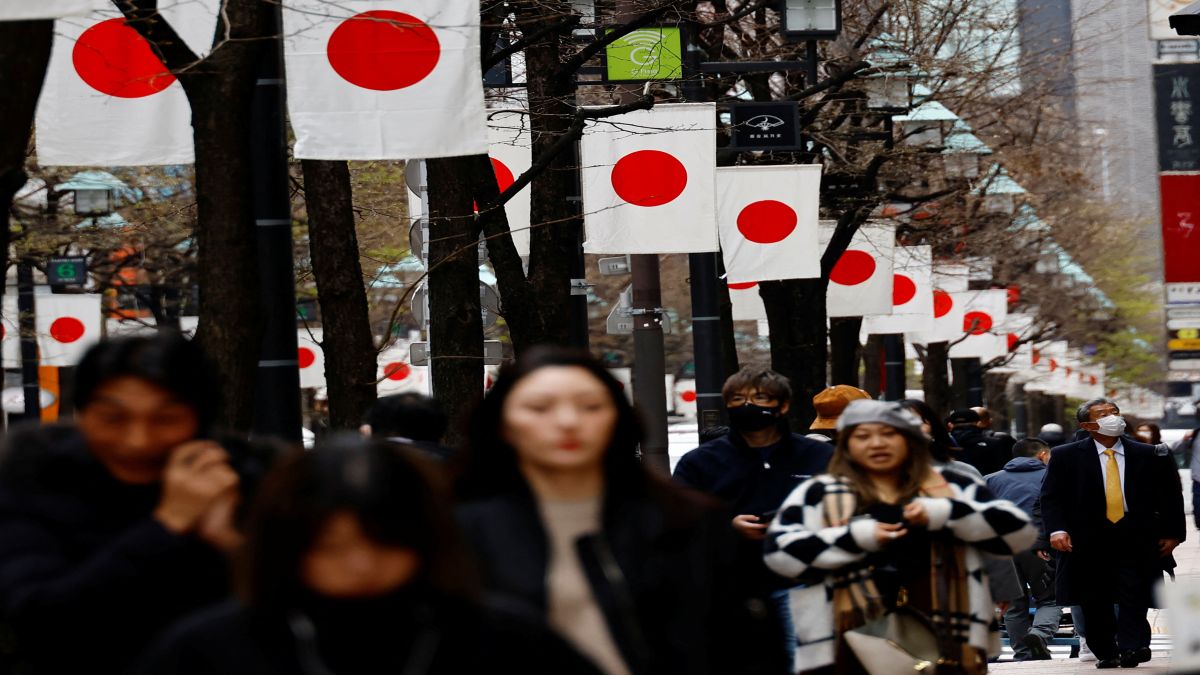
 "Representative image.")
The Bank of Japan (BOJ) has flagged growing upside risks to inflation from rising global oil prices and a persistently weak yen, warning that structural shifts in corporate behaviour could make price pressures more durable than in the past.
In a detailed staff paper released on Monday, the central bank said Japan’s underlying inflation—defined as price increases driven by domestic demand rather than temporary cost shocks—may now respond more strongly to external factors such as energy prices and currency movements.
The BOJ noted that firms are increasingly willing to raise prices and wages, marking a significant departure from Japan’s long-standing deflationary mindset. This shift could amplify the impact of imported inflation, particularly as a weaker yen pushes up the cost of fuel, raw materials, and food imports.
“Upward pressure on prices through this channel may have strengthened compared with the past,” the BOJ said, adding that corporate pricing strategies are becoming more flexible amid tightening labour market conditions.
While higher crude oil prices could weigh on overall economic activity, the central bank said they may also lift inflation expectations among households and businesses. This could create a feedback loop, where expectations of higher prices lead to actual price increases, reinforcing underlying inflation.
The report also warned that even temporary supply-side shocks—such as recent increases in food prices—could have a lasting impact if they become embedded in consumer expectations.
Quick Reads
View AllThe BOJ formally exited its decade-long ultra-loose monetary policy in 2024 and has since maintained a gradual approach toward policy normalisation. It has made clear that further interest rate hikes will depend on whether underlying inflation stabilises sustainably around its 2 per cent target.
Addressing criticism that its concept of underlying inflation lacks clarity, the BOJ outlined its analytical framework. It looks at the difference between actual economic output and potential output, tracks various price measures—including a new index that removes temporary factors like government subsidies—and studies surveys about what people expect for future inflation.
Its composite indices suggest that inflation expectations are currently in the range of 1.5 per cent to 2.0 per cent, indicating gradual progress toward the target.
The central bank added that Japan’s output gap is improving, labour market conditions remain tight, and wages are rising moderately—all signs that demand-driven inflation is strengthening.
However, the BOJ stressed that it will continue to closely monitor whether inflation becomes “firmly anchored” at around 2 per cent, a crucial condition for sustaining its policy tightening cycle.