One of the enduring mysteries of Bollywood is the fact that Dev Anand had such an intense fan following right up until his passing on Saturday – despite the fact that he hadn’t delivered a hit film in over a generation. It is perhaps the consideration that one doesn’t speak ill of the dead that inhibited fans and the film fraternity from critiquing his career – and sticking to banalities about the “evergreen hero” - when they heard of his passing. But on the morning after, there are stray attempts to reconcile the legend of Dev Anand at his peak with the shadow of his former self that audiences got to see over the past 30-plus years. Over at The Indian Express, film critic
Shubra Gupta recalls
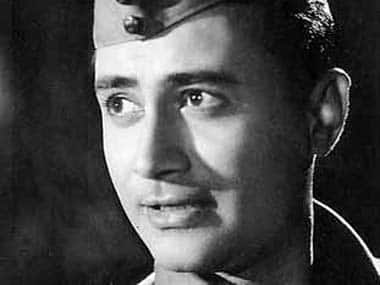
sitting through two-and-a-half “execrable” hours watching Dev Anand’s directorial disaster Chargesheet, and wondering at the end of the film whom she could arrest for this “misguided wanderings of a mind mired in a fugue, floundering to stay afloat.” [caption id=“attachment_148278” align=“alignleft” width=“380” caption=“There was a stuck-in-the-60s quality to the films that Dev Anand made. Image Courtesy CNN IBN”]
 [/caption] Contemporaneous reviews of Chargesheet were equally searing.
Amod Mehra said
he caught the “first day first show” of the film for two reasons: “I’m still a big Dev Anand fan, and I was not too sure if it would have a second show!”
Another critic noted
that Dev Anand’s “track record in recent years stops us from asking for a story, but nobody knew that he will treat it as a privilege.” Dev had, the critic said, “become more ruthless” – on the audience - as a storyteller.
A third critic felt
that the film was either scripted in the 1980s – or Dev Anand had opted to set his story in an ethos he was comfortable with. “It’s not just the wardrobe, the locations or the choreography which has the retro look. It’s the camera angles, the lighting and the stereotypical characters which belong to another era. Chargesheet spoofs Bollywood without intending to and generates huge laughs in the process.” There was a curious self-indulgence about Dev’s directorial ventures, and to many, it appeared that he was making films for his own gratification. His last commercial hit film – Des Pardes - was delivered in 1978. And most of his production house projects fared equally poor at the box office. As Shubra Gupta notes, “Dev Anand, the filmmaker who gave us films with heart, had long back morphed into Dev Anand, the evergreen impresario who was determined to lurch from one project to another, projects bereft of any semblance of story-telling and sense, featuring faceless, talent-less extras, there just to flaunt cleavage and leg.” Precisely how Dev managed to churn out so many flops remains a mystery to many. As Binoy Prabhakar writes in the Economic Times, even film trade analysts are befuddled. Taran Adarsh says he asked Dev the same question, and his response was: “Log mujhe pyar karte hain” (People love me). The only reasonable explanation that analysts offer is that
Dev Anand “had money to squander”
because over a career that spanned 65 years, Dev had a good run for nearly 40 years, during which time he delivered 16 hit films, a few of which were blockbuster hits. In a sense, therefore, the outpouring of grief over Dev Anand’s passing is in many ways about nostalgia for an earlier time. Even critics who panned his films felt compelled to sit through them out of a sense of nostalgia. For all her searing criticism of Chargesheet, Gupta notes that she sat through the film. “Because of the man who was at the centre of it. Him and me, we had a longstanding covenant, forged in steel and love, tempered by affection and passion, of a kind that can only happen at the movies. And of the kind that could be engendered by the one and only Dev Anand.”
[/caption] Contemporaneous reviews of Chargesheet were equally searing.
Amod Mehra said
he caught the “first day first show” of the film for two reasons: “I’m still a big Dev Anand fan, and I was not too sure if it would have a second show!”
Another critic noted
that Dev Anand’s “track record in recent years stops us from asking for a story, but nobody knew that he will treat it as a privilege.” Dev had, the critic said, “become more ruthless” – on the audience - as a storyteller.
A third critic felt
that the film was either scripted in the 1980s – or Dev Anand had opted to set his story in an ethos he was comfortable with. “It’s not just the wardrobe, the locations or the choreography which has the retro look. It’s the camera angles, the lighting and the stereotypical characters which belong to another era. Chargesheet spoofs Bollywood without intending to and generates huge laughs in the process.” There was a curious self-indulgence about Dev’s directorial ventures, and to many, it appeared that he was making films for his own gratification. His last commercial hit film – Des Pardes - was delivered in 1978. And most of his production house projects fared equally poor at the box office. As Shubra Gupta notes, “Dev Anand, the filmmaker who gave us films with heart, had long back morphed into Dev Anand, the evergreen impresario who was determined to lurch from one project to another, projects bereft of any semblance of story-telling and sense, featuring faceless, talent-less extras, there just to flaunt cleavage and leg.” Precisely how Dev managed to churn out so many flops remains a mystery to many. As Binoy Prabhakar writes in the Economic Times, even film trade analysts are befuddled. Taran Adarsh says he asked Dev the same question, and his response was: “Log mujhe pyar karte hain” (People love me). The only reasonable explanation that analysts offer is that
Dev Anand “had money to squander”
because over a career that spanned 65 years, Dev had a good run for nearly 40 years, during which time he delivered 16 hit films, a few of which were blockbuster hits. In a sense, therefore, the outpouring of grief over Dev Anand’s passing is in many ways about nostalgia for an earlier time. Even critics who panned his films felt compelled to sit through them out of a sense of nostalgia. For all her searing criticism of Chargesheet, Gupta notes that she sat through the film. “Because of the man who was at the centre of it. Him and me, we had a longstanding covenant, forged in steel and love, tempered by affection and passion, of a kind that can only happen at the movies. And of the kind that could be engendered by the one and only Dev Anand.”
Movie mystery: Dev remained a hit even when his films flopped
FP Staff
• December 5, 2011, 14:08:03 IST
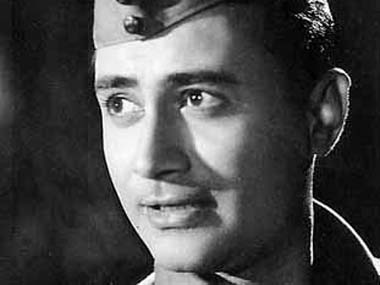
Dev Anand represented our nostalgia for an earlier Age of Innocence. Evidently, he too was trapped in a cinematic past.
Advertisement
 "Movie mystery: Dev remained a hit even when his films flopped")
End of Article