

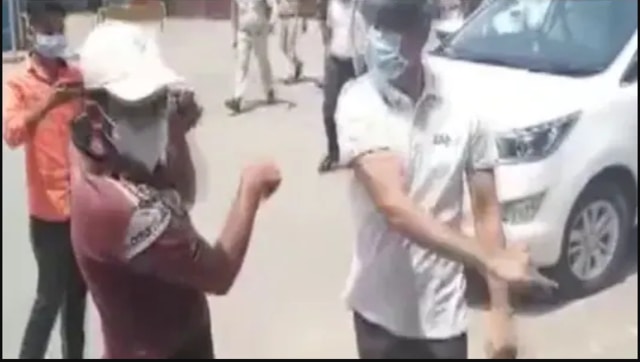
 "What can we do about our uncivil servants?")
Sometimes condemnations are stunning in their timidity. And they lead to more questions rather than provide succour to the outraged. The IAS Association’s criticism this week of the actions of one of its own in Chhattisgarh on 23 May, hard on the heels of another IAS officer’s excessive actions in Tripura less than a month ago on 26 April, epitomises this tendency to underwhelm. “The IAS Association strongly condemns the behaviour of Collector Surajpur, Chhattisgarh. It is unacceptable and against the basic tenets of the service and civility. Civil servants must have empathy and provide a healing touch to society at all times, more so in these difficult times,” it thundered. Or rather, coughed. And stayed silent about what to do about their uncivil brethren. After the social media storm caused by the viral video of the IAS officer Ranbir Sharma delivering a stinging roundhouse slap — akin to a forehand tennis shot — across the cheek of a young man in full view of properly deferential policemen (who later added a few lathi blows too for good measure), Chief Minister Bhupesh Baghel also (re)acted decisively. Sharma was… transferred. This egregious abuse of power should have led to strong action. But it is hard to deem a move from the boondocks of Surajpur in north Chhattisgarh to the capital Raipur 350 kilometres away as a punishment of any kind. Only initial reports said he was suspended; he has, in fact, been attached to the state secretariat as a “joint secretary in-waiting”, i.e, without any responsibility. Last month the other IAS officer, Shailesh Kumar Yadav, strode into two wedding celebrations that had flouted COVID-19 protocols on the duration of festivities and number of guests, and also embarked on remarkably similar behaviour. On videos, he was seen slapping guests and ordering those ever-willing accompanying policemen to use their lathis creatively. Curiously, both officers in varying degrees also justified their actions. Ensuring compliance with Covid protocols was their common excuse. But the inevitable question arises: are slapping and energetic wielding of lathis prescribed alongside fines and other legal methods as acceptable ways to make sure Covid protocols are followed? Is this ‘civil’ service behaviour? Despite being supposedly bound (and protected) by the Central Civil Service Conduct Rules, many IAS officers cock a snook at them. Corruption at all levels of the bureaucracy, for instance, is a malady many prime ministers and chief ministers have tried to eradicate with only partial success and inevitable relapses. But the tendency for random violence is not on their radar. It is true that we Indians — at least in India — are notoriously unwilling to follow laws, especially those that we think hinder our lives and livelihoods. Traffic rules are a case in point. This pandemic has shown we are equally averse to simple precautionary measures like wearing masks and keeping a 6-feet distance from others unless we are coerced by means of lockdowns and curfews. But delivering this kind of summary “justice” — slaps and lathi blows — is not expected of those upholding the law and running the administration. That also shows the same jugaad instinct, besides enhancing the aura of extrajudicial power that comes with riding around in a big white SUV with the word “Collector” written in shiny brass on a regal red plate. In 2019, a video went viral of West Bengal IAS officer Nikhil Nirmal and his wife assaulting a young man who allegedly posted lewd remarks about the lady. He could be heard saying. “If I can bring you to a police station in half an hour, I can kill you at your home.” He was, once again, only transferred and continues to be in service. And his wife even defended their actions. She posted, “If you want to remove him, remove him. But do not disturb a family man. Yes, we have slapped and kicked the man. Any other person would have killed such men. My husband told me during marriage that he will take care of me…protect me. And he did. I am proud of him.” There is clearly something seriously wrong in the mindset of the ruling bureaucracy. There are two solutions to this issue, and perhaps need to be implemented in tandem. The first is a robust application of the relevant constitutional provisions to deal with errant, uncivil, and often criminal, government servants. The second is pre-emptive action already taken by governments in other countries, in the form of psychological evaluation before inducting people. The Constitution’s Article 311(1) directs that a civil servant cannot be dismissed or removed by any authority subordinate to the one by which he was appointed. Art 311(2) lays down that a civil servant cannot be removed, dismissed or reduced in rank unless he has been given a reasonable opportunity to show cause against the action proposed to be taken against him. That answers two questions: why IAS officers are ‘investigated’ by IAS officers and why no precipitate action can be initiated – i.e., no instant sacking. But that also leads to a public perception that the IAS acts as a cabal and exonerates its own (and possibly collects IOUs to be used if tables are turned) or delays proceeding till the official retires or the public simply forgets! The fact is Article 311 has provisions for dismissal of officers or reducing them in rank—both counted as “punishment” by law — but there has to be a decisiveness among the bureaucrats and their political bosses to see it through. Merely making certain uncivil servants take compulsory retirement is neither deemed punishment by law nor does it deter younger officers from straying. A subclause of Article 311 (1) also says “when an authority empowered to dismiss or remove a person or to reduce him in rank is satisfied that for some reason, to be recorded by that authority in writing, it is not reasonably practicable to hold such enquiry”, then an officer can be dismissed forthwith, as happened recently in the case of Inspector Sachin Waze in Maharashtra. In 2019, at least 27 Indian Revenue Service officers were removed from service. Corruption was the implicit reason. The same year, the government told the Rajya Sabha that two IAS officers had been dismissed from service on corruption charges in the last three years and sanction has been granted for the prosecution of 16 IAS, 2 IPS and 7 Indian Forest Service (IFoS) officers. The public waited for more such decisive action but they petered off. It surely cannot be that all errant officials had been found and dealt with; so why did this “cleansing of the stables” stop after relatively few instances? And why do such “Swachch Bharat” drives only focus on corruption when there are clearly many other areas in which government officials cross the line? The IAS officers I spoke to this week pointed out that there “only a few bad eggs” among their ranks. They also emphatically said that slapping, kicking, and other such actions are neither taught nor rationalised as acceptable at any stage of induction or training. Dismissing them for such actions would send out the right message to the other officials about their conduct. But they also said it is the political class — the prime minister, the relevant cadre-controlling central minister and chief ministers — who have to follow through with dismissals, after the due procedure, of course. Most times too many “other” factors weigh in (and against) taking any really decisive action unless the violation is far too big to ignore—such as a multi-crore scam or, say, a terror charge. On the second possible remedy, after clearing the main examination conducted by the Union Public Service Commission for all-India services, the interview, is supposed to be (theoretically) a “personality test” to assess suitability. But quite evidently, thanks to intensive ‘coaching’, most candidates know exactly what to say to clear this ‘test,’ regardless of their real mindsets. Besides, being interviewed by retired people from the same system — who may have used or condoned the same methods while in service — is not a very reliable way to weed out those with such tendencies. And once admitted into government service, there is no real deterrent anymore, as bureaucrats are hardly ever cashiered for anything except large-scale corruption. But the British civil service, from which the IAS claims its lofty lineage, makes applicants go through a proper behavioural assessment these days and sit for a business behaviour test before clearing them for appointment to any civil service. According to its website, it is to ensure it gets “employees with a high ability to handle various situations in a specific manner.” All civil service entrants go to Lal Bahadur Shastri National Academy of Administration (LBSNAA) for a foundation course after which IAS probationers stay on for more training. They are, in fact, taught “acceptable” behaviour at LBSNAA, I am told. But if there is violence latent in a person, no amount of courses or counselling can guarantee change. A proper, professionally conducted psychological evaluation can, however, identify people with a penchant for violence and moral ambivalence right at the outset, though whether such a proviso would stand up in court is moot in our nation of litigious bureaucrats and proto-bureaucrats. Even now court cases also add to political reluctance to sack rather than transfer. Violence is endemic in Indian society, as we see every day, but if those who are supposedly pillars of “civil society” behave in a brutish manner, there can never be a change for the better without a zero-tolerance policy on abuse of power and all other malpractices, not just corruption. Where authenticated video footage provides incontrovertible proof, inevitable exoneration by probe panels or soft pedalling by political leadership can no longer be acceptable. But this can only happen if there also is a push for zero tolerance from within the civil services. Bureaucrats—especially retired ones—do not pull their punches these days when it comes to pointing out shortcomings on a variety of issues. A word (rather than just a cough) from the IAS Association and other such bodies on what to do with uncivil servants would be a nice start.
Arbitrary slaps and lathi blows by bureaucrats cannot be allowed to go unpunished any longer
Advertisement
End of Article

 "Charlie Kirk, shot dead in Utah, once said gun deaths are 'worth it' to save Second Amendment")
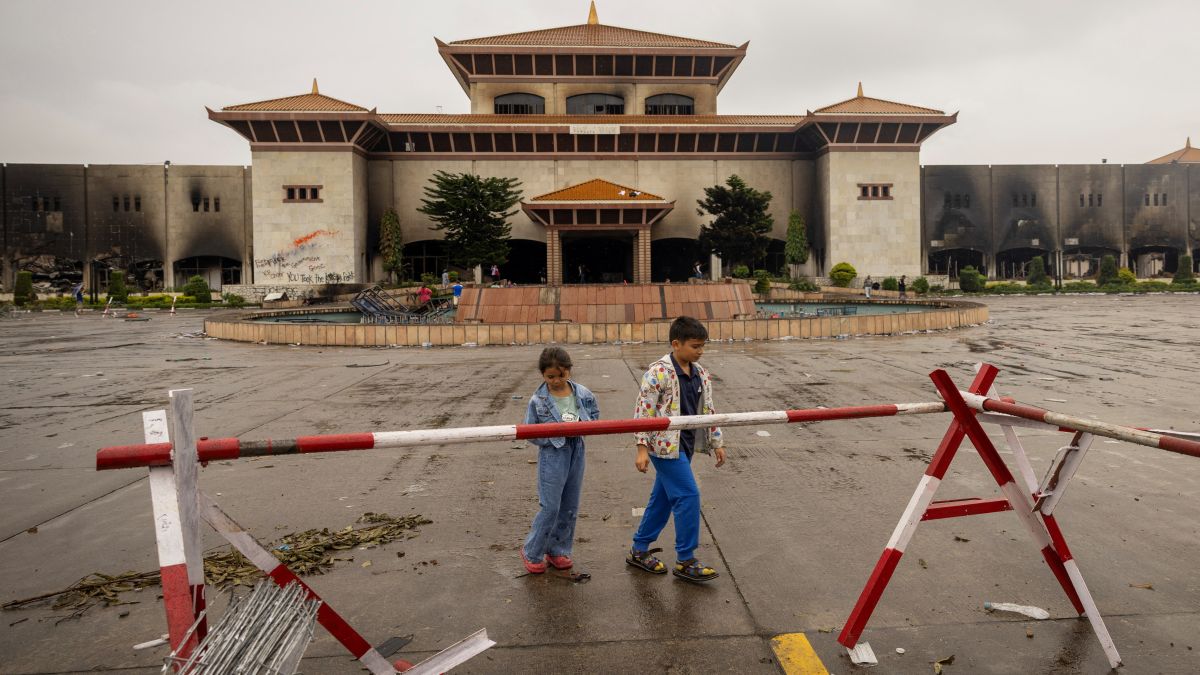 "From governance to tourism, how Gen-Z protests have damaged Nepal")
 "Did Russia deliberately send drones into Poland’s airspace?")
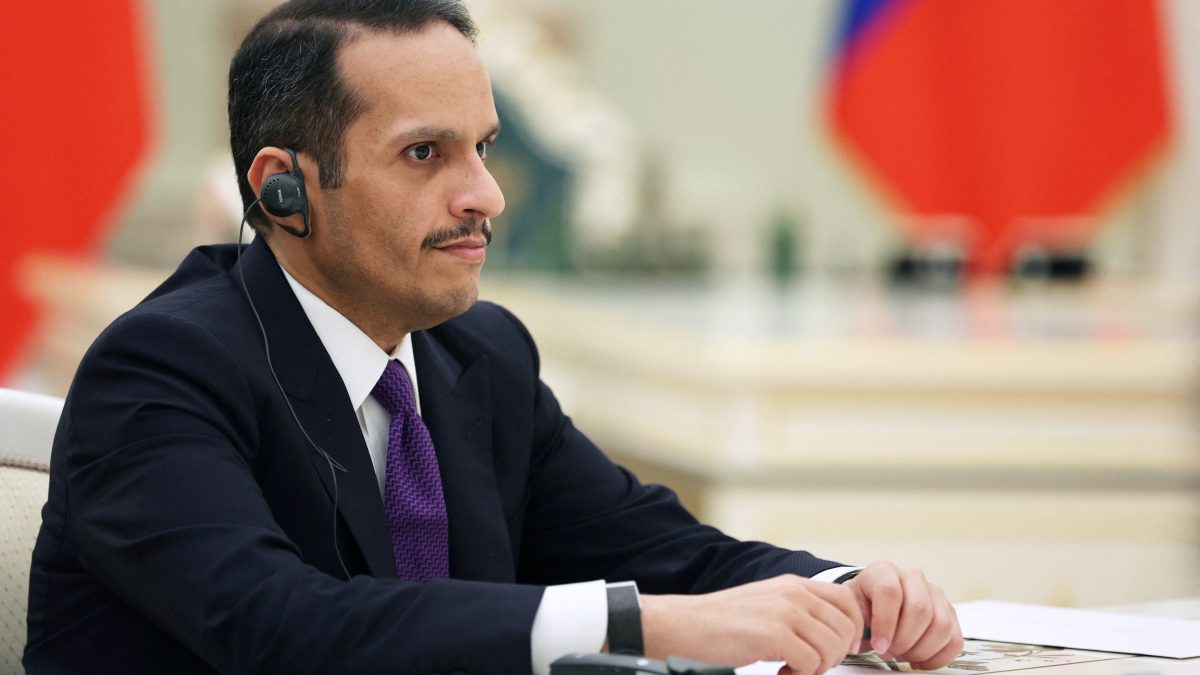 "Netanyahu ‘killed any hope’ for Israeli hostages: Qatar PM after Doha strike")
 "Charlie Kirk, shot dead in Utah, once said gun deaths are 'worth it' to save Second Amendment")
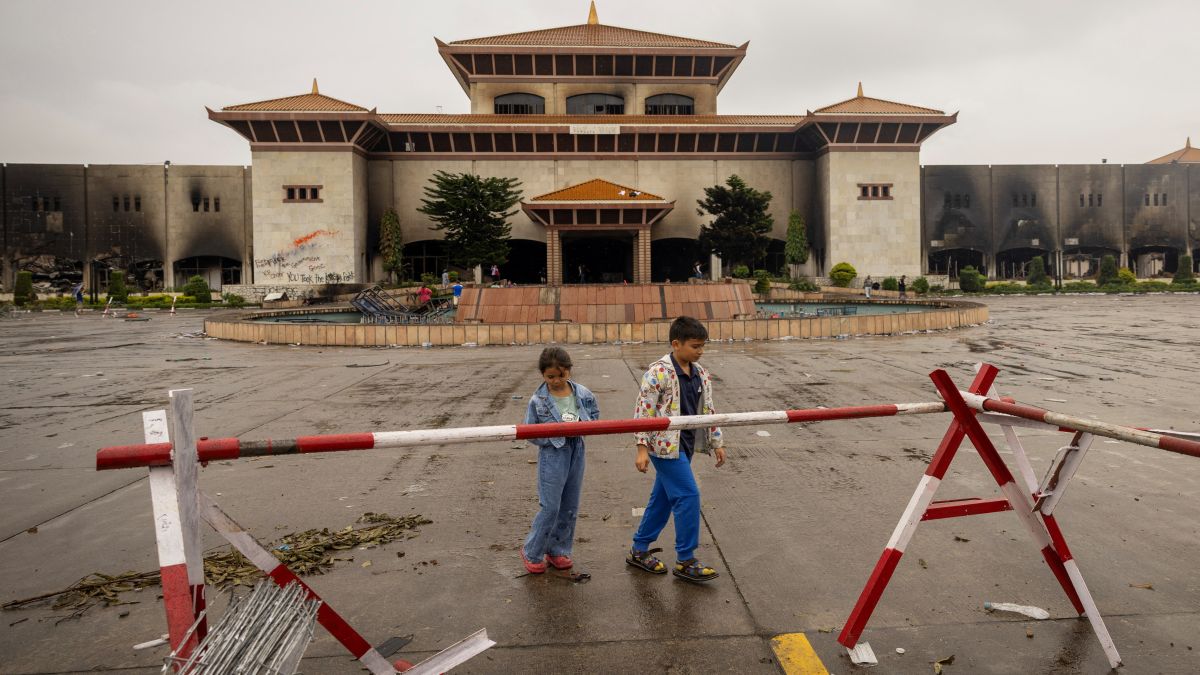 "From governance to tourism, how Gen-Z protests have damaged Nepal")
 "Did Russia deliberately send drones into Poland’s airspace?")
 "Netanyahu ‘killed any hope’ for Israeli hostages: Qatar PM after Doha strike")



