 "Unequal Mumbai: Now, loos for your pet dog!")
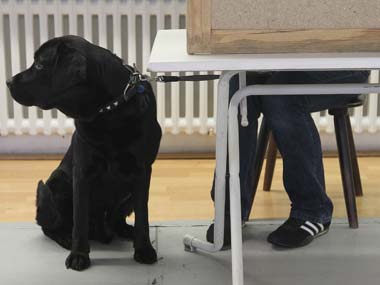
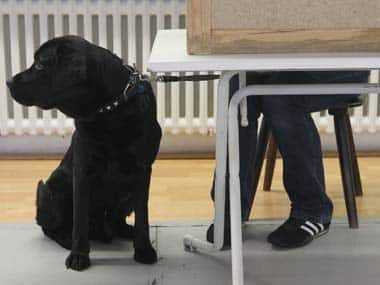
Mumbai is likely to get toilets for dogs. The above development comes in the wake of a civic official telling Saamana, the Shiv Sena mouthpiece, that it was the best way to deal with the menace of dog poo on the streets and sidewalks. What is disappointing though is their shortlist for the likely locations. Marine Drive, Worli Seaface and Bandra are areas for the genteel and the well-heeled. While no decision has been taken on dog loos yet, in Mumbai civic choices are made essentially for the rich and mighty and it could soon become a reality. Whether it would work is another question. [caption id=“attachment_289380” align=“alignleft” width=“380” caption=“Now, dog toilets in Mumbai? Getty Images”]
 [/caption] The locations suggested indicate how loos for pets is an idea smacking of the class thing. Those who walk on the Marine Drive, Marine Lines, or the Worli Seaface are the well-heeled. They combine their walk with the canine’s morning call because they all live in flats, and even if it’s large, it has to be taken to the streets. Those who frown at these dogs easing on the sidewalks also belong to the same stratum except that they don’t have dogs. So, when you cannot discipline the dog-owners to carry the scoop and plastic bags, then you think of dog toilets. It satisfies both sections of society, a class which is not only influential but also vociferous. Since this idea is from an unidentified official of the Municipal Corporation of Greater Mumbai, a small digression, but related to toilets, is in order. It is about toilets for humans who outnumber the pets. There are people living in chawls who make do with one toilet at the end of the verandah or balcony for each floor. Then there are slums where, as per official estimates, one toilet seat is all that they get for about 100 to 850 users while slum studies by Tata Institute of Social Sciences have revealed ‘up to 1,500’ users per seat. Worse, these are ill-maintained or not maintained at all. They have little or no water supply and its use is a daily inconvenience where people have learnt to time their bowel movements. Women often time it for the afternoons. The public toilets at places like bus stands and railway stations are a misery and women have been crying out for usable toilets but to no avail. Contrast this with a two-bedroom apartment – two toilets for the family, perhaps one of them attached, taking up about 15 percent of the carpet area which is equal to a slum dwelling. Water on the tap, and clean, someone coming in to keep it sparkling. In the backdrop of such stark disparity, it’s unfortunate that a civic official has thought of a solution for dealing with dog poo. Now, back to the doggies. The city has not come to grips with the canine issue at all. Of course, like most cities in India. Either the residents don’t care about them, or if they do, they care about their adorable pet, often in plural, but not about the mess they create on the streets. Anyway, how often do Mumbai streets get cleared of garbage, including dog poo at all? How many canines are there in Mumbai? According to the same report today, the number is 27,146 while those holding licences are a mere 7,007. Media reports in 2008 with regard to a judgement by a Constitutional bench of Bombay High Court mentioned around 70,000 strays. A year earlier, when the then civic commissioner, Jairaj Pathak, had advocated a return to killing of strays by the civic body, the suggestion was the city had as many as two lakh of them. A common sense question would be this: The city has 27,000 plus domesticated dogs and they can be trained to use the dog toilets but what about the 70,000 or two lakh – you take the pick - stray dogs? Who is going to teach and mind their toilet practices? Could that be a major civic programme to be outsourced to contractors and NGOs with a budget that would make quite a few happy? The common sense inference is that the civic authorities have two categories in mind – the classy dogs and the street dogs – much like the posh citizens and the slum dwellers. Dogs as an issue, especially the strays, have been, pardon the pun, dogging this city. After Pathak suggested that dogs be killed as they were between 1987 and 1994, there was an outcry from the dog lovers, some of them so genuine that they spend time, money and effort on the canines of the streets. After 1994, they adopted a policy of sterilising them, but when contracted out, bills kept arriving at the civic headquarters and apparently the dogs continued to multiply. The High Court, of course, said that strays or abandoned pets, including those who cause nuisance by barking all night can be subjected to discretionary execution, in other words, culled. This order was of course, appealed against, because the judgement did not define what ‘nuisance’ was. One supposes it includes shitting in public places. Now, the order of 2008 has been appealed against the High Court order and has been posted to September for hearings. The Animal Welfare Board of India, according to media reports, contends that unless ‘nuisance’ was properly defined, culling cannot take place. A parting word: dog toilets seem to be big business overseas. A goggle search shows about 11,900,000 links in 0.44 seconds.
Mahesh Vijapurkar likes to take a worm’s eye-view of issues – that is, from the common man’s perspective. He was a journalist with The Indian Express and then The Hindu and now potters around with human development and urban issues.