 "Hawk-eye view: Why cricket is different from tennis")
“If tennis had been Indian cricket, India would have blocked DRS and Andy Murray would still be playing,” tweeted one of my favourite cricket writers David Hopps during Wimbledon 2012. As far as this writer is concerned, this quick micro-take from Mr Hopps is a rather one-dimensional point of view, which the DRS kerfuffle is anything but. The great thing about the aforementioned micro-blogging platform is it’s perfect for pithy, non sequitur-ish word-bombs on various matters in the news. The fast-moving and far from thoughtful medium, however, is most unsuitable for anyone who cares to engage in a nuanced discussion on a layered topic like, say, DRS. For that one needs a column, at the very least. And an open mind. [caption id=“attachment_377560” align=“alignleft” width=“380”]
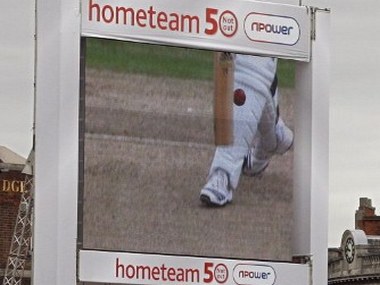
 Ball tracking technology works so beautifully in tennis because it is employed to decide something quite elementary, as compared to the onerous responsibilities it is burdened with in cricket. AFP[/caption] Fortunately for the Decision Referral System (DRS) in tennis, it’s not cricket. The reason being DRS’ job in tennis is much simpler; all it needs to do is decide whether the ball is ‘in’ or ‘out.’ Speaking of ins and outs, cricket sanctioned the use of technology to determine the fate of line calls way back in 1992. Ironically, the first player to be dismissed with the help of the earliest avatar of DRS was Sachin Tendulkar. (Ironic because some people are of the opinion that Tendulkar is one of the Indian players who opposed the wholesale implementation of ball-tracking based DRS in cricket today.) For those who are in a mood to really see, the reason ball tracking technology works so beautifully in tennis is because it is employed to decide something quite elementary, as compared to the onerous responsibilities it is burdened with in cricket. If cricket were like tennis, this author is certain India wouldn’t have too many problems with DRS. Come to think of it, considering how many football games have been ruined due to the absence of DRS, it’s fair to say Mr Hopps would be on a better wicket if he took a swipe at football’s governing body (FIFA) for mulishly resisting the use of technology to decide whether or not the ball has crossed the goal-line instead. Using DRS in tennis to slag ‘Indian cricket’ is being a touch too simplistic and, well, just not cricket. Fact of the matter is DRS in tennis and cricket are two completely different ball games. Here’s a quick layman’s guide to why. In tennis, high speed cameras are employed to help umpires spot where the ball has bounced. In cricket, Hawk-eye’s technology is being called upon to predict the path the ball will take after it has bounced. Let’s get that clear: In cricket, Hawk-eye’s technology is being called upon to predict the path the ball will take after it has bounced. There is a big dissimilarity between the two outcomes Hawk-eye’s cameras are being asked to judge. The ‘pitch map,’ which is a graphical representation of the places the bowler lands the ball, is the closest thing in cricket to what Hawk-eye is capturing for umpires in tennis. The only thing of consequence when it comes to DRS in tennis is the point of contact between the court and the ball. In cricket, on the other hand, Hawk-eye’s job is to figure out what might happen after the point of contact. One is like mathematics, while the other more akin to astrology. Be that as it may, is DRS good for cricket? Of course it is (even though is it based on a somewhat flawed Hawk-eye and Hot Spot). But Indian cricket is not the sole reason this prohibitively expensive referral system — being hard-sold to the cricket world by a British and Australian company, no less — hasn’t been implemented. And Twitter is hardly the best place to understand why. The writer tweets
@Armchairexpert
. You can follow him if you’re into that sort of thing.
Ball tracking technology works so beautifully in tennis because it is employed to decide something quite elementary, as compared to the onerous responsibilities it is burdened with in cricket. AFP[/caption] Fortunately for the Decision Referral System (DRS) in tennis, it’s not cricket. The reason being DRS’ job in tennis is much simpler; all it needs to do is decide whether the ball is ‘in’ or ‘out.’ Speaking of ins and outs, cricket sanctioned the use of technology to determine the fate of line calls way back in 1992. Ironically, the first player to be dismissed with the help of the earliest avatar of DRS was Sachin Tendulkar. (Ironic because some people are of the opinion that Tendulkar is one of the Indian players who opposed the wholesale implementation of ball-tracking based DRS in cricket today.) For those who are in a mood to really see, the reason ball tracking technology works so beautifully in tennis is because it is employed to decide something quite elementary, as compared to the onerous responsibilities it is burdened with in cricket. If cricket were like tennis, this author is certain India wouldn’t have too many problems with DRS. Come to think of it, considering how many football games have been ruined due to the absence of DRS, it’s fair to say Mr Hopps would be on a better wicket if he took a swipe at football’s governing body (FIFA) for mulishly resisting the use of technology to decide whether or not the ball has crossed the goal-line instead. Using DRS in tennis to slag ‘Indian cricket’ is being a touch too simplistic and, well, just not cricket. Fact of the matter is DRS in tennis and cricket are two completely different ball games. Here’s a quick layman’s guide to why. In tennis, high speed cameras are employed to help umpires spot where the ball has bounced. In cricket, Hawk-eye’s technology is being called upon to predict the path the ball will take after it has bounced. Let’s get that clear: In cricket, Hawk-eye’s technology is being called upon to predict the path the ball will take after it has bounced. There is a big dissimilarity between the two outcomes Hawk-eye’s cameras are being asked to judge. The ‘pitch map,’ which is a graphical representation of the places the bowler lands the ball, is the closest thing in cricket to what Hawk-eye is capturing for umpires in tennis. The only thing of consequence when it comes to DRS in tennis is the point of contact between the court and the ball. In cricket, on the other hand, Hawk-eye’s job is to figure out what might happen after the point of contact. One is like mathematics, while the other more akin to astrology. Be that as it may, is DRS good for cricket? Of course it is (even though is it based on a somewhat flawed Hawk-eye and Hot Spot). But Indian cricket is not the sole reason this prohibitively expensive referral system — being hard-sold to the cricket world by a British and Australian company, no less — hasn’t been implemented. And Twitter is hardly the best place to understand why. The writer tweets
@Armchairexpert
. You can follow him if you’re into that sort of thing.
Avinash Subramaniam is a writer. His interests include advertising, scrabble, body building, chess, making money, reading, internet culture, cricket, photography .