

 "In Tilottoma Misra’s High Wind, inter-community relations in North East are explored through intimacy of fiction")
“Despite common assertions about strong emotional bonds between the peoples of the region, I feel that, given the present ground reality, the cohesive idea of a ‘North East’ is an illusive construct,” says academic and translator Udayon Misra. While the rise of ethno-nationalism has certainly led to increased political and social consciousness, it has also resulted in a highly exclusionary politics in the region. “With isolationist and fragmentary politics gaining ground, I feel the space for inclusive politics is increasingly shrinking. This has made it increasingly difficult for the different communities/nationalities of the northeastern region to put up a united fight against social and political injustices,” he adds. It’s this atmosphere that prompted him to translate Tilottoma Misra’s Ka Meikhar Ghar from the Assamese into English as High Wind, published by Zubaan in May 2020. “The novel presents a sharp critique of exclusivist politics and the limitations of ‘patriotism’ and ‘nationalism’ and tries to break barriers in order to reach out to what may be said to be the universal,” he says. Through telling the story of one family who moves from Assam to Shillong across three generations, the book, set in the early 20th century, makes insightful observations related to inter-community relations in the North East, especially between the Assamese, the Khasis, and the Bengalis. Well-received as Ka Meikhar Ghar, which was awarded the Assam Sahitya Sabha and the Lummer Dai Award, he translated it so that the book, with its nuanced dialogue and universal bent, could reach a wider audience.

In High Wind, art generally stands strong against a threatening, divisive politics.
“All the communities displayed great zeal in trying to establish the superiority of one’s own culture which also often led to subterranean tension. But music and the other arts have been a great cementing factor in the northeastern societies which have otherwise been witnessing numerous fissures developing over time,” says Tilottoma. “There was a time when Bhupen Hazarika’s songs acted as a catalyst to heal wounds between communities in the hills and the plains,” and today, music continues bringing about that togetherness.
Besides the inter-community relations, High Wind also comments on several other issues, always exploring the variety of emotions that come with it. It throws light on the equal status afforded to oral and written traditions in pre-colonial India. It meditates on the meaning of universities and the thriving exchange of ideas they should house, but the censorship and closemindedness one instead often finds there. It comments on the social hierarchy that languages slowly started being slotted into. It contemplates the tension between holding onto one’s ideals while being open-minded enough that one doesn’t hurt or alienate one’s own family in the process. Primarily through Haimavati, it discusses the status and voice of women in society, and through her daughter Bhabani, celebrates breaking out of the shackles society imposes on women. Through the contrast of Sarat and Bijoy, it observes how differently people understand and respond to activism. And through it all, as these characters live out their eventful lives, nature is a strong constant in the background. A pine tree standing outside their house, also the cover of the book, offers the residents comfort and hope: The branches of the tall, solitary and slightly bent pine tree which was visible from the window of Haima and Panchatirtha’s bedroom were once again swaying violently in the strong wind. Sarat often looked at the tree and found similarities with it when it came to facing the challenges of life. Like so many others, the tree too had withstood all the storms of life and continued to stand firm and erect. Like Sarat, his mother Haima before him, and later his daughter Jeumon, also find comfort in that tree, its existence closely woven into the hearts of every generation of the family. “The pine trees surrounding our house in Shillong were so much a part of the sweet-sad memories of my childhood and youth that a part of it must necessarily have come into my depiction of life in Shillong in the last century,” says Tilottoma. This, she adds, was aided by the fact that “in the days before television or mobile phones, we had ample time to “stand and stare” at the beauty of nature all around us.”

 "Charlie Kirk, shot dead in Utah, once said gun deaths are 'worth it' to save Second Amendment")
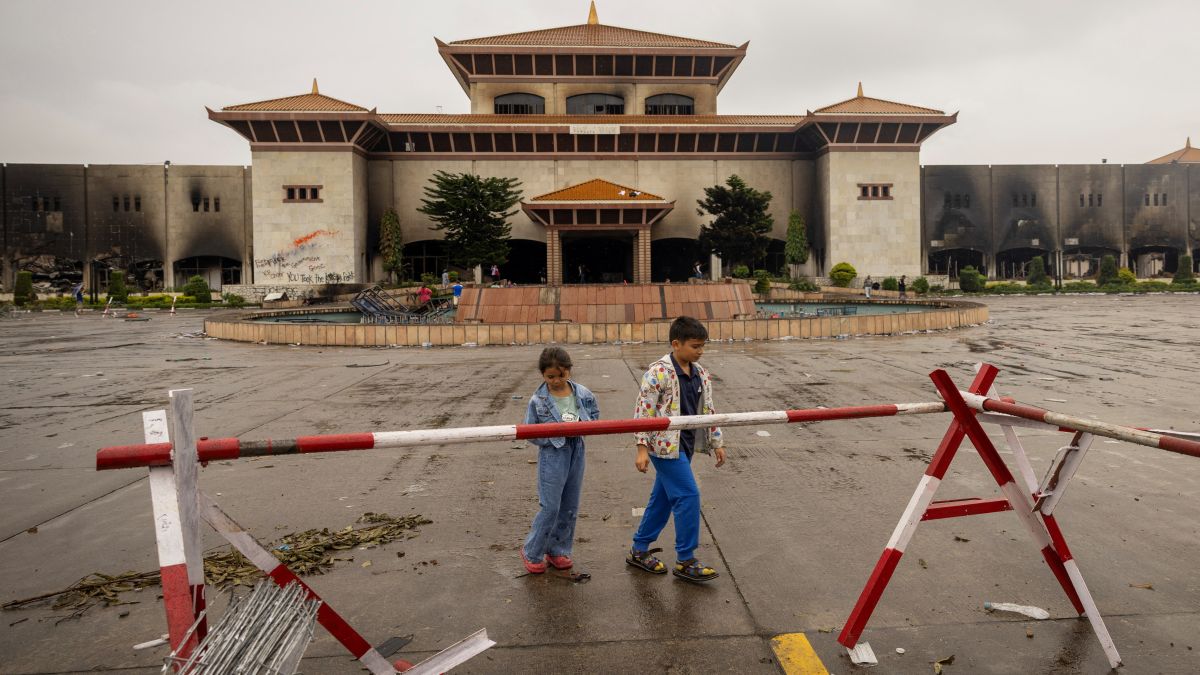 "From governance to tourism, how Gen-Z protests have damaged Nepal")
 "Did Russia deliberately send drones into Poland’s airspace?")
 "Netanyahu ‘killed any hope’ for Israeli hostages: Qatar PM after Doha strike")
 "Charlie Kirk, shot dead in Utah, once said gun deaths are 'worth it' to save Second Amendment")
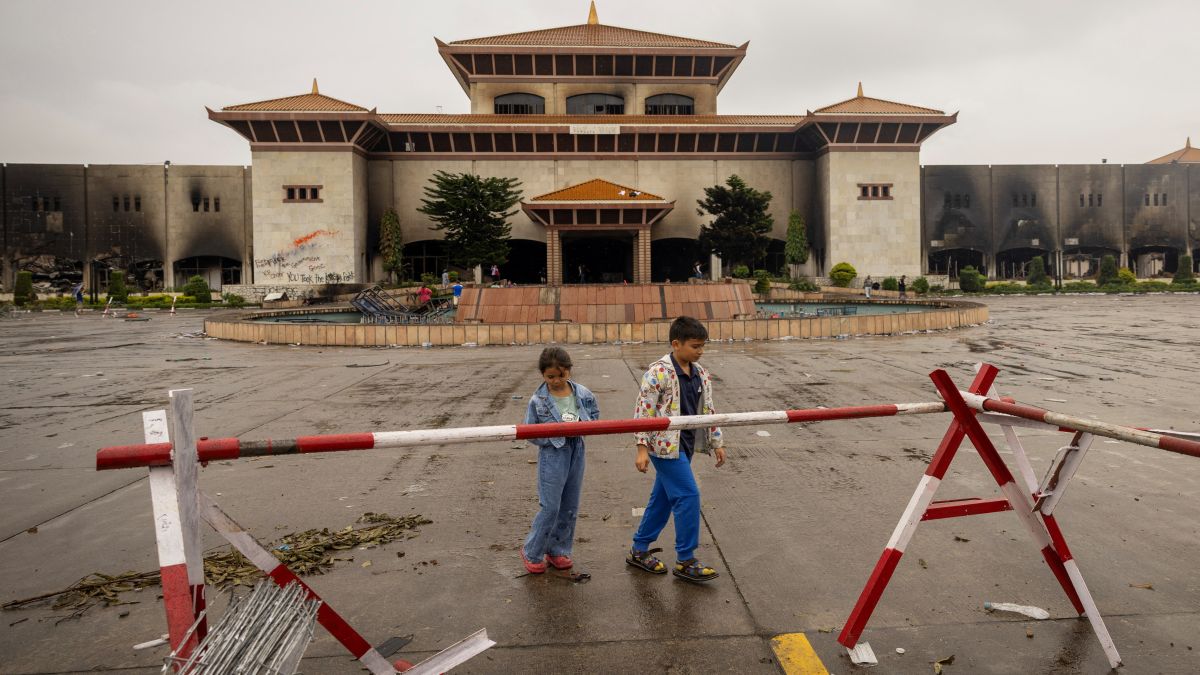 "From governance to tourism, how Gen-Z protests have damaged Nepal")
 "Did Russia deliberately send drones into Poland’s airspace?")
 "Netanyahu ‘killed any hope’ for Israeli hostages: Qatar PM after Doha strike")



