

 "In Sebastiao Salgado's photography, a piercing reflection on the pathos of climate change, migration")
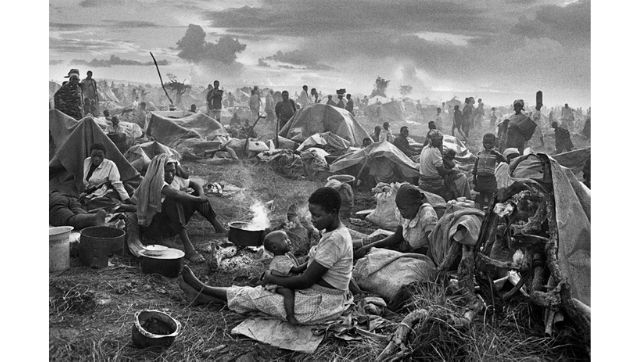
At an age when most retire, Brazilian photographer Sebastião Salgado experienced a kind of revival in his work. From being a social photographer, celebrated for his sensitive work on the human condition, he began capturing nature, the earth, its beauty, and pristine and untouched landscapes. This meant traversing difficult, hard-to-reach terrain by the time he was well into his 60s. At 17, barely an adult, Salgado spent his days fighting the dictatorship in Brazil alongside Lélia Wanick Salgado, his wife. Much too young to live under the threat of being captured, tortured or killed, they were sent to Paris where he continued training as an economist and she, as an architect. Working for the International Coffee Organisation, he would often travel to Africa for development projects associated with the World Bank. Lélia’s camera would accompany him, and on each trip, he would grow more enchanted with photography. With a worldview of how market forces and greed exploit humanity, Salgado abandoned economics in 1973 and embraced photography, embarking on long-term photographic projects on Africa, Latin America and Europe. His work has been exhibited globally, and has earned him numerous international honours, including a World Press Photo Award and appointment as a UNICEF Goodwill Ambassador in 2001. He left the prestigious photo agency Magnum Photos in 1994, to establish Amazonas Images with Lélia, in order to handle his work exclusively. But, characterising his life’s work is not easy. He is more than a photographer. You could call it social, anthropological and environmental, besides photojournalistic work, but in his own words on the subject, he says: “I live totally inside photography. I have made it my life.” [caption id=“attachment_9023581” align=“alignnone” width=“640”] 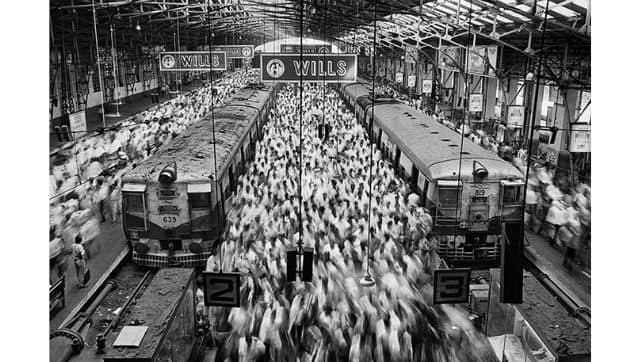 From Sebastiāo Salgado’s Exodus. Church Gate railway station. Mumbai, India, 1995.[/caption] Dramatic imagery from the world’s largest open gold mine, Serra Pelada, in 1980, begged the question of how shiny pieces of metal could blind almost 50,000 men from all walks of life. Salgado’s stark images captured the emotion, the struggle and the glint of their gold fever and marked a return of black and white photography to mainstream reportage. Working alongside Doctors Without Borders (MSF), Salgado documented the famine in Africa from 1984-85. And, much before Syrian or Rohingya refugees made their way across treacherous waters to safety, Salgado followed the movement of the people dispossessed due to war, famine and oppression in places such as Tanzania, Burundi, Bosnia, Congo, Croatia and Rwanda from 1994-99. His book Migrations: Humanity in Transition (2000) would eventually prove to be the toughest undertaking for him. “We are all political animals, and when we shoot, we shoot from our heritage, we see everything according to our lives,” he said in a virtual talk with photographer Raghu Rai, hosted by the Indian Photo Festival - Hyderabad (IPF) at their opening ceremony on 12 November. “Photography is something that grows inside you. If your photographs tell the story of your country, it becomes the evidence of your time. When we began photography, it allowed us to be completely tied to the moment we were in," he said, to which Raghu Rai added: “It seeps into you, it is not about instant gratification." In Rwanda, Salgado saw and experienced pure despair. Thousands of people fled from the genocide into Tanzania, and Salgado followed this tragic mass movement with his camera. Everywhere he went, people were dying daily by the thousands. When a participant asked how one could tackle the ethics of photography, Salgado answered: “Ethics is a straight line and a personal judgement. There were times in Africa where I would throw down my camera and weep because the situations in front of me were so hard. And sometimes, what was happening in front of me was so disturbing and dramatic, it was just necessary to be photographed, to be shown. I made those decisions myself. No one will know what you go through because they were not shooting, they were not there.” [caption id=“attachment_9023591” align=“alignnone” width=“640”] 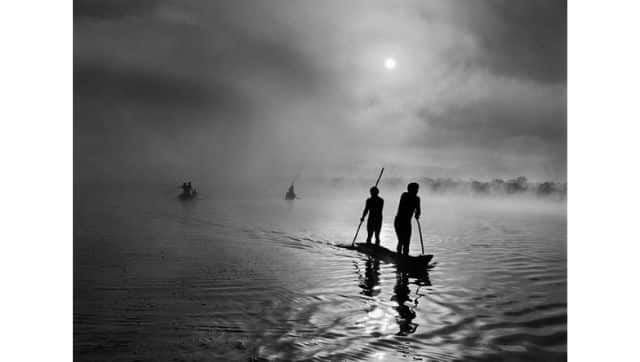 From Sebastiāo Salgado’s Genesis. Group of Waura fishing in a lake. Upper Xingu region, Mato Grosso state, Brazil. 2005.[/caption] The extent of suffering that he witnessed broke something within him. Sick and unable to continue with an immune system that was compromised due to stress, he and his wife returned to their home in Brazil, to the farmlands in the small town of Aimorés, where he had spent his childhood. But the paradise that he grew up in, surrounded by the greenery of the Atlantic Forests, no longer existed. The land that he found was empty, devoid of life. What Salgado felt about the state of humanity was reflected in the farmlands. Deforestation, drought and overgrazing had it left barren. When Lélia suggested they replenish and restore the land to its former lushness, they began rebuilding it and his spirit. Together, they established the area as a private reserve, formed Instituto Terra, an environmental NGO and began planting, in the late 1990s. The first year, not many saplings survived, the second year, fewer died and so on, until they resurrected 600 hectares in the Rio Doce Water Basin within a decade. In January 2019, over 2.5 million seedlings from almost 300 species from Atlantic Forest were planted. Birds, animals, reptiles and amphibians returned, and a thriving area of biodiversity emerged. As life returned to the land, it rekindled Salgado’s love for photography. He set out once more, but this time it was to photograph the Earth, for which he felt hope. The stunning breadth of the work that followed is almost unfathomable. He began to understand life in the Galapagos Islands as Darwin did, and went on to photograph for eight years in 32 countries, bringing together animals, landscapes and indigenous people from across the world living in a state of harmony with nature, untouched and untainted as it was centuries before in one large body of work, Genesis (2013). The colossal book is a collection of hope and wonder, and a fitting tribute to the planet. “When people see the photos in Genesis, I wish to leave them with the feeling of being closer to the planet and being a part of the earth in a different way.” If the events of this year have taught us anything, it is that climate change is the most urgent issue for us to act on. In 2019, the Amazon forest fires saw an 80 percent spike over the same period from the year before, according to Brazil’s National Institute for Space Research (INPE). Most fires were set by humans to clear the land for agriculture and cattle grazing. In the past, the country was able to reverse deforestation, but, the current government under Jair Bolsanaro has loosened forest protection laws and regulations in a bid to increase agriculture and development. [caption id=“attachment_9023611” align=“alignnone” width=“640”] 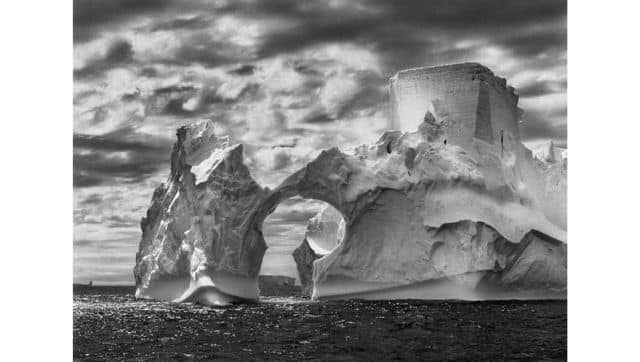 From Sebastiāo Salgado’s Genesis. Iceberg between Paulet Island and the South Shetland Islands in the Weddell Sea. Antarctic Peninsula. 2005.[/caption] Salgado has been fighting to protect the forests, the indigenous people’s endangered existence and organised a petition to protect them from the spread of COVID-19. It was signed by Oprah Winfrey, Brad Pitt, Madonna, Paul McCartney and David Hockney. With a new book on the Amazonian forests coming out in April, Sebastiāo Salgado remains firmly optimistic about our future. Almost 77 now, the photographer is nowhere near being done. “It’s like being on a bicycle, and we must keep pedalling. When I was at (Mexican artist) Álvarez Bravo’s birthday celebration, he was sick, with his feet inside a tub of hot water, but, he was there, still shooting pictures of his feet at the age of 100!” The Indian Photo Festival 2020 is a free event, and is being largely held online till 13 December, featuring a host of talks by photographers, portfolio reviews by editors and virtual exhibitions. * Images courtesy: Sebastião Salgado, Amazonas Images/Indian Photo Festival 2020
Intensely political yet captivating, Brazilian photographer Sebastião Salgado’s body of work examines the beauty and brutality of the human condition. More recently, his photographs serve as an ode to the planet — an optimistic view of what we must save and celebrate.
Advertisement
End of Article

 "Charlie Kirk, shot dead in Utah, once said gun deaths are 'worth it' to save Second Amendment")
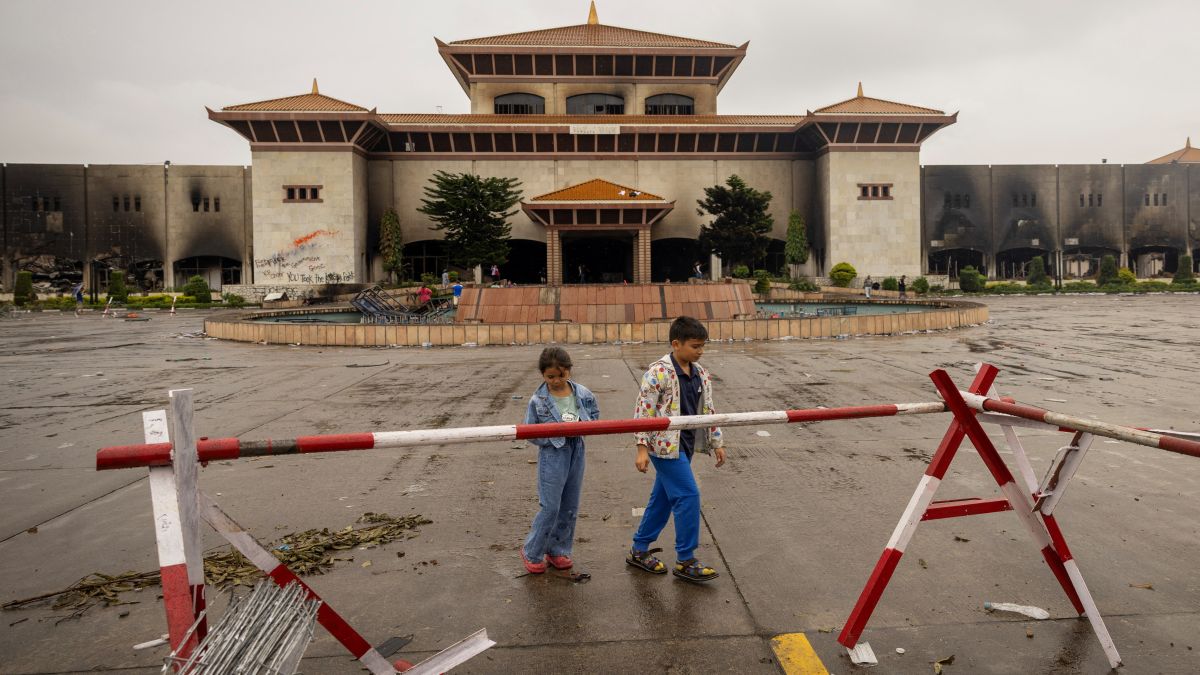 "From governance to tourism, how Gen-Z protests have damaged Nepal")
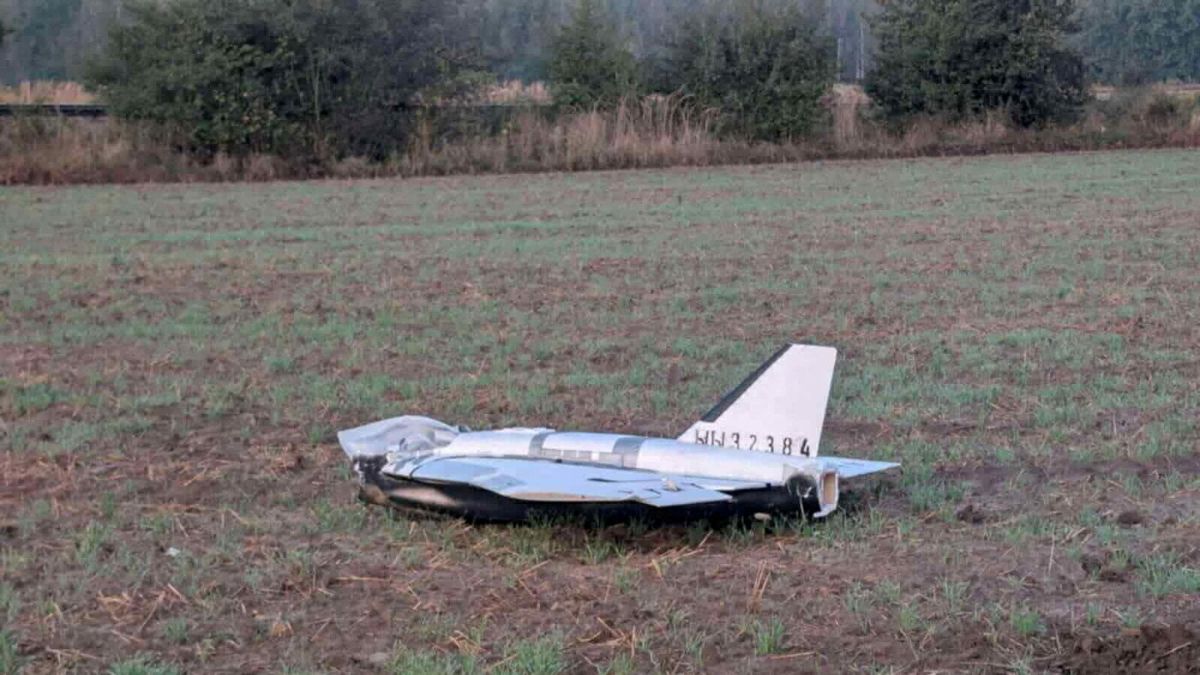 "Did Russia deliberately send drones into Poland’s airspace?")
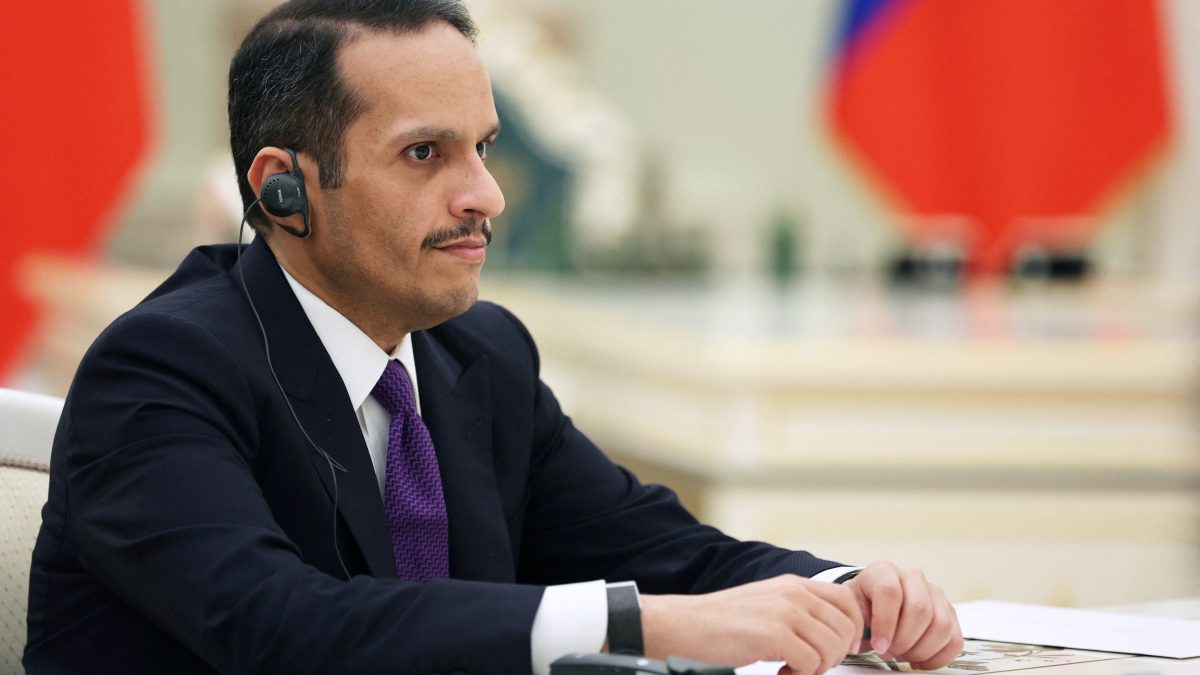 "Netanyahu ‘killed any hope’ for Israeli hostages: Qatar PM after Doha strike")
 "Charlie Kirk, shot dead in Utah, once said gun deaths are 'worth it' to save Second Amendment")
 "From governance to tourism, how Gen-Z protests have damaged Nepal")
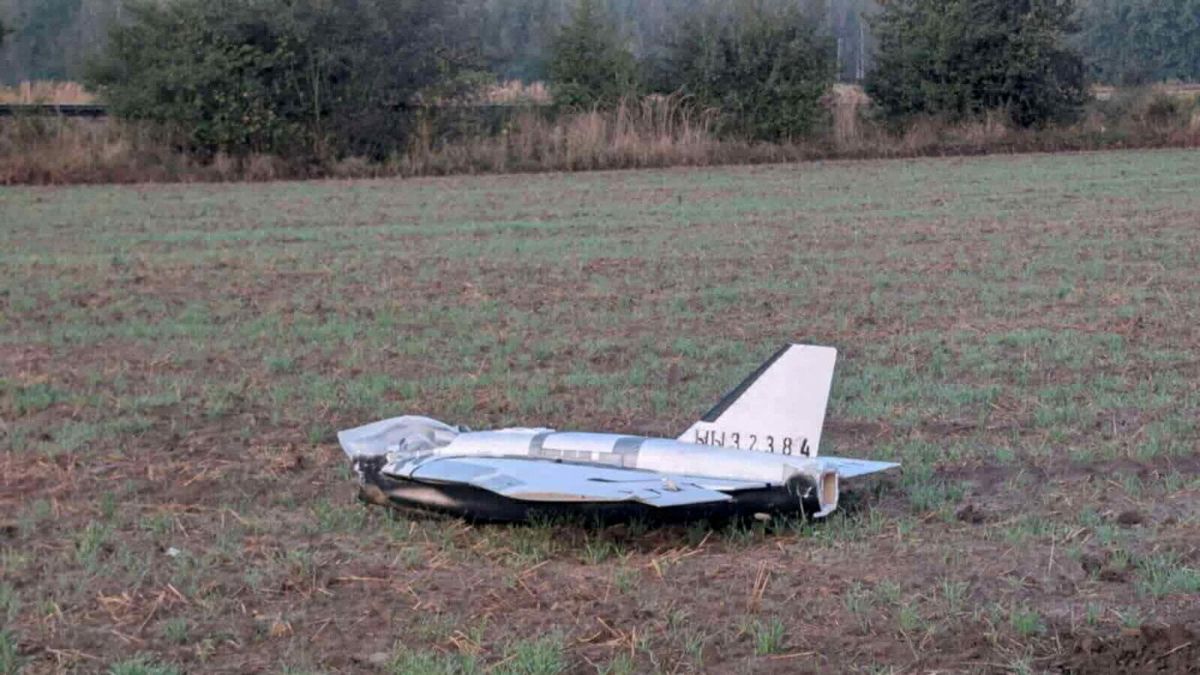 "Did Russia deliberately send drones into Poland’s airspace?")
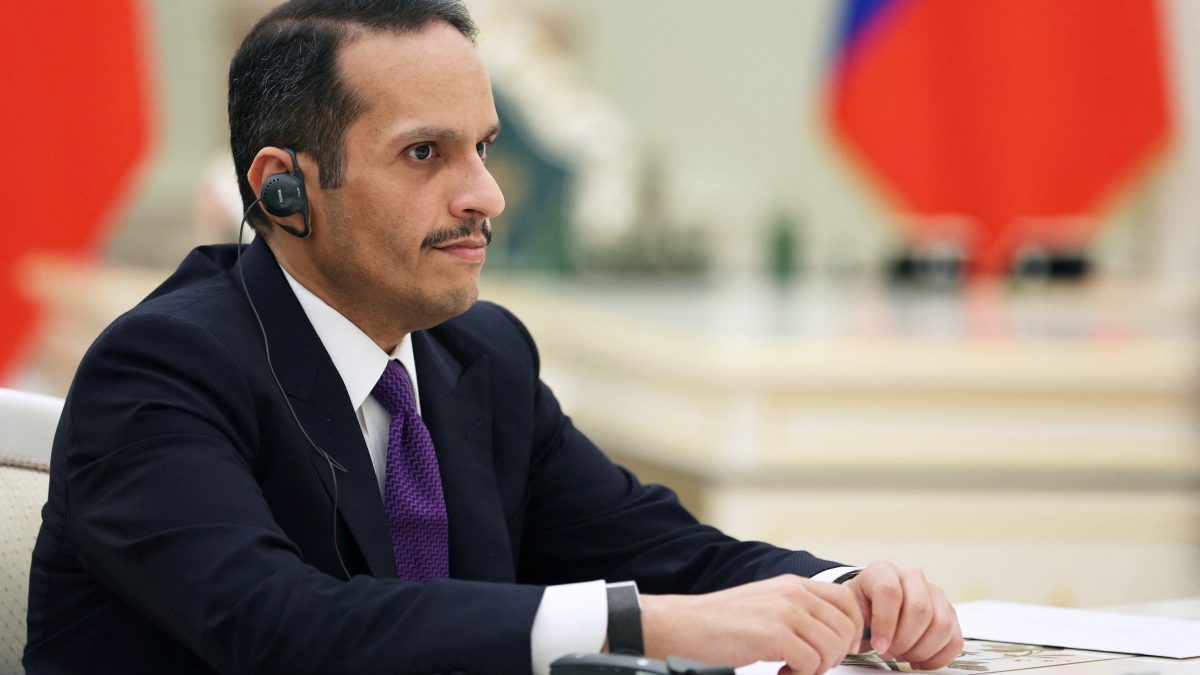 "Netanyahu ‘killed any hope’ for Israeli hostages: Qatar PM after Doha strike")



](https://images.firstpost.com/wp-content/uploads/2020/11/Salgado-2-640.jpg)
](https://images.firstpost.com/wp-content/uploads/2020/11/Salgado-3-640.jpg)
](https://images.firstpost.com/wp-content/uploads/2020/11/Salgado-4-640.jpg)