

 "When it comes to corrupt elites, it’s Hindi-Chini bhai-bhai")
In the three weeks since Arvind Kejriwal went public with his expose of the ‘sweetheart deals’ that real estate developer DLF offered Robert Vadra, many more revelations about the cosy business transactions of people in or close to power have come to light. They show up the striking manner in which Sonia Gandhi’s son-in-law took what was even until 2007 only a middling business and swiftly road the fast elevator to business fortune – by diversifying into real estate and growing it some 600 times in three years. But remarkable though that burst of wealth creation (spurred by shadowy deals and influence-peddling) is, Vadra’s effort pales when compared to a rather more sensational scandal that has come to light in China just this morning. The New York Times reports , after diligent sleuthing, that the family fortunes of Premier Wen Jiabao, who will step down from office next month as part of a leadership transition, and who has all along projected him as hailing from an “ordinary” family, grew to an estimated $2.7 billion in the years since he assumed power. “Many relatives of Wen Jiabao, including his son, daughter, younger brother and brother-in-law, have become extraordinarily wealthy during his leadership,” the investigation revealed. “A review of corporate and regulator records indicates that the prime minister’s relatives, some of whom have a knack for aggressive deal-making, including his wife, have controlled assets worth at least $2.7 billion.” In many cases, the names of the relatives were found to be hidden behind layers of partnerships and investment vehicles involving friends, colleagues and business partners. And much like in the Indian parallels that are coming to light, untangling the financial holdings has offered a peep into how “politically connected people have profited from being at the intersection of government and business as state influence and private wealth converge in China’s fast-growing economy,” it observed. None of the investments could be traced to Wen himself, but the Premier had oversight in respect of policy relating to the industries in which his family was invested. For its efforts in exposing scandalous ‘influence peddling’ leading right upto a top leader’s close family members, the New York Times finds itself blocked in China all day today. In the run-up to next month’s major leadership transition – the most sweeping in a generation – Chinese leaders are taking no chances and are cracking down in the only way they know: Net censorship. A spokeswoman for the New York Times said she hoped that full access to the daily’s websites would be “restored shortly”. But the prospects of that are not too bright. [caption id=“attachment_503925” align=“alignleft” width=“380”] 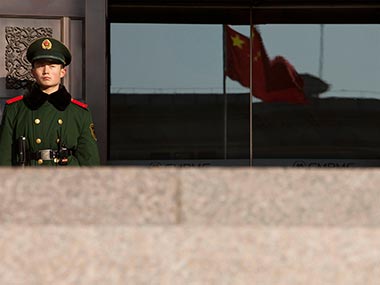 AP[/caption] The latest expose about Wen are merely the latest in a long list of revelations about the manner in which top Chinese leaders’ family fortunes have soared. In June this year, Bloomberg news agency’s investigations unmasked the business empire of close relatives of Xi Jinping, the man who will be China’s next President. As Xi rose through the Communist Party over the years, members of his extended family have expanded their business interests to include high stakes in rare-earth companies, mining interests, real estate, and mobile-phone equipment, Bloomberg noted. ( Read that report here.) Since that expose in June, Bloomberg’s website has been blocked in mainland China. More such instances of blatant conflict of interest among China’s top leadership and involving their family’s business interests have come to light. Chinese scholar Cheng Li at the Brookings Institution has, in a recent report ( here), revealed embarrassing details about the brother of Li Keqiang, who is set to succeed Wen Jiabao as Premier next month. The Brookings report noted Li Keqiang’s brother had a prominent hand in China’s tobacco industry, which is ironic considering that Li Keqiang himself is overseeing reform in the health sector. Much like in India, where the business fortunes of Vadra and of BJP president Nitin Gadkari have soared as a consequence of their political connections ( as _Firstpost_ noted here ), in China too there is palpable anger that those who have access to power are leveraging it for personal gain. As Perry Link, a China scholar at the University of California, Riverside, told Bloomberg: “People are angry because there’s unequal access to money- making, and the rewards that get reaped appear to the populace to be undeserved.” The Congress party in India has been dismissive of accusations that Vadra built his real estate fortunes largely because DLF saw him as political capital worthy of investment. But as Roderick MacFarquhar, a professor of government at Harvard, explained in the Chinese context, if you are a relative of someone who is very important (in China), “automatically people will see you as a potential agent of influence and will treat youwell in the hope of gaining (goodwill) with the bigwig relative.” Clearly, India and China may face strains in other aspects of their bilateral relationship, but when it comes to corruption and influence peddling among the top leadership and their family members, the two share a resemblance that recalls the bhai-bhai bonhomie days. Ahead of the upcoming Communist Party conference at which the leadership transition will be formalised, Chinese leades have been under pressure to demonstrate their commitment to political reforms. Yiyi Lu, an expert on Chinese civil society, is currently working on a project to promote open government information in China, noted recently ( here) that “there is no better way for the party to demonstrate its commitment to reform and openness and prove its critics wrong than to make all government and party officials, especially senior officials, and their direct relatives, disclose their assets.” But as India’s experience of getting senior officials to disclose their assets shows, it’s hardly effective in ensuring transparency or combating corruption in high places. There is, however, one striking difference between reports of elite riches in India and China, observes a Reuters commentary ( here). India “struggles to attract investment because its unpredictable and pervasive corruption is far less conducive (than China) to healthy returns.” But in China, it adds, “investors worry less about unorthodox systems and insiders than they do about unpredictability.” For all the juicy details tumbling out, the idea that China’s elite are very rich is hardly surprising – and in fact, it might even be reassuring for investors, many of whom have made billions of dollars from pre-IPO investments struck by knowing the right people, it notes.
India and China may face strains in other aspects of their bilateral relationship, but when it comes to corruption and influence peddling among the top leadership and their family members, the two share an eerie resemblance.
Advertisement
End of Article
Written by Vembu
Venky Vembu attained his first Fifteen Minutes of Fame in 1984, on the threshold of his career, when paparazzi pictures of him with Maneka Gandhi were splashed in the world media under the mischievous tag ‘International Affairs’. But that’s a story he’s saving up for his memoirs… Over 25 years, Venky worked in The Indian Express, Frontline newsmagazine, Outlook Money and DNA, before joining FirstPost ahead of its launch. Additionally, he has been published, at various times, in, among other publications, The Times of India, Hindustan Times, Outlook, and Outlook Traveller. see more

 "Israel targets top Hamas leaders in Doha; Qatar, Iran condemn strike as violation of sovereignty")
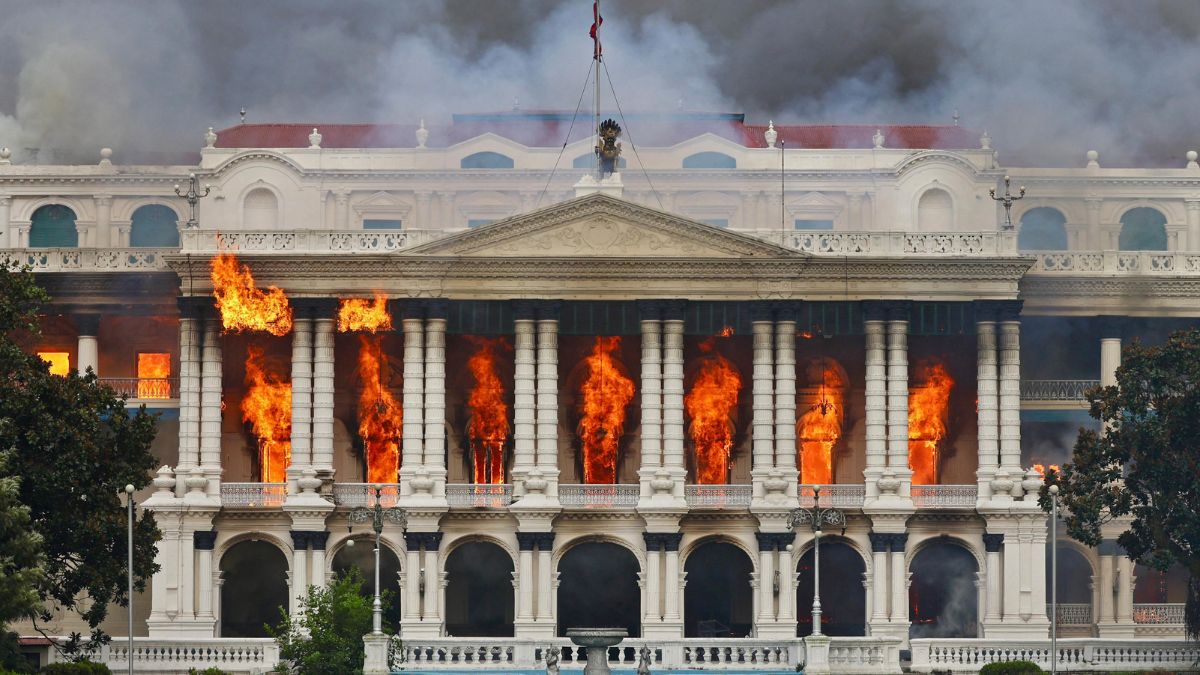 "Nepal: Oli to continue until new PM is sworn in, nation on edge as all branches of govt torched")
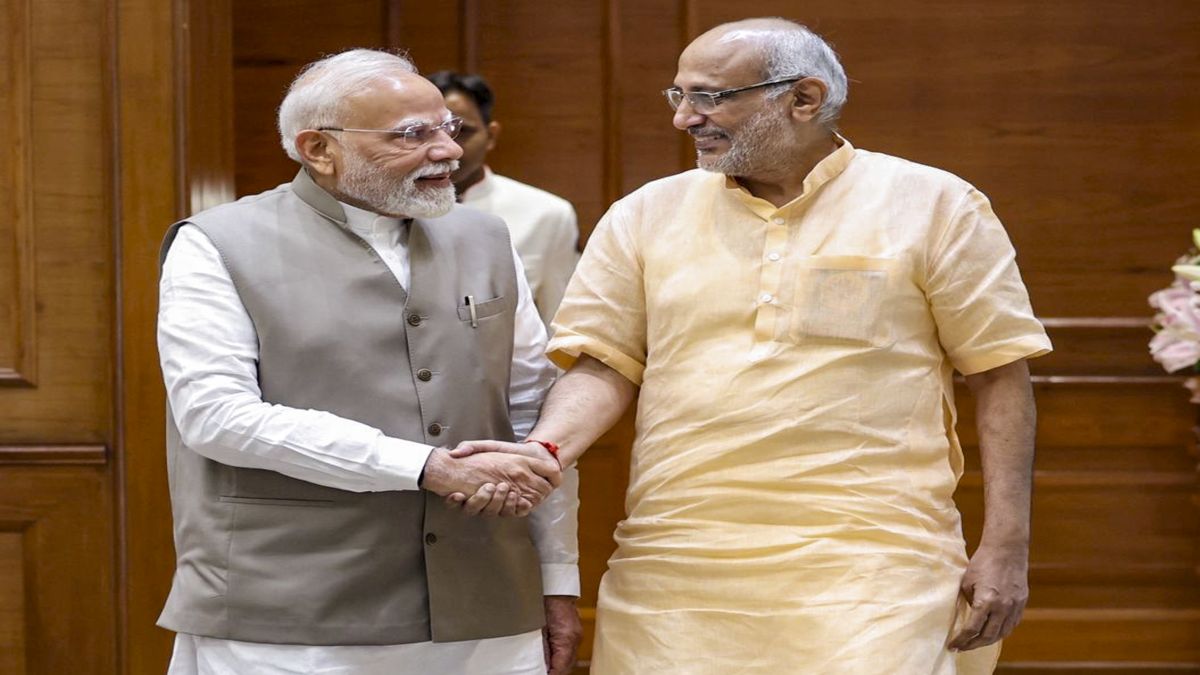 "Who is CP Radhakrishnan, India's next vice-president?")
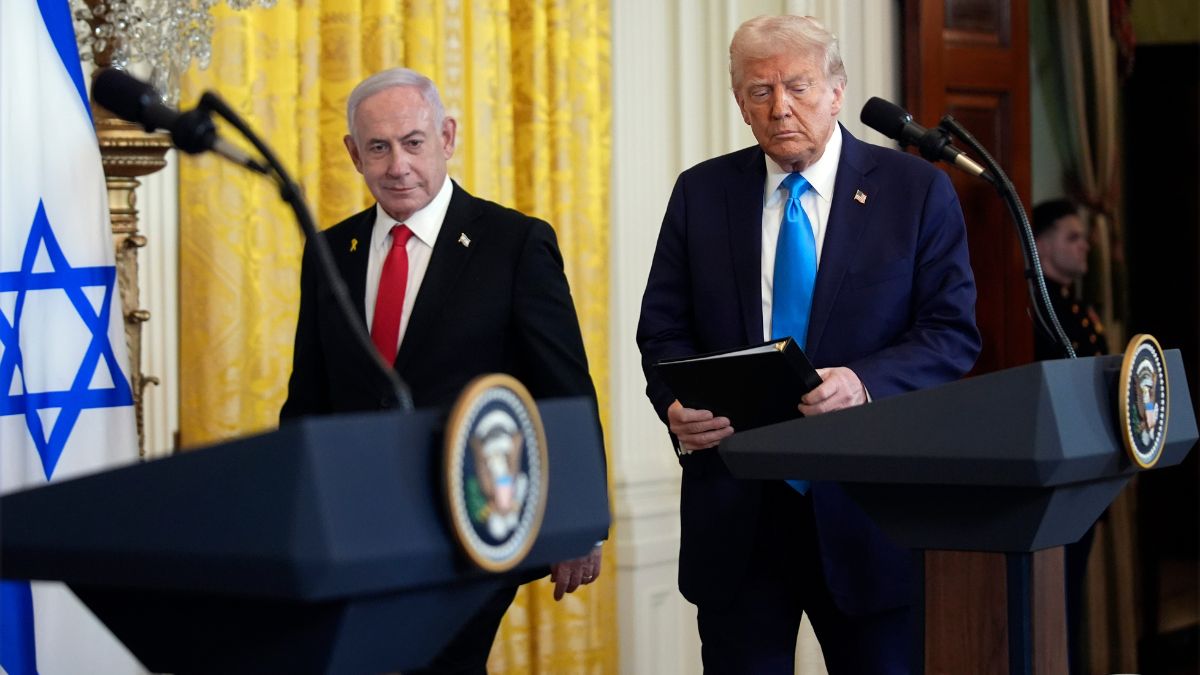 "Israel informed US ahead of strikes on Hamas leaders in Doha, says White House")
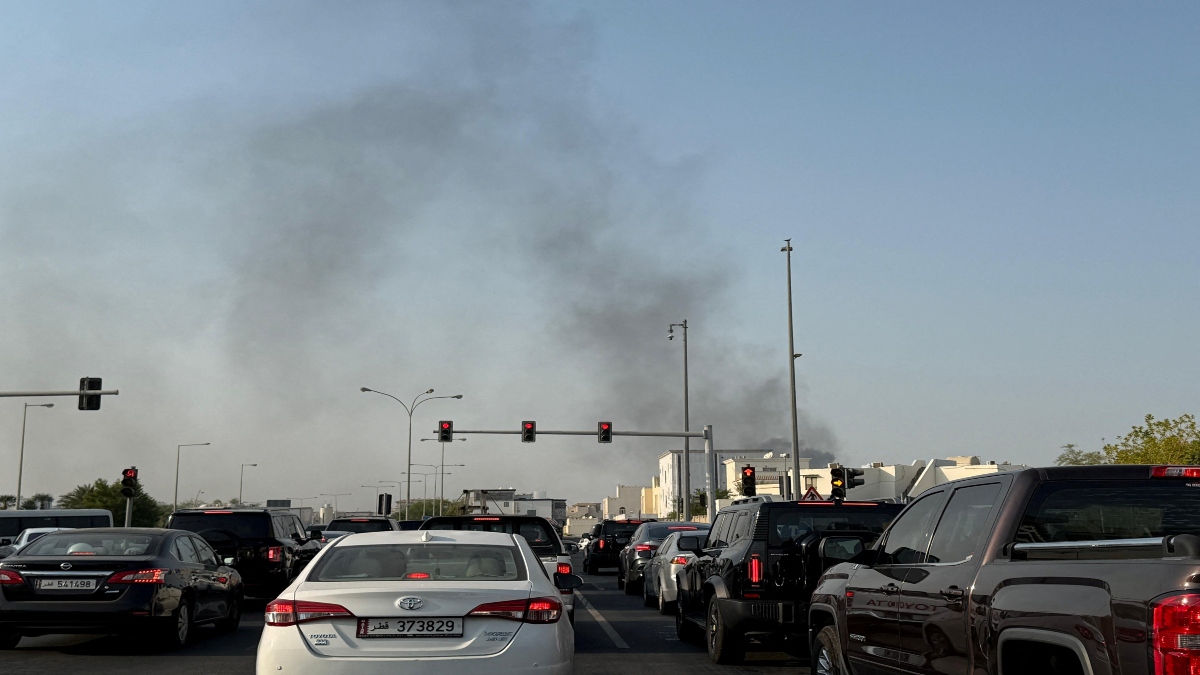 "Israel targets top Hamas leaders in Doha; Qatar, Iran condemn strike as violation of sovereignty")
 "Nepal: Oli to continue until new PM is sworn in, nation on edge as all branches of govt torched")
 "Who is CP Radhakrishnan, India's next vice-president?")
 "Israel informed US ahead of strikes on Hamas leaders in Doha, says White House")



](https://images.firstpost.com/wp-content/uploads/2012/10/ChinaFlag_NEW_AP3.jpg)