

 "H-1Bs workers: India's best or job-stealing cybercoolies?")
(This article is part of a comprehensive package from Firstpost on the H-1B visa programme. The main article can be accessed here , and other subsidiary strands can be accessed here and here .)
In January, the U.S. Government and Accountability Office (GAO) issued a report on H-1B visas aimed at gauging immigration policies on American competitiveness, and as an inquiry into whether U.S. workers are “unfairly disadvantaged or displaced by H-1B visa holders.”
Wages of foreign workers became a focus of the report, and among the findings, the document noted that “H-1B workers are often not paid wages associated with the highest skills in their fields.” Furthermore, 54% of workers with visas approved between June 2009 and July 2010 were classified as entry-level positions and were paid the lowest possible wage acceptable in their industry for a H-1B worker under U.S. law," the report said.
[caption id=“attachment_10704” align=“alignleft” width=“380” caption=“The lawsuit filed against Infosys includes claims that the company was bringing ordinary workers to the U.S. AFP Photo”] 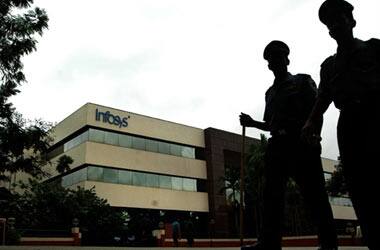 [/caption]
For some critics of the visa programme, this is an indication that foreign workers are taking jobs away from Americans. In his testimony before the judicial committee, Ronil Hira, an associate professor at Rochester Institute of Technology and a long-time critic of H-1B visas, pointed out that the U.S. Department of Labour has certified wages as low as $12.25 per hour-not even twice the federal minimum wage of $7.25 per hour-for H-1B computer professionals, a job where the median salary is more than $70,000 per year.
And in his opening statements for the March hearing, Judiciary Committee Chairman Lamar Smith (R-Texas) noted that while the H-1B visa programme plays a “vital role” in the U.S. economy, he was also concerned about the salary discrepancies between permanent residents and H-1B workers:
Impact Shorts
More ShortsThe Government Accountability Office recently found that H-1B employers categorise over half of their H-1B workers as entry level - which is defined as “perform[ing] routine tasks that require limited, if any exercise of judgment” - and only six percent as fully competent. Are all these entry level workers really the “best and brightest”?
The dollar differences are not trivial. In New York City, the prevailing wage for a computer systems engineer in systems software is $68,370 for an entry level worker and $120,037 for a fully competent worker. Are American workers losing out to entry level foreign workers?
This is the chief critique of Norm Matloff, an engineering professor at UC Davis who is a vocal detractor of H-1B visas. The “prevailing wage”, or the salary standard used by H-1B employers to determine an H-1B worker’s salary, can be lower than market rate, Matloff said, which creates a financial incentive for U.S. companies to hire H-1B workers over equally qualified American workers. “The crux of the problem with H-1B visas is that they’re about underpayment and cheap labour,” he added.
This echoes the sentiments of Paul E. Almeida, president of the American labor union AFL-CIO, who submitted a letter to lawmakers in conjunction with the March judicial committee hearing. In 2010, more than “100,000 of these H-1B visas went to fill entry-level positions, with wages starting at $10 per hour,” Almeida wrote. “There is no evidence that these workers were among the best and the brightest or that there were an insufficient number of U.S. workers to fill the positions.”
The lawsuit filed against Infosys also includes claims that the company was bringing ordinary workers to the U.S. at the expense of American workers. “During the course of his employment, Plaintiff learned that Infosys was sending lower level and unskilled foreigners to the United States to work in full-time positions at Infosys’ customer sites in direct violation of immigration laws,” the complaint alleges.
But where are the skilled workers?
But Sanjay Puri, founder and chairman of U.S. India Political Action Committee (USINPAC), said that given the demand for highly skilled workers, particularly in Silicon Valley, turning to foreign workers is a natural solution. “There is 9% unemployment, but if you talk to high tech firms, you will find that there is still a real challenge for them to recruit experts in high tech,” he said.
Tech firms like Intel, for their part, have turned to H-1B workers because it cannot find skilled U.S. workers. “What happens is if you go to recruit at the top U.S. universities for folks with engineering and math and tech and science backgrounds with advanced degrees, about 50% of them are foreign nationals,” said Lisa Malloy, an Intel spokesperson. “That is where we run into the need to hire people on H-1B visas. If we could find U.S. citizens to work our U.S. jobs, we would, but we can’t. There is an absolute skill shortage that foreign nationals fill and we are glad to have them.”
USINPAC’s Puri proposes a labour-market analysis to help the U.S. government determine how and when to issue H-1B visas. “Get an industry-government partnership together to identify where we have a shortage of jobs,” he said. “We do have statistics through the Census, the Department of Labour, and then you get high-level companies like Google or Apple to bring in their senior VPs of human resources and recruiting, and you get into a dialogue with them.”
Jeanne Batalova, an analyst with the Migration Policy Institute, a Washington D.C. nonpartisan think tank, agrees that is an area crying out for additional study. “The reality is we don’t have the solid evidence that would point to a labour shortage or a lack of such a shortage,” she said. “One of the recommendations that the institute proposed is that we need to have a labour market and immigration standards commission, and one of its goals would be to do research on labour market and hiring trends.”

 "Israel targets top Hamas leaders in Doha; Qatar, Iran condemn strike as violation of sovereignty")
 "Nepal: Oli to continue until new PM is sworn in, nation on edge as all branches of govt torched")
 "Who is CP Radhakrishnan, India's next vice-president?")
 "Israel informed US ahead of strikes on Hamas leaders in Doha, says White House")
 "Israel targets top Hamas leaders in Doha; Qatar, Iran condemn strike as violation of sovereignty")
 "Nepal: Oli to continue until new PM is sworn in, nation on edge as all branches of govt torched")
 "Who is CP Radhakrishnan, India's next vice-president?")
 "Israel informed US ahead of strikes on Hamas leaders in Doha, says White House")



](https://images.firstpost.com/wp-content/uploads/2011/05/infy1.jpg)