

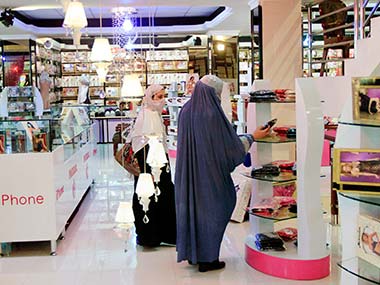
 "Nashaa of Afghanistan: An Indian woman on her life in the country")
By Samhita Arni How do I describe life in Afghanistan for an Indian woman? I suspect that Sushmita Banerjee’s experience was widely different from mine — although we’re both writers, she had lived there for years; I was there for an all-too-brief six months. Sushmita lived in Paktika province, the wife of an Afghan businessman. I lived in posh Wazir Akbar Khan, an area of Kabul filled with embassies, guesthouses for the expat community, the residences of Afghan ministers and the Kabul elite. There are multiple restaurants — Thai, Indian and Lebanese — all within walking distance. My guesthouse, a scant two hundred metres from the residence of the famous Uzbek warlord Abdul Rashid Dostum, was just off Shirpur Street where, past twenty-foot walls, watchtowers and coils of barbed wire, one can catch a glimpse of Kabul’s ’narco-palaces’ — large, many-roomed mansions adorned with glittering mosaic frescos and Corinthian columns. My neighbourhood was cosmopolitan in a way that I suspect Sushmita’s in Paktika was not. Apart from the international troops, there’s a huge expat community — NGOs, aid workers, security contractors, diplomats and foreigners, like me, who have come to work for Afghan companies. Although most live in high-security environments, driven in bullet-proof SUVs, with restrictions like curfews, living in guesthouses with lockdown rooms; there’s a happening party scene. On weekend nights at Gandamack, a colonial-style bar in a beautiful, old Afghan house, (which, rumour has it, once was the residence of Osama Bin Laden’s fourth wife) it is not uncommon to see an idealistic aid-worker sharing a drink with an ex-military security contractor. [caption id=“attachment_1090437” align=“alignleft” width=“380”] Image used for representational purposes. Reuters[/caption] That’s often what is most surprising about conflict zones: expats, mostly single and living away from their families, party hard, as if to make up for the stifling, suffocating days of working in high security bunkers, under a constant fear of attack. One is ferried to parties by taxi drivers, many of whom will offer to sell you their stash of hash, or when that fails, will tell you that they have a friend who has a friend…who works at customs and, for a few extra dollars, might be able to get you a bottle of Tajik vodka. (Yes, alcohol is illegal but available, although it’s expensive and tough to get hold of.) I suspect Paktika doesn’t have any such parties. What brought Sushmita and me to Afghanistan was also different. Sushmita Banerjee had fallen in love with an Afghan and had come here to live during Taliban times, and penned many books, one which was turned into the film — Escape from Taliban. I had come in much safer times, in 2012, to work on a six month contract for Tolo TV, an Afghan television channel. Tolo TV was striving to be an enlightened workplace. Large numbers of women worked there. I was impressed and surprised by my Afghan female colleagues — all educated, sassy and fashionable young women, many of whom had spent the Taliban years as refugees in Iran. There was even a creche on the office premises. Did I feel scared as a woman? I think life for many Afghan women is arduous and frightening but the irony, for me, is that I found travelling late-night in Kabul a less frightening experience than in Delhi. There is nothing, or very little that I can presume to know about Sushmita Banerjee or what her reality was like. But she was a health worker in Paktika, and I know that winters in Afghanistan are fierce and harsh. Last winter, shivering under my blanket at night at -18 C temperatures with just an erratic electric heater to keep the chill away, I succumbed to chronic bronchitis. Another friend who used a bukhari to keep warm suffered from carbon monoxide poisoning. But our accommodations were luxurious compared to many — almost everyday we passed by camps, consisting of mud houses and temporary structures, that housed internal refugees. I would see children, barefoot and in threadbare clothes, playing in snow and ice in sub-zero temperatures.They have no blankets, burn scrap for heat — and it is heart-rending but no surprise that many, many children die each year during the harsh winters. I also suspect that Sushmita faced fear, often, and I can tell you a little about that — for even in cosmopolitan urban Kabul, despite the bullet-proof cars, the armed guards, the fortified guesthouses — we lived with fear, in a perpetual state of hyper-vigilance, on a constant adrenaline and cortisol high. The stress begins to show — fights and breakdowns are commonplace. Immune systems weaken. Every one in Kabul is perpetually sick. There are some who react to fear by staying indoors and never going out, others react by constantly courting danger. There have been numerous attacks on the Indian embassy in Kabul — the one in 2008 killed 58 people and the 2010 bombing killed 18. As part of Kabul’s expat Indian circle, I’ve met the people who now sit in the offices of the dead. I’ve heard the drone of helicopters and planes every night and in the mornings. I got used to the banging doors and the rattling window panes that accompany the frequent explosions. Every place in Kabul is a monument to some terrible incident — there’s Finest supermarket, where I bought my groceries and necessities every week, which was bombed in 2011. And there’s Ariana Square, where President Najibullah was, after being castrated and tortured, hung from a lamp post in 1996. And there are the stories. An Afghan colleague told me about a stint working as a translator for the British marines in Helmand. He spoke of watching the river flow past him, bearing bits and pieces of hacked corpses. Another colleague had witnessed the horrific 2011 Ashura bombing which killed seventy and, during another Shia-Sunni clash, had watched his friend die, hurled out of window by a mob. Is worse to come as 2014 approaches? The ANA is losing vast numbers of trained soldiers — attrition rates are over 30 percent. Earlier this week I read that the commander of the special forces, General Roshandel, who I had the good fortune to meet once in Kabul (I was helping research and script a TV series about the Afghan security forces), had left Afghanistan and sought asylum in Europe. Roshandel was a rare man — an incorruptible, capable and efficient commander. The article I read hinted that it was frustration, not fear, that led to his departure. He’s not the only one who is leaving — I hear that the brilliant, sassy and fashionable Afghan women I knew in Kabul, who held so much hope for the future, are seeking asylum abroad. Given all this, it’s a question worth asking - why did Sushmita, risking death and reprisal, return to Afghanistan after her escape from the Taliban? I’d like to hazard a guess. Despite the hardship, the fear, the disillusionment and the cynicism; in spite of the crazy parties and the security bunkers; there’s just something about Afghanistan that makes you fall in love with the country. It might be the people — generous, welcoming and warm-hearted. It might be the courage and fortitude with which these people face their future and their past. It might be the harsh beauty of the mountains or the indescribable magic of moonlit gardens in Kabul. It might be the constant adrenaline, and the stress of ever-present danger. It might be all of these things. Afghanistan is a nashaa, an intoxicant. It makes you feel as if colours are brighter, experiences more vivid, relationships more intense. It gets under your skin. Life elsewhere seems to be just a faint, muted parody.
Samhita Arni recounts her life in Afghanistan in the posh Wazir Akbar Khan, an area of Kabul filled with embassies, guesthouses for the expat community, the residences of Afghan ministers and the Kabul elite.
Advertisement
End of Article
Written by FP Archives
see more


 "Russian drones over Poland: Trump’s tepid reaction a wake-up call for Nato?")
 "As Russia pushes east, Ukraine faces mounting pressure to defend its heartland")
 "Why Mossad was not on board with Israel’s strike on Hamas in Qatar")
 "Turkey: Erdogan's police arrest opposition mayor Hasan Mutlu, dozens officials in corruption probe")
 "Russian drones over Poland: Trump’s tepid reaction a wake-up call for Nato?")
 "As Russia pushes east, Ukraine faces mounting pressure to defend its heartland")
 "Why Mossad was not on board with Israel’s strike on Hamas in Qatar")
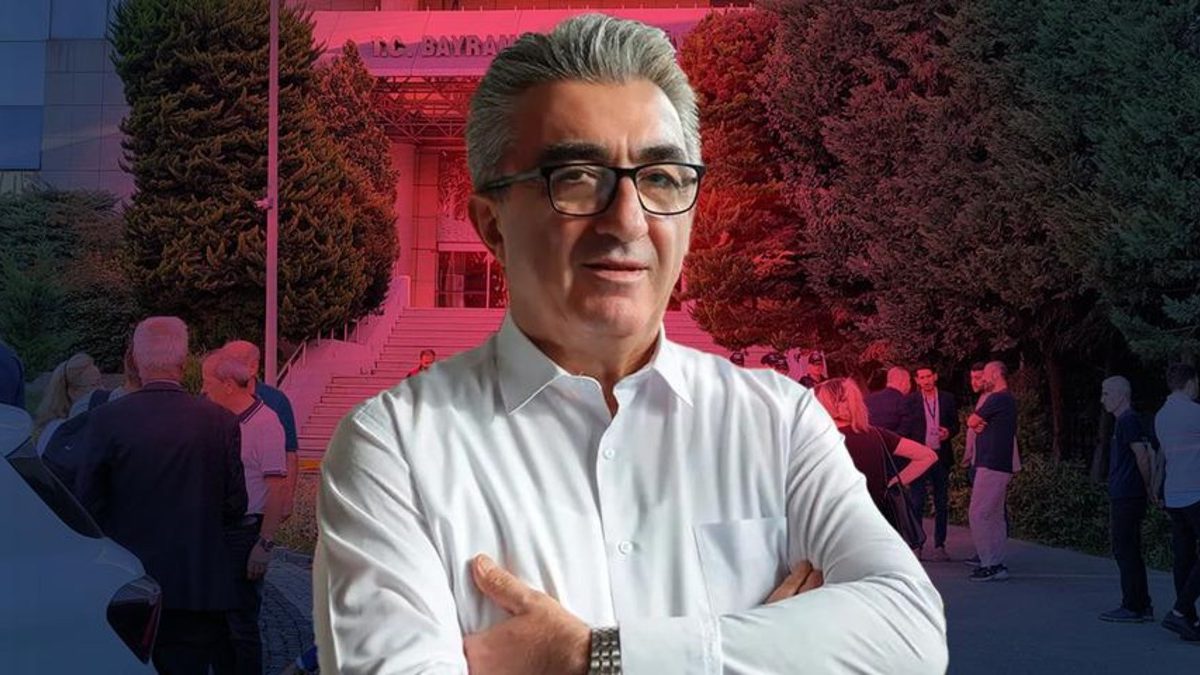 "Turkey: Erdogan's police arrest opposition mayor Hasan Mutlu, dozens officials in corruption probe")



