

 "In memoriam: Indian American writers remember 9/11")
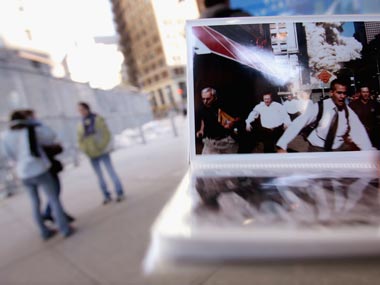
Editor’s note: On the tenth anniversary of 9/11, Firstpost asked several Indian American writers and thinkers what they remembered most about that September morning. And how 10 years later they viewed its impact on their lives and the world around them. The invincibility is gone: Chitra Divakaruni On 9/11, I was in the San Francisco bay area. I opened up my computer early in the morning, and on the MSN homepage was a video of the towers being attacked. I was in shock. At first I thought it was a simulation, or a hoax. Then I turned on the TV and heard the news. I just sat in front of the TV, stunned, for about half an hour while the same clips were being replayed. Then I couldn’t stand it anymore and turned it off. I remember feeling hollowed out. By then the other hijacked planes had crashed as well. I felt terrible for all the lives lost unnecessarily. I felt terrible to think someone hated America (and us Americans) so much. I felt terrible because I was afraid of the violent aftermath that I guessed would follow. And of course it did — in terms of government retaliation, and also in the hate-crimes that swept across the nation aimed at anyone who seemed/looked Muslim. In a few days when the dead and missing were tallied, I felt devastated — we knew people who worked in the towers and who were now dead for no fault of their’s. Yet mingled with all the sorrow were the stories that floated up from the depths — stories of courage and selflessness and community, of people helping and sacrificing in an attempt to save each other. [caption id=“attachment_81351” align=“alignleft” width=“380” caption=“Ten years later, I believe we still face some of the problems and tensions that erupted after 9/11. Getty Images”] 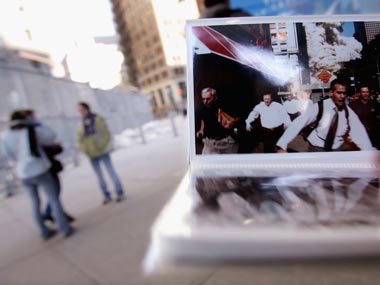 [/caption] Ten years later, I believe we still face some of the problems and tensions that erupted after 9/11. The sense of invincibility and immunity that America once felt is gone. The wars in Afghanistan and Iraq have taken their toll on the economy, on morale, and on the many soldiers that have been scarred by them. Even now, airport security remains a problem for people who look like us, and has led to a new ironic expression being coined, “flying while brown”. Even this year there was some nervousness about terrorist attacks happening again on that day. But I also feel a deep sense of regeneration and acceptance; even as people think back and honour the memories of dear ones who perished in the towers or on the planes, the common people of America (and perhaps some of the political leaders, too) are committed to going forward, to valuing the fragility of life, and to creating better communication across cultures and nations that might stop future attacks like this which fed on people’s prejudices and their ignorance of each other. Many memorials, and many tributes of art, theatre and opera (for instance, the Houston Grand Opera is doing a performance on the lives of Houstonians affected by 9/11) — many of them debuting on this 9/11 — exemplify these sentiments. As told to Sandip Roy Chitra Divakaruni’s latest novel is One Amazing Thing_._ Her short stories, Arranged Marriage, won an American Book Award. She teaches Creative Writing at the University of Houston. We cannot assume we will not witness the end of the world: Manil Suri My partner called me from his office and asked if I’d seen the news. He told me a plane had crashed into one of the towers of the World Trade Center. I turned on the television and there it was: the tower in flames. The newscasters still didn’t know if it was an accident or a terrorist attack. I had to tear myself away from the screen because my car was due at the garage for repairs. They didn’t have a television at the garage, so the transaction was quite normal. I gave them my keys, told them I’d come back in the afternoon to pick the car up, and started walking back home. Three blocks from my house, a woman came up to me, all excited. “They’ve just bombed the Pentagon,” she said. “Who knows whom they’ll hit next?” I sprinted back home, perhaps afraid of my own safety, even though the Pentagon is almost 12 miles from where we live. By now, two towers burned on the television screen, interspersed with a smoking Pentagon. I called my parents in India to assure them we were safe. “Planes weren’t meant to disappear into buildings,” my father said. Perhaps what I remember most clearly from that day and the ones that followed is how preternaturally clear the sky was. A pure September blue, one free of even the slightest wisp of cloud. The only planes that flew for some time were military jets – dozens of them, zooming over Washington, DC and its suburbs. Every time we heard them, we wondered if the terrorists had returned. That eleventh day of September demonstrated how vulnerable we are. It created a sense of insecurity that has slowly hardened over the past decade, become a part of many of us. For me, personally, this anxiety has manifested itself in my fiction. In September 2000, I wrote a scene in which I imagined us all on the verge of destruction. In those relatively optimistic times, one perhaps encountered such notions mainly in fiction. This month, I completed the first draft of The City of Devi, the novel that arose from that beginning. In the ensuing 11 years, the unlikely scenario I imagined has moved into the realm of the possible. The instability generated by 9/11 (and by the ensuing retaliation) has taken root, perhaps most dangerously in nuclear-armed Pakistan. We can no longer take our survival for granted, assume we will not witness the end of the world. As told to Sandip Roy Manil Suri’s most recent novel is The Age of Shiva_. He received a Guggenheim Fellowship in 2004. I__n addition to being a writer, Suri is s a tenured full professor in the Department of Mathematics and Statistics at the University of Maryland, Baltimore County._ Continues on the next page Smothering the meaning of 9/11 with flags: Vijay Prashad On 9/11 I was buying a bicycle. When I got home, I heard about the devastation. My sister-in-law called. She was worried. I was teaching in New York then. Was I ok? I was fine. It became clear that thousands had died in the attacks. It was clear that the country was in turmoil. This was a sad event for New York City, for the Pentagon and for the families who lost their loved ones there and in the fields of Pennsylvania. For me there will always be 1984, when the massacres in Delhi took the lives of thousands of Sikhs. I was in Dehra Dun then, where the fires struck the small town. A Sikh family that ran a pharmacy saw their livelihood burned, as other Sikhs were killed. They had lost a pharmacy before, in the Partition riots of 1947-48, when they left what was to become Pakistan for India. They had the resilience to rebuild their lives, their fortunes. [caption id=“attachment_81357” align=“alignleft” width=“300” caption=“Nobody learns from these acts of violence, no one wants to ask what provokes them and why it is revenge that answers for them. New York Times”]  [/caption] But the enormous singularity of the event that held my neighbours did not come to me. I, like so many others in the Global South, had been privy to other disasters, other nightmares.For me there will always be 1992-93, when I watched the soldiers of saffron kill Muslims at will in northern Delhi and in places like Seelampur. I spent a night in a temple during the curfew, and will never forget the young men of saffron return after their adventures, bragging and thirsting to return the next day. The sound of knives being sharpened remains with me. For me there will always be the scenes of bombs fallen on the cities of Kabul and Kandahar, Baghdad and Basra – before 9/11, in the 1980s and 1990s. I remember the faces of an Afghan family, refugees who took over our barsati in Green Park in 1993, broken by the violence and scarred by its unending hold on their dreams. These are all 9/11. After 9/11 came 9/12. Nobody learns from these acts of violence, no one wants to ask what provokes them and why it is revenge that answers for them. Mircea Eliade, the scholar of religion, asks us how can we “tolerate the catastrophes and horrors of history – from collective deportations and massacres to atomic bombings – if beyond them [we] can glimpse no sign, no transhistorical meaning?” Is there no reason for all this? Is it because we don’t want to face the fact of these events that we are prone to making them into Myth, denying them the right to be historical, to tell us something of themselves? Do we fear them, cover them in patriotic flags and smother what they are trying to say, their meaning? As told to Sandip Roy Vijay Prashad is George and Martha Kellner Chair in South Asian History and Professor of International Studies at Trinity College, CT. His books include Darker Nations: A People’s History of the World and Karma of Brown Folk_._ Reminded of Jallianwala Bagh: Arun Gandhi My wife and I had just returned from Chicago on the night of the 10th. We were then living in Memphis, TN. I was still having breakfast and my wife had gone to take a shower. Being a news junkie the first thing I do every morning on getting up is put on the TV news broadcast. Suddenly, on TV they showed the first plane crashing into Tower One. I was speechless and, like the commentator, thought this was an awful accident. Then, the second plane crashed into Tower II and by then the media had realised that this was no accident but planes hijacked by terrorists and purposefully rammed into the WTC Towers. Like all Americans for several days we were stunned and remained glued to the TV to learn more and more about what was happening. There was no doubt this was violence escalated to the nth degree. After the initial shock wore off I was concerned about the reaction to this attack. I was reminded of the Jallianwala Bagh incident in the Punjab in 1919. Although people may say the two were very different, I think in many ways both incidents evoked the same sense of outrage and anger in both countries. In 1919, the British were outnumbered 4,000 to 1 and if the Indians were instigated as the Americans were the British would have faced a massacre. Thousands would have died on both sides and nothing would have been gained. I wrote about this and offered it to the print media in the US, including the New York Times, but the article was rejected. President Bush stoked the anger of the country and declared a war on terror that we have not been able to stop for 10 years and no one knows how much longer we will have to fight, and for what? To avenge the deaths of some 3,500 who died in the Twin Towers, we have sacrificed more than 6,000 of our own young men and women, not to speak of the hundreds of thousands who have died in Iraq and Afghanistan. As told to Uttara Choudhury Arun Gandhi has written several books and now writes a regular blog for Washington Post_. A grandson of Mahatma Gandhi, he co-founded the MK Gandhi Institute for Nonviolence, at the University of Rochester._ I became a New Yorker on 9/12: Rajiv Joseph I was working for a dot com company in Midtown Manhattan. A television was brought into the coffee lounge and together we watch the second tower fall. Then we left work. Everyone in Midtown was filing out of their offices. There was no traffic, no subways or busses, and so the streets were filled with people, quietly walking north into Central Park. I went to a friend’s apartment and we sat in front of the television all day, waiting for worse and worse news, that kept coming. It took the greater part of the day for the events to sink in, for me to grasp the terror and sadness of the event. Rudy Giuliani may have since tarnished his political reputation by exploiting the events of that day, but I will never forget his stunning leadership. It was a day that demanded a leader, and the Mayor was the only politician in the entire country who assumed that role. 9/11 is actually never far from my thoughts. I think about that day all the time. I had been living in New York for exactly one year, and I hadn’t quite grown accustomed to the city. I became a New Yorker on 9/12. For me, it is important to always remember the feelings of that day, the reality of the situation, the fear we all shared and the bravery of the first responders. Clearly, the day set the stage for the next 10 years. As Americans, we are still paying the price for the Bush administration’s calamitous response to 9/11. Nothing that happened on that day was even remotely associated with the country of Iraq, and yet there we went, attacking a country that posed no threat to us. As told to Uttara Choudhury Continues on the next page Rajiv Joseph is an American playwright and his Bengal Tiger at the Baghdad Zoo was a 2010 Pulitzer Prize finalist for drama. His darkly comic Bengal Tiger about the Iraq war played on Broadway this year starring Robin Williams. Arrived drunk at a funeral: Amitava Kumar I was asleep when the planes hit the towers. A phone call from an editor in India woke me up. Actually, my wife had picked the phone and I sprang awake when I heard her sobbing. Her brother worked in a building close to the World Trade Center. I was asked to write 800 words. During the rest of the day, there were other requests from editors. I spent the day writing. I kept going back to my memory of the day Indira Gandhi was killed. I had been a student in Delhi at that time, and had lived through the horrible massacre of Sikhs. I kept fearing that there would be violence, that Arabs or Arab-looking people would be pulled from their homes and killed. Of course, that didn’t happen. And the bombs were not to fall over Afghanistan and Iraq till many weeks later. The first piece I wrote on September 11 contained some angry words for the US, at its neglect for what the rest of the world thought of it. Later, I read Amitav Ghosh’s sweet, sad elegy in the New Yorker magazine, and I felt a bit abashed about the angry piece I had written. It was as if I had arrived drunk at a funeral. Of course, my views have changed, not least because the world has changed. Nearly each year I have taught a course called “Literature of 9/11”. I have also written a book about the human cost of the global war on terror which, to put it bluntly, has been a monumental tragedy. A character in David Hare’s play Stuff Happens says at one point, “On September 11th, America changed. Yes. It got much stupider.” As told to Uttara Choudhury Amitava Kumar is the author of several books, including A Foreigner Carrying in the Crook of His Arm a Tiny Bomb_. He teaches at Vassar College in upstate New York._ [caption id=“attachment_81358” align=“alignleft” width=“380” caption=“The heroes of that day will be the ones who made an attempt to invite forgiveness. New York Times”] 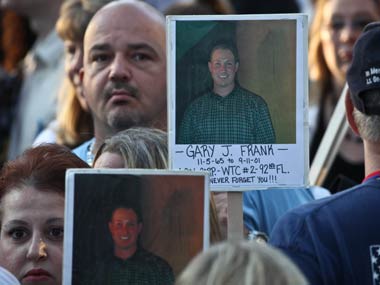 [/caption] The spirit of Diwali: Suvir Saran September 11, 2001 made a patriot out of many a liberal elite of the US. People who never felt they would have a jingoistic moment, found it instantly. Expressions of the type liberals, especially the very educated never felt they would utter — became commonplace. If the last generation may have had the Kennedy assassination to bring them together in some way, those that lived through 9/11, would always have that as a means of coming together. Patriotism and anger were everywhere. Even as people mourned the loss of the towers, some had also lost their orientation around the city they called home. I know intimately how I used those towers for figuring out South from North, and being able to guide myself around downtown New York, that does not always follow a grid. There was sadness for the loss of life and anger at the US Government for having failed to keep the country secure. I also feel many are still surprised and shocked at the reactions they felt, and still feel about the heinous acts of that day. Pro-America became an instant calling card, a trump card if you will. People genuinely found patriotism for the first time in their life. Patriotism, and the suffering for some, that it comes packaged with, brought incongruities to the fore. The feelings of pain and loss for one’s country, also made a few realise that something this horrific and ugly must come to have some truth and meaning. It must come to some better end. For some it was a questioning of whether violence and war could be acceptable means of seeking justice after tragedy. For some the road to be taken was the one towards love and hope. Few wanted to find strength to build the bridges needed and not the ugliness of revenge that was a rampant cry of the moment. Others, those considered foreign, and especially those that had seen horror and tragedy in their own lives before were comparatively unmoved by the events of 9/11. They had lost innocence years ago. Having lived through horrors and having watched the world react with cold indifference, how could they be horrified? They found sadness in the events. They found sadness in death and tragedy in pain but the past had made them accustomed to such realities of life. Events like those that happened that day can change the way one looks at things. When bad things happen, it is easy for man to turn into an animal of the most vicious type. But the heroes of that day will be the ones who made an attempt to invite forgiveness. But could it find room? Perhaps the horror left too much anger in most hearts. I know many New Yorkers found many ways of renewing their faith through the events that unfurled in the aftermath of 9/11 and through the process of grieving the tragedy. There was, and remains, in many hearts a hope to find new life after the horror that all witnessed. Somewhat like the story behind Diwali. When I look at the floodlights that mark the towers, I am reminded of the spirit of Diwali. The premise of appreciating light through darkness, embracing death in order to celebrate life. As told to Sandip Roy Suvir Saran ( www.suvir.com) is Executive Chef at Devi in New York, the chair of Asian Culinary Studies at the Culinary Institute of America. His books include American Masala: 125 New Classics from my Home Kitchen_._ The connection between 9/11 and 26/11: Mira Kamdar I was living on the West Coast on the morning of 9/11 but my husband was scheduled to fly to New York, where his head office was, on 12 September and we owned an apartment in the East Village. My husband woke me up around 6:00 am Pacific time, 9:00 am in New York. “Get up. There’s some kind of an attack on the World Trade Center. It looks really bad.” Our family gathered in front of the television and watched the horror unfold like millions of other Americans and people around the world. I kept thinking: “This can’t be real. This looks like a movie.” I didn’t realise I was crying until my daughter, then six years old, said: “Mommy! Why are you crying?” I told her: “You know Sweetie, when I was your age a really terrible thing happened to our country. The president, John F. Kennedy, was assassinated. I remember all the teachers at my school were crying and grandpa was crying. It was the first time I’d seen them cry. Well, what is happening now is like that, and when you grow up, you will remember this just like I remembered that.” We had a young woman renting a room in our New York apartment who worked in the Financial District. We tried frantically to reach her. Hours later, she called to say that she had walked all the way home, after running for her life from the smoke and debris near her office. She told us she was covered with soot, but otherwise okay. When I flew to New York a month later, it was shocking to see the gaping holes where the Twin Towers had been. I remember the holes were still smoking. And it was just heartbreaking to see all the posters put up seeking information on missing loved ones, the wilted flowers and burned out candles everywhere in our neighborhood in front of fire stations but also in front of buildings of all kinds. New Yorkers were collectively in a state of shock. Everyone said “hello” and smiled weakly to one another on the street. People were super polite. The paperback edition of my book, Motiba’s Tattoos, was to be launched in the home of painter Natvar Bhavsar on 15 September. Needless to say, the launch was postponed. My publisher’s offices were downtown and closed for a couple of weeks. The book was finally released in November. By then, New Yorkers were back to their usual remote selves on the street, the posters were faded, many of the improvised flower and candle shrines were gone. Life was starting to return to normal. Ten years later, I am shocked that the new buildings to be built on the site are not yet up. I resent the way the Bush administration handled the attack and its aftermath. I feel the real damage to the country was the subsequent attack on American citizens’ privacy and civil liberties, especially those of South Asian or Middle Eastern origin. Every brown-skinned person with an exotic name became a suspected terrorist, and many of my South Asian friends were singled out for special searches or other forms of harassment. I also resent that 9/11 was used as an excuse to invade Iraq, a huge mistake that has cost the United States, not to mention the Iraqi people dearly. The culture that was subsequently created in the military that led to the shocking photographs of humiliation and torture of detained Iraqis did much to damage the sympathy extended to the United States right after 9/11 by people around the world. Meanwhile, while the country’s attention was focused on what the Bush administration called “the war on terror,” big finance was given a free hand to execute what may be the largest transfer of wealth in history out of the hands of middle-class Americans and into the pockets of the super rich, and to lay the groundwork for the economic crisis the country, and now the world, is still facing. I resent that Guantanamo remains open and that the United States still engages in extraordinary rendition. I also resent that the terrorist groups that operate out of Pakistan with the blessing of the ISI are basically funded, if indirectly, by US aid to Pakistan. Those terrorists struck very close to my heart when they murdered my cousin in the 26/11 attack on Mumbai, and I see that attack as another tragic outcome to the US government’s reaction to 9/11. As told to Uttara Choudhury Mira Kamdar is the author of Planet India and Motiba’s Tattoos_. She is a_ Senior Fellow at the World Policy Institute, an Associate Fellow at Asia Society in New York and a Fulbright Senior Scholar at Franco-American Commission in Paris.
Those who lived through 9/11 will always remember where they were when they heard the news. Ten years later, well-known Indian Americans writers and thinkers talk about the legacy of that Tuesday morning.
Advertisement
End of Article
Written by FP Archives
see more

 "Israel targets top Hamas leaders in Doha; Qatar, Iran condemn strike as violation of sovereignty")
 "Nepal: Oli to continue until new PM is sworn in, nation on edge as all branches of govt torched")
 "Who is CP Radhakrishnan, India's next vice-president?")
 "Israel informed US ahead of strikes on Hamas leaders in Doha, says White House")
 "Israel targets top Hamas leaders in Doha; Qatar, Iran condemn strike as violation of sovereignty")
 "Nepal: Oli to continue until new PM is sworn in, nation on edge as all branches of govt torched")
 "Who is CP Radhakrishnan, India's next vice-president?")
 "Israel informed US ahead of strikes on Hamas leaders in Doha, says White House")



](https://images.firstpost.com/wp-content/uploads/2011/09/sep11_3.jpg)
](https://images.firstpost.com/wp-content/uploads/2011/09/sep11_two.jpg)
](https://images.firstpost.com/wp-content/uploads/2011/09/sep11_one.jpg)