

 "Why Samsung is the new Nokia")
I grew up reading The Indian Express. But a few years back my parents started subscribing to The Times of India after my mother complained once too often that “Express main masala nahi hai!” The fall of The Indian Express along with The Statesman which used to be two very good newspapers (Express still is. And I haven’t read The Statesman in a while, though at a point of time it was regarded the best English newspaper in Asia) are nowhere in the reckoning now, as far as the number of readers is concerned. What happened? To some extent the papers remained stuck to their past glory and did not see the rise of the new Indian middle class, which along with hardcore news also wanted a dash of masala every morning. They wanted to know how the Congress party was screwing up the country but they also wanted to know whether Amitabh and Rekha smiled when their eyes met at a film industry party. The Times of India was the only newspaper which caught on to this trend (or should we say created it), raked in the moolah and got way ahead of almost all its competitors in the race. [caption id=“attachment_564053” align=“alignleft” width=“380”] 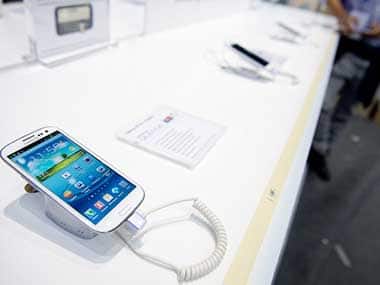 Samsung Galaxy S III in this file photo. AFP[/caption] So what is the point of I am trying to make? Incumbents who are firmly entrenched in their businesses more often than not fail to see the rise of a new category. The most recent example of the same is Nokia, which after being the top mobile phone brand in the world for a period of nearly 14 years has lost out to Samsung. And the reason for this is very simple. Nokia did not see the smartphone. There are loads of other examples of existing companies that did not see the rise of a new category. Sony invented the walkman but allowed Apple to walkway with the MP3 player market. RCA which was big radio manufacturer had earlier allowed Sony to walkaway with the pocket radio market. Southwest Airlines created an entirely new low cost airline market which gradually spread to all other parts of the world. Incumbents like Panam, Delta, Singapore Airlines and British Airways did not spot this opportunity. In India Hindustan Lever Ltd did not spot the low cost detergent market, Nirma did that. Amabassador and Premier Padmini which were the only two car companies in India did not see the rise of the small car market which Maruti Suzuki captured. More recently Maruti did not spot the growing demand for diesel cars and continued to be primarily a company which manufactured petrol cars. It lost out in the process. Bharti Beetel, revolutionised the landline phone market in India with the introduction of push button phones. But it got into the mobile phone market very late. And this was a huge business opportunity missed given that Bharti Airtel became the largest mobile phone company in India and could have easily bundled Beetel mobile phones along with Airtel mobile phone connections. An entire first generation of Indian mobile phone users could have ended up using Beetel mobile phones. Kodak a company which invented digital photography went bankrupt recently. And BBC, the most respected news organisation in the world did not see the rise of the concept of 24 hour news and left it to CNN to capture that market. As marketing consultants Al and Laura Ries,write in War In the Boardroom, “The biggest mistake of logical management types is their failure to see the rise of a new category. They seem to believe that categories are firmly fixed and a new one seldom arises.” And why is that? The answer lies in the fact that incumbent companies are too cued into what they are doing at that point of time. A brilliant example is Kodak. How could a company which invented digital photography go bankrupt because of it? Mark Johnson explains this phenomenon in Seizing the White Space - Business Model Innovation for Growth and Renewal. As he writes “In 1975, Kodak engineer, Steve Sasson invented the first camera, which captured low-resolution black-and-white images and transferred them to a TV. Perhaps fatally, he dubbed it “filmless photography” when he demonstrated the device for various leaders at the company.” Sasson was asked to keep quiet about his invention. This was because Kodak was the biggest producer of photo films at that point of time. And any invention that did not use photo films would have hit the core business of the company. So Kodak ignored the segment. By the time it realised the importance of the segment other companies like Canon had already jumped in and become big players. Also by then brand Canon had come to be associated very strongly with the digital camera whereas Kodak continued to be associated with the old photo film. The same would have stood true for Beetel in India. They would have been making good money on selling landline phones and wouldn’t have seen any sense in entering the nascent mobile phone market in India where calls were priced at Rs 16 per minute. And by the time the market took off brands like Nokia would have been firmly entrenched. Amabssador and Premier Padmini fell victim to the same thing. Another excellent example of this is Xerox. “Just think of Xerox’s Palo Alto Research Center, which famously owned the technologies that helped catapult Apple (the graphical user interface, the mouse), Adobe (post script graphical technology) and 3Com (Ethernet technology) to success,” writes Johnson. But Xerox executives were busy selling the photocopier. They did not have time for these small tinkerings that seemed to have been happening in their company labs. The photocopiers brought in all the money and their attention was firmly focussed on them. Sony is a really interesting example in this trend. Sony had created the Walkman and the entire market of listening to music anywhere and everywhere. But they somehow failed to latch onto the MP3 player market which was captured by the likes of Apple iPod. An MP3 player was just an extension of the Walkman. Other than being an electronics company Sony had also morphed into a music company owning the rights to the music of some of the biggest pop and rockstars. Hence Sony supporting MP3 technology would mean one of the biggest music companies in the world supporting the free copying and distribution of music because that was what MP3 was all about. And with this logic which might have seemed perfectly fine at that point of time Sony lost out to Apple in the MP3 space. Also, over the years music became free anyway. Getting back to where we started, Nokia made the same mistake. It did not see the rise of the smartphone category as other players like Samsung(with Galaxy) and Apple(with iPhone) did. And the reason was simple. Even though smartphones have been around for a while only now have they really taken over the market because they are robust enough. Hence, as long as the basic phones of Nokia were selling well, as they were till a couple of years back, it had no real interest in thinking about the smartphone market. By the time the company caught on with the launch of Lumia other international players like Samsung and Apple already had a major presence in the market. In India the smartphone space has loads of local players like Micromax battling for the market as well. And so Nokia lost the race! The interesting thing is that Samsung will also lose the race when the next evolution in the mobile phone space happens. It will be too focused on its smartphone. Vivek Kaul is a writer. He can be reached at vivek.kaul@gmail.com
Nokia failed because it did not see the rise of the smartphone category as other players like Samsung(with Galaxy) and Apple(with iPhone) did. Samsung will also lose the race when the next evolution in the mobile phone space happens.
Advertisement
End of Article


 "Israel targets top Hamas leaders in Doha; Qatar, Iran condemn strike as violation of sovereignty")
 "Nepal: Oli to continue until new PM is sworn in, nation on edge as all branches of govt torched")
 "Who is CP Radhakrishnan, India's next vice-president?")
 "Israel informed US ahead of strikes on Hamas leaders in Doha, says White House")
 "Israel targets top Hamas leaders in Doha; Qatar, Iran condemn strike as violation of sovereignty")
 "Nepal: Oli to continue until new PM is sworn in, nation on edge as all branches of govt torched")
 "Who is CP Radhakrishnan, India's next vice-president?")
 "Israel informed US ahead of strikes on Hamas leaders in Doha, says White House")



](https://images.firstpost.com/wp-content/uploads/2012/12/SamsungGalaxySIII_AFP_6Dec1.jpg)