

 "Scientists at IIT Hyderabad make IC chips off graphene for next gen digital devices")
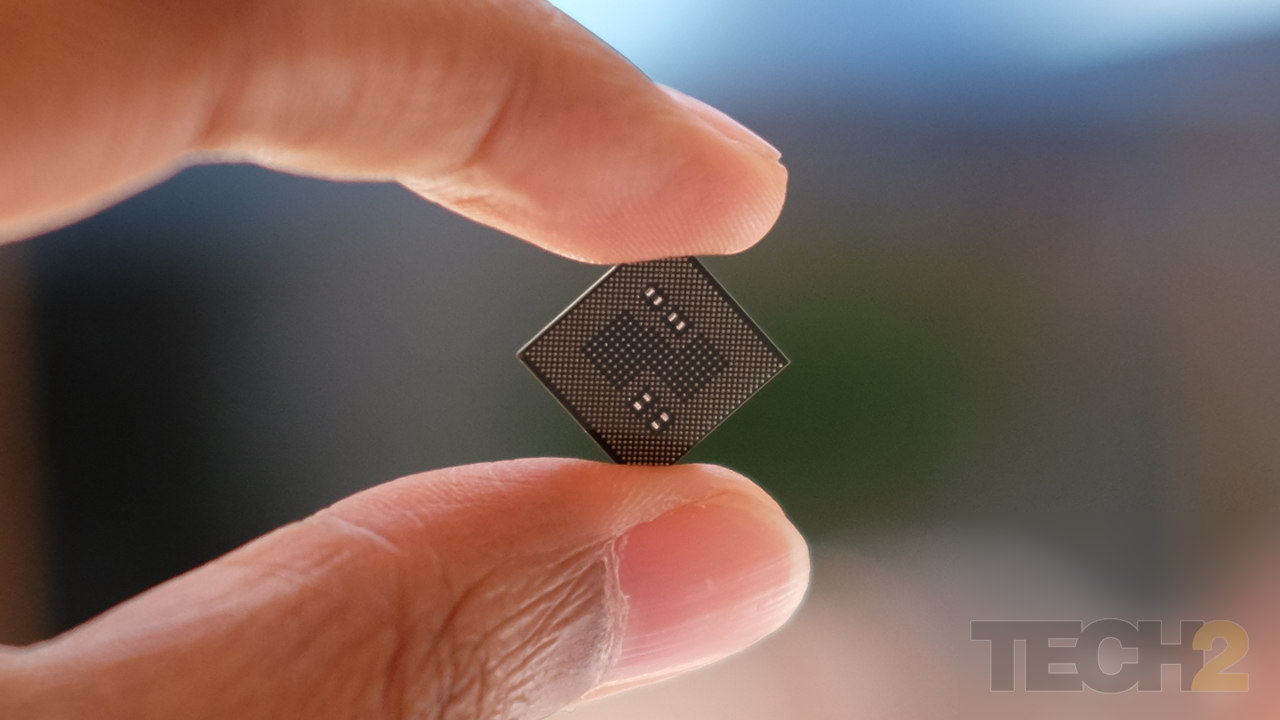
The growing popularity of digital devices has spurred the need for integrated circuits that are lightweight, consume ultra-low power and are highly efficient. Technology companies are increasingly focusing on nanoelectronics for developing such devices but using nanomaterial like graphene is still challenging as there is little evidence of it showing intrinsic magnetism. Now researchers from the Indian Institute of Technology (IIT), Hyderabad and University of Hyderabad have shown that graphene can be made magnetic with the control on electric field and temperature. They have shown this in single layer zigzag graphene nanoribbons. Graphene, a carbon material, is the thinnest and strongest material known. It came into the limelight after its exceptional quantum properties fetched Andre Geim and Konstantin Novoselov the 2010 Nobel Prize in Physics. From then on, there are many ongoing research projects for its applications in nanoelectronics. [caption id=“attachment_6239341” align=“alignnone” width=“1280”] A Qualcomm Snapdragon 845 chip. Image: tech2[/caption] The team exploited intrinsic magnetism in this lightweight soft magnetic material, and also observed the occurrence of various magnetic phases and its transitions from one phase to another. It has designed a methodology to identify the position of the appeared magnetic phases, moving towards making ‘graphene chip’ a reality in future. The research team includes this author and the work was supervised by Dr Amit Acharyya and Dr Swati Ghosh Acharyya. When your laptop or your mobile phone gets too heated up beyond the threshold, you would sometimes get panicky that chips inside the phone would have burnt out. That’s why some phone manufacturers nowadays claim that their phone chipsets are based on 14 nm FinFet technology and that they have advanced thermal management. Yet, we are facing the heating issues. Just imagine a situation where the heat generated via the chipset could be harnessed to perform computations. Researchers proceeded with this interesting thought. What if the temperature and electric field can be utilized to induce magnetism in graphene nanoribbons? There are already reported instances in the scientific literature that electric field and temperature can be individually used for controlling or inducing magnetism. In order to make ‘graphene processors’ a reality, the key issue to be addressed is thermal management. To achieve this, we need a mechanism which could harness excess heat generated in the operation of gadgets to induce magnetism. Our group envisaged a processor application using a single-layer zigzag graphene nanoribbon which could potentially harness heat generated in the system, to reduce the voltage requirement and to perform computations (information propagation) using spins. The researchers performed a computational study on pristine free standing single layer zig-zag graphene nanoribbons typically in the size of 1 to 50 nanometers to study magnetic properties. They could induce intrinsic magnetism in nonmagnetic graphene by application of electric field and temperature. At a particular value of electric field and temperature, paramagnetism was seen and further tuning to different values led to the achievement of ferromagnetism and antiferromagnetism. It was observed that if one value (say electric field) is kept constant, the other value (temperature) can be increased or decreased to obtain different magnetic phases and vice versa. It means if one’s laptop is generating high temperature, a lower electric field could achieve the distinct magnetic phases in nanoribbons. Not limiting themselves to electric field and temperature, the researchers also built a bow-tie scheme to induce magnetism in the majority of the carbon allotropes. This thermoelectromagnetic effect and unusual behaviour of magnetism in graphene which is tunable are definitely a stepping stone towards graphene electronics. The work could pave the way for stretching the performance of integrated circuits and eventually lead to the realisation of laptops powered by graphene-based microprocessors. The research team included Santhosh Sivasubramani, Sanghamitra Debroy, Amit Acharyya (IIT Hyderabad); Swati Ghosh Acharyya (University of Hyderabad). The study results were published in journal Nanotechnology. The research work is partially funded by Redpine Signals, Department of Science and Technology (DST), Centre for Development of Advanced Computing (CDAC) and Ministry of Electronics and Information Technology. India Science Wire The author is a research scholar in the Department of Electrical Engineering, IIT Hyderabad
The popularity of digital devices has spurred the need for IC chips that are lightweight yet efficient.
Advertisement
End of Article

 "Israel targets top Hamas leaders in Doha; Qatar, Iran condemn strike as violation of sovereignty")
 "Nepal: Oli to continue until new PM is sworn in, nation on edge as all branches of govt torched")
 "Who is CP Radhakrishnan, India's next vice-president?")
 "Israel informed US ahead of strikes on Hamas leaders in Doha, says White House")
 "Israel targets top Hamas leaders in Doha; Qatar, Iran condemn strike as violation of sovereignty")
 "Nepal: Oli to continue until new PM is sworn in, nation on edge as all branches of govt torched")
 "Who is CP Radhakrishnan, India's next vice-president?")
 "Israel informed US ahead of strikes on Hamas leaders in Doha, says White House")



