

 "Samsung, Tizen and the Internet of Things revolution")
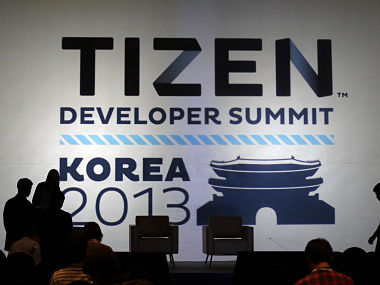
Editor’s Note: In the first part of this series we looked at the Samsung-Android connection. In this part we take a deeper look into the much bigger story behind why Samsung is pushing Tizen, one that enters into the Internet of Things, considered by many to be the defining technology trend of the coming years. Samsung is the No 1 hardware manufacturer in the Android ecosystem. But sometimes, even leaders are slaves to others. And currently, Samsung plays slave to two masters: Microsoft and Google. [caption id=“attachment_1233701” align=“alignleft” width=“380”]  Representational image. AP[/caption] By using Google’s Android OS on its devices Samsung has effectively forgone the lucrative revenue stream that comes with owning your own OS. Just over the last year Google reported over 1 billion activations across 1.5 billion devices globally with ABI Research predicting nearly USD $6.8 billion of revenue from Android apps alone. And although Samsung primarily uses the Android OS for its devices it doesn’t really get a slice of this ever increasing pie. Clearly, Samsung feels it’s time to get out of this one-sided relationship and make a go of it alone on the world stage instead of merely enabling Google’s increasing profitability by hosting the Google Play store on Samsung hardware. But to do so in the quest for greater profitability and control, Samsung needs to have a controllable device platform at the ready, which is where Tizen comes in to the picture. Samsung has already allocated USD $4 million towards the development of various apps from developers (Tizen allows developers to program in HTML5, CSS, and Javascript) for its upcoming smartphone. The second thorn in Samsung’s side is Microsoft. Not as well known a problem as Google is Samsung’s desire to dodge the Microsoft licensing agreement that it has regarding undisclosed patents used in the Android OS. This agreement requires Samsung to pay royalties on a per-device basis to Microsoft in lieu of getting sued, which Samsung already has had enough of from Apple. Clearly, transitioning to an operating system of its own such as Tizen will make for a more cost-effective alternative and one where the sword of legal action isn’t always hanging over Samsung’s head. Samsung’s Applications Ecosystem on Tizen But why stop with smartphones? The truth is with Tizen, Samsung’s strategy is first smartphones, then the world. Samsung seems to be taking a cue from the emerging trends of ecosystem oriented technology, such as Microsoft’s cross platform systems (Windows, Cloud, Xbox), Amazon services (Amazon online, Kindle devices and InstantVideo/Lovefilm), and Sony lifestyle products (TVs, music systems and PlayStation devices) . All of these players are attempting to corner the consumer entertainment market by consolidating their products and services in a closed tech ecosystem that retains consumers. Just the current debate over Sony’s PS4 and Microsoft’s Xbox One gaming console is enough to show the stakes that are at play. So as Samsung delves deeper down the inbred world of mobile open source operating to gain independence it must promote Tizen as not only a mobile OS but a platform that can cross device barriers. With this in mind Samsung has already started deploying Tizen on its digital cameras. The Samsung NX300M digital camera is the first device in this line and runs on the Tizen Camera Platform and is soon to be followed by a host of other devices such as washing machines, dryers, TVs, refrigerators, smart cars, gaming devices, and smart homes. Samsung has already garnered the attention and support of various manufacturer and service providers, such as Intel, Fujitsu, Huawei, Here (Nokia mapping service), Konami, McAfee, Panasonic, Sharp, the Weather Channel and a few smaller start-ups such as Appbackr in order to standardize the future hardware platform across numerous device categories while it finds innovative apps for Tizen. It isn’t too outrageous a bet to assume that we’ll soon start seeing Tizen appear on devices of all types even if we don’t notice it. Revolutionising Consumer Technology Ain’t Easy “Tizen extends beyond the smartphone and tablet ecosystem to a wider array of other connected device segments,” says Trevor Cornwell, founder and CEO of Appbackr, giving a clue as to what changes may just be around the corner in terms of inter-device connectivity. In order to accelerate the app development goal Samsung has set a late 2014 deadline with the Tizen Association and the former is eagerly funding developers to populate an as-yet barren applications market place. A big investment in itself if we consider the rivalry it is sure to face from Google and other competitors. Samsung is also the only company in the Tizen group to have multiple device categories across its operations, from TVs to computer hardware, and it’s ideally placed to leverage this advantage. By autonomously ensuring a native operating system, Samsung can not only create a high value applications ecosystem for its products but also shed its massive dependency on Google’s Android. Samsung has already hired Luc Julia, the former director of Apple’s Siri program to spearhead Samsung’s own artificial intelligence system to make a super version of Siri. As vice president and innovation fellow at Samsung’s Open Innovation Center, Julia has developed SAMI (Samsung Architecture for Multimodal Interactions), and hopes to leverage cloud and data analytic capabilities to further enforce Samsung’s Internet of Everything strategy. “IoT [Internet of Things] is all about sensing and collecting data - and then transporting it [to the cloud]. Once it’s there, it’s about massaging it and sending it back to the user,” said Julia, elaborating on his belief that by 2020 there will be over 1.5 trillion interconnected devices and providing users with predictive and intuitive solutions is the key to next generation mobility. To accomplish the applications development aspect of this ambitious goal, Samsung has allocated $100 million in an accelerator fund along with 48 other companies, which will collect, analyse and deploy useful insights from various sensors in devices. Not wanting to leave any stone unturned they are also providing incentives to start-ups in the range of $100,000 to $2 million for developing deep analytic services. “Our findings clearly show that intelligent systems bring back more RoI for OEMs and supply chain vendors who invest in them,” said Mario Morales, vice president of IDC’s Semiconductors and Enabling Technologies research group. “The evolution of intelligent systems embodies a vision of computing that surrounds us and is adaptable and autonomous.” In a world of interconnected devices, securing TVs, refrigerators, cars, phones and gaming devices, under a unified OS would be the first step to making a feasible ecosystem. Samsung’s thinking is clearly beyond just the phone but the desire to create a digital network architecture that will push Samsung directly into the devices market. Samsung was one of the first hardware manufacturers to think ahead and partner with Google’s Android on its devices when everyone else was scrambling for a standardised OS. Perhaps once again, Samsung’s ambitious plans to create a world of interconnected devices will propel it to the front of the race and give it the edge that it seems to have lost. For now, we’ll just wait and see how successful Samsung is in making this dream a reality.
By using Google’s Android OS on its devices Samsung has effectively forgone the lucrative revenue stream that comes with owning your own OS. Just over the last year Google reported over 1 billion activations across 1.5 billion devices globally with ABI Research predicting nearly USD $6.8 billion of revenue from Android apps alone.
Advertisement
End of Article

 "Russian drones over Poland: Trump’s tepid reaction a wake-up call for Nato?")
 "As Russia pushes east, Ukraine faces mounting pressure to defend its heartland")
 "Why Mossad was not on board with Israel’s strike on Hamas in Qatar")
 "Turkey: Erdogan's police arrest opposition mayor Hasan Mutlu, dozens officials in corruption probe")
 "Russian drones over Poland: Trump’s tepid reaction a wake-up call for Nato?")
 "As Russia pushes east, Ukraine faces mounting pressure to defend its heartland")
 "Why Mossad was not on board with Israel’s strike on Hamas in Qatar")
 "Turkey: Erdogan's police arrest opposition mayor Hasan Mutlu, dozens officials in corruption probe")



](https://images.firstpost.com/wp-content/uploads/2013/11/South-Korea-Samsung-N_Verm_opt1.jpg)