

 "Wikileaks: How India is manipulating carbon credits")
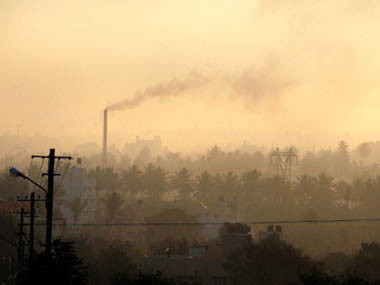
Millions of carbon credits traded by India and used to offset emissions in the developed world may not actually exist. A Wikileaks cable from 2008 has revealed that a number of projects that trade in carbon credits were ineligible to do so and are not therefore trading in ‘real’ credits. The cable says most of the carbon-offset projects in India fail to meet the CDM requirements set by the UN Framework Convention on Climate Change. It also describes the UN’s validation and registration process as “arbitrary”. Carbon trading which happens under the Clean Development Mechanism (CDM) established under the Kyoto protocol, allows developed countries to offset some of their carbon emissions by investing in climate-friendly projects, such as hydroelectric power and wind farms, in developing countries. Verified projects earn carbon credits that can be bought and sold, and count towards meeting rich nations’ carbon-reduction targets. India and China are among the biggest recipients of such projects. India for instance is currently believed to have around 720 verified projects which account for around 120 million tonnes of carbon credits. However it may turn out that a significant proportion of those projects should never have been CDM verified in the first place. ( read more) [caption id=“attachment_94991” align=“alignleft” width=“380” caption=“AFP”] 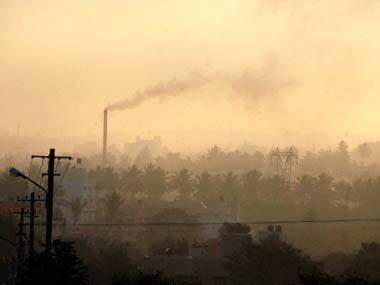 [/caption]The problem lies with the mandatory ‘additionality’ criteria that companies must fulfill for their projects to be eligible for CDM verification. Under this criteria, companies must demonstrate that they require outside assistance to make a project both economically viable as well as environmentally sustainable. This could be through the installation of alternate power methods or through investment in more expensive ‘clean’ technology. Companies that can already afford such technologies are not considered for CDM verification because the idea is to increase the use of clean technology. This would necessarily mean incentivizing companies who would otherwise not use it. Companies therefore have to demonstrate a need for CDM at the very first planning stages of a project. However since CDM eligibility means more money and more profits, there have been instances of companies going back and manipulating records to show there were CDM requirements at the very start. “The problem is that additionality is subjective and can be subject to manipulation. There have even been instances where the United Nations has had to suspend third party verification agencies because they worked with companies to ensure that they fulfilled eligibility criteria for CDM projects”, said Swapan Mehra, CEO of Iora Ecological Solutions. Aditya Ghosh, a senior coordinator with the Centre for Science and Environment agrees that verification is the main issue when it comes to CDM. “The problem is that people manipulate CDM for their own personal benefit, and regulatory companies are unable or unwilling to catch it”, he said. But this, he says, is not the only problem in a process ‘racked with controversies from the very beginning’. Double accounting for instance is a very real issue. Here one set of carbon credits from a single project may be traded by the company running the project as well as by the government of the country in which the project is based. So basically a reduction with the value of x is traded as 2x in the global market. Another problem lies with determining whether or not CDM certified projects actually have sustainable development benefits even though they may offset emissions. According to Ghosh a large number of projects in India do not have long term sustainable benefits although they may offset emissions in the short term. This defeats the entire purpose of carbon trading. And the problem runs a lot deeper than just companies and verifying agencies. The Wikileaks cable also criticized Indian officials, saying that they had known about the problem for at least two years. The cable also quotes R. K. Sethi, then chairman of the CDM’s executive board and member-secretary of the Indian CDM authority in New Delhi, as admitting that the authority simply “takes the project developer at his word for clearing the additionality barrier”. Trading in carbon credits is still the main strategy by which developing countries seek to combat climate change. However there clearly needs to be greater transparency and more accountability to the process. Trading thin air at the cost of clean air is not something to be trifled with.
India is one of the biggest traders of carbon credits, but these credits are often bought and sold by companies that are not legitimately certified to do so.
Advertisement
End of Article

 "Israel targets top Hamas leaders in Doha; Qatar, Iran condemn strike as violation of sovereignty")
 "Nepal: Oli to continue until new PM is sworn in, nation on edge as all branches of govt torched")
 "Who is CP Radhakrishnan, India's next vice-president?")
 "Israel informed US ahead of strikes on Hamas leaders in Doha, says White House")
 "Israel targets top Hamas leaders in Doha; Qatar, Iran condemn strike as violation of sovereignty")
 "Nepal: Oli to continue until new PM is sworn in, nation on edge as all branches of govt torched")
 "Who is CP Radhakrishnan, India's next vice-president?")
 "Israel informed US ahead of strikes on Hamas leaders in Doha, says White House")



](https://images.firstpost.com/wp-content/uploads/2011/09/GreenHouseGasAFP.jpg)