

 "PIL: The real hero of Supreme Court decision on 2G")
by Raghul Sudheesh and Spadika Jayaraj The two recent landmark Supreme Court judgments, one upholding the right of a private citizen to seek sanction for prosecution of a public servant, and the other being the quashing of 122 2G licenses, have one thing in common: They are both results of Public Interest Litigation (PIL). Public Interest Litigation is a form of litigation wherein a third party, whose right has not necessarily been violated, can file charges in court against the government. The first PIL in India was filed in the year 1979, in the case Hussainara Khatoon v. State of Bihar. It dealt with the plight of under-trial prisoners in the jails of Bihar. It was filed by an advocate on the basis of a newspaper article which had highlighted the same. In the year 1981, Justice VR Krishna Iyer laid down the foundation of PIL, by emphasising the need for relaxing the rules relating to locus standi to include those whose legal rights have not been directly violated, in the judgment Fertiliser Corporation Kamgar v. Union of India. [caption id=“attachment_203171” align=“alignleft” width=“380” caption=“The major criticism that the PIL has drawn is the slippery slope argument about the extent of judicial activism and the role of the judiciary in handling policy decisions. Reuters”] 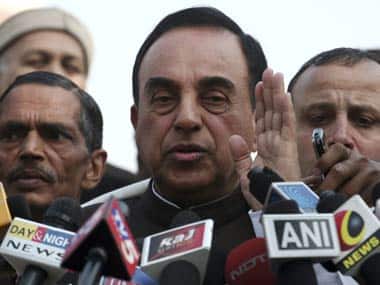 [/caption] A year later, Justice PN Bhagwati, in the landmark judgment SP Gupta v. Union of India, expressly articulated that when a legal right has been breached and the individual is unable to approach the court for relief, any member of the public can maintain an application for an appropriate direction, both with the High Court and the Supreme Court. In keeping with the spirit of PIL, which is to increase the access to justice, there are a few conditions that a petition must meet. They are, firstly, the complaint cannot be against a private party, and secondly, it must be a bona-fide complaint that is not frivolous in nature. Within this broad framework, PILs have emerged as a powerful tool in the hands of the people. The courts have accepted even letters and telegrams as petitions. Several important judgments, such as Sunil Batra v. Delhi Administration (where a prisoner wrote a petition in the form of a letter, complaining about torture being inflicted upon a fellow inmate) and People’s Union for Democratic Rights v. Union of India have been products of PILs that have reached the court through post and telegram. In light of the two PIL-initiated judgments that have been in the news recently, it’s important to remember that PILs have been used to hold public officials accountable for their actions in the past as well. The scandal involving petrol pump and gas agency allocations by then petroleum minister Captain Satish Sharma, and the more recent Adarsh Co-operative housing scam were also brought to light by public-spirited individuals. The major criticism that the PIL has drawn is the slippery slope argument about the extent of judicial activism and the role of the judiciary in handling policy decisions. The Indian Constitution advocates a system of checks and balances among the three organs of government (the executive, the legislature and the judiciary), and does not recognise the doctrine of separation of powers in absolute rigidity. However, the judiciary has mainly attracted criticism when it appears to overstep its mandate of upholding the law. For example, in the famous case Vishakha v. State of Rajasthan, the Supreme Court recognised the absence of legislation regarding sexual harassment in the workplace, and mandated that until such legislation was in place, the guidelines set by the Supreme Court in the judgment shall be enforceable. In the 2G case itself, the Supreme Court has held that a first-come-first-served basis for allocation of natural resources is “inherently flawed” and in that case the state must “always adopt a method of auction”. Such a judgment opens the door to further questions on the role of the judiciary in deciding matters of policy. However, there is no denying that accessing justice has become much easier with the advent of the PIL. The public can now hold the government accountable for its actions without worrying about high court fees or red-tapism. This will hopefully pave the way for a more efficient and transparent state mechanism. Society is the ultimate winner, with the evolution of PIL. A matter of concern is that the law ministry is considering a bill to regulate the PIL mechanism in India. This has to be seen with great caution and can end up destroying the utility of the PIL concept. Being aware of this fact, the Apex Court itself has laid down guidelines that include: the courts should prima facie verify the credentials of the petitioner before entertaining a PIL; prima facie be satisfied about the correctness of the contents of the petition; be satisfied that substantial public interest is involved; ensure that the petition that involves larger public interest, gravity and urgency is given priority; before entertaining a PIL, ensure that it is aimed at the redress of genuine public harm or public injury; ensure that there is no personal gain, private motive or oblique motive behind filing the PIL; and, finally, ensure that petitions filed by busybodies for extraneous and ulterior motives are discouraged by imposing exemplary costs or by adopting similar novel methods. There has to be a check and balance on the PIL mechanism and frivolous PILs are to be avoided but this does not mean that the doors of Temple of Justice should be shut to the people. Raghul Sudheesh is Associate Editor at Bar & Bench . You can follow him on Twitter. Spadika Jayaraj is a student at National Law School of India University, Bangalore.
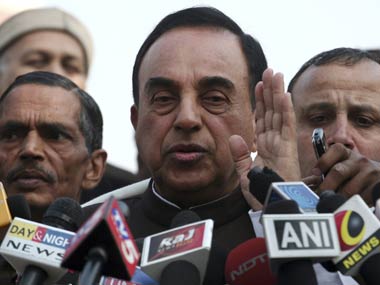
Subramanian Swamy and Prashant Bhushan are in the spotlight these days because of recent Supreme Court decisions. But the real hero of the drama is the humble PIL or Public Interest Litigation.
Advertisement
End of Article
Written by FP Archives
see more

 "Israel targets top Hamas leaders in Doha; Qatar, Iran condemn strike as violation of sovereignty")
 "Nepal: Oli to continue until new PM is sworn in, nation on edge as all branches of govt torched")
 "Who is CP Radhakrishnan, India's next vice-president?")
 "Israel informed US ahead of strikes on Hamas leaders in Doha, says White House")
 "Israel targets top Hamas leaders in Doha; Qatar, Iran condemn strike as violation of sovereignty")
 "Nepal: Oli to continue until new PM is sworn in, nation on edge as all branches of govt torched")
 "Who is CP Radhakrishnan, India's next vice-president?")
 "Israel informed US ahead of strikes on Hamas leaders in Doha, says White House")



](https://images.firstpost.com/wp-content/uploads/2012/02/swamy380.jpg)