

 "Kharif MSPs: Subbarao 'ka bad luck heech kuch kharab hai'")
Many years before he became a social ambassador trying to highlight all that is wrong with India, actor Aamir Khan did this film called Rangeela. The movie had many firsts to its credit. The actress Urmila Matondkar, who had had a string of flops till then, wore a swimsuit on screen for the first time. It was AR Rahman’s first Hindi film, with all his releases before Rangeela being dubbed versions of his Tamil scores. The movie also had a lead character (played by Khan) speaking Mumbaiya Hindi, one of the earliest in the history of Hindi cinema, throughout the movie.
One of the lines that Khan spoke in the movie, and which has since become a part of popular culture, was “apun ka to bad luck heech kharab hai” (We all know what it means, so let me not waste time translating it). But before you start wondering why am I talking about Aamir Khan in a piece which is clearly not about him, let me explain.
[caption id=“attachment_345135” align=“alignleft” width=“380” caption=“Subbarao is in a huge Catch-22 situation. Even if he manages to lower long term interest rates the borrowing may not pick up.AFP”] 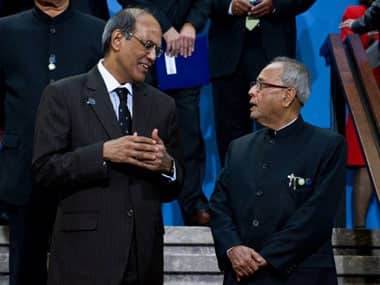 [/caption]
An individual mouthing the same lines like Aamir Khan in Rangeela 17 years back, right now, must be Duvvuri Subbarao, the governor of the Reserve Bank of India (RBI). The government of India seems to be in the mood to make his job tougher by the day.
The Cabinet Committee for Economic Affairs on Thursday (14 June 2012) approved sharp increases of 15-53 percent in the minimum support prices (MSP) of kharif crops, which are typically sown around this time of the year for harvesting after the rains (ie, September-October). “The government has accepted the suggestion made by the Commission for Agriculture Costs and Prices (CACP), which recommends MSPs after taking into account the cost of production,” said Home Minister P Chidambaram , after a meeting of the Cabinet Committee on Economic Affairs.
The MSP for paddy (rice) has been increased from Rs 1,080 per quintal to Rs 1,250 per quintal. For the ‘A’ grade variety the prices have been increased from Rs 1,110 per quintal to Rs 1,270 per quintal. Other major products like bajra, ragi, jowar, soyabean, urad, cotton, etc, have seen similar increases.
This means UPA-2 has already put itself in election mode, and any interest rate cuts will mean helping a profligate government seek re-election with other people’s money. Should Subbarao be helping politicians by obliging?
The impact
Every year the Food Corporation of India (FCI), or a state agency acting on its behalf, purchases rice and wheat at MSPs set by the government. The “supposed” idea behind setting the MSP much in advance is to give the farmer some idea of how much he should expect to earn when he sells his produce a few months later. This price support is expected to encourage higher production of rice and wheat.
FCI typically purchases around 15-20 percent of India’s wheat output and 12-15 percent of its rice output. But what this price support often leads to is farmers producing a lot more than the required demand. With the FCI obligated to purchase what the farmers produce, its godowns overflow and at times the wheat and rice are dumped in the open, leading to rodents feasting on the crop. So if you see more such news items and photographs later this year showing this, don’t be surprised.
The significantly higher prices that the government is offering for the rice crop also mean an increased fiscal deficit. Fiscal deficit is the difference between what a government earns and what it spends.
For the current financial year 2012-2013 (i.e. the period between 1 April 2012 and 31 March 2013) the food subsidy has been budgeted at Rs 75,000 crore. Experts are of the opinion that this amount is underprovisioned and with the MSP of rice paddy going up, the food subsidy bill will shoot up significantly. “The underprovisioning of food subsidy in the current year is at Rs 31,750 crore. Now with increased MSP on paddy, the total food subsidy deficit at the end of the current year will be about Rs 40,000 crore, putting immense pressure on the food subsidy burden of the government,” a food ministry official told The Economic Times.
Given that the government is offering a significantly higher MSP for paddy in the kharif crop, a similar move can be expected for wheat, which is substantially part of the rabicrop, planted in the autumn season and harvested in winter. This means that food subsidies will go up even further, in turn pushing up the fiscal deficit.
Higher inflation
The MSP for urad has been increased by Rs 1,000 per quintal to Rs 4,300. The MSP of cotton has been raised from Rs 600 to Rs 800 per quintal. Jowar saw the biggest jump of 53 percent per quintal.
Other than rice and wheat, many of the crops with announced MSPs do not have a designated government agency that buys the crop at the prescribed price. Hence, when an increase in MSP is announced it doesn’t necessarily lead to an increase sowing of these crops. But what it does is push up prices. As Madan Sabnavis, chief economist, Care Ratings, told Business Standard: “I can’t understand the need to announce MSPs for crops other wheat and rice, given (that) there is no official procurement. It does nothing, except pushing up food inflation.”
Religare Commodities, in a research note, expressed a similar sentiment. It said though higher MSPs for agri-products were thought to increase the sown area for a crop, in the last few years that doesn’t seem to be happening for most crops, except paddy, cotton and soyabean.
The difficulty of being Duvvuri Subbarao
This announcement makes life even more difficult for Duvvuri Subbarao. First and foremost, the government is most likely to overshoot its planned fiscal deficit of Rs 5,13,590 crore for the current financial year 2012-2013. The government will have to borrow more in order to finance the increased fiscal deficit. More borrowing means that the current higher interest rate scenario is likely to continue.
The RBI is meeting on 18 June 2012 to decide on what its interest rate policy is going to be. It is widely expected that the bank will cut the repo rate (the rate at which it lends to banks). This, after the GDP growth rate for the period of January to March 2012 fell to 5.3 percent. The idea is that once the RBI cuts interest rates, banks will cut interest rates as well. Then business will borrow and so will you and me.
But reality is always different from economic theory. The RBI might cut the repo rate, which is a short-term interest rate, but long term interest rates on home loans, car loans, loans to business, etc, may not fall. This is because the government of India will have to borrow more for the long term to finance its increased fiscal deficit. And since its borrowing needs will go up, it will have to offer a higher rate of interest to attract lenders.
When the government borrows more, it crowds out private borrowing, meaning, there is a lesser pool of “savings” for private borrowers to borrow from. Hence, banks and other financial institutions which needed to borrow in order to give out home loans have to offer an even higher rate of interest than the government to attract lenders.
Hence, even if the RBI cuts the repo rate, whether that will have an impact on long term interest rates in India is doubtful. Over and above that, an increase in the MSP of the kharif crop will most likely to lead to higher inflation. This inflation will be on two fronts. One, as explained above, will be in the form of food inflation. The second will be in the form of suddenly increased incomes in rural India. This will lead to a situation where more money will chase the same amount of goods, leading to higher prices and thus higher inflation.
In a scenario where inflation is expected to go up, should the RBI be cutting interest rates or should it be raising them? Subbarao is in a huge Catch-22 situation. Even if he manages to lower long term interest rates the borrowing may not pick up. As John Kenneth Galbraith points out in The Economics of Innocent Fraud:
“If, in recession the interest rate is lowered by the central bank, the member banks are counted on to pass the lower rate along to their customers, thus encouraging them to borrow. Producers will thus produce goods and services, buy the plant and machinery they can afford now and from which they can make money, and consumption paid for by cheaper loans will expand..The difficulty is that this highly plausible, wholly agreeable process exists only in well-established economic belief and not in real life… Business firms borrow when they can make money and not because interest rates are low.”
And the current economic scenario in India does not look good enough for the businesses to borrow.
To conclude
What the huge raise in MSPs tells us is that the Congress-led United Progressive Alliance is also getting into an early election mode. And the easiest way to get votes is to bribe voters at the taxpayers’ cost. Before the last Lok Sabha elections, the UPA waived off Rs 71,000 crore of farm loans. This move of substantially increasing MSPs of crops is in line with that move, though it’s not as big as that. However, the UPA raised MSPs by huge amounts even in 2008 - a year before the elections.
It’s likely that this might be a first in a series of moves which might lead to the UPA bringing the elections forward from 2014. Having the elections before 2014 clearly makes sense for the Congress, given that the state of the economy is only going to get worse in the days to come. Hence we might be entering a scenario where the UPA will come up with more boondoggles to woo voters.
This will make things even more difficult for Duvvuri Subbarao, who might well be telling himself “apun ka to bad luck heech kharab hai” more often in the days to come.
Vivek Kaul is a writer and can be reached at vivek.kaul@gmail.com

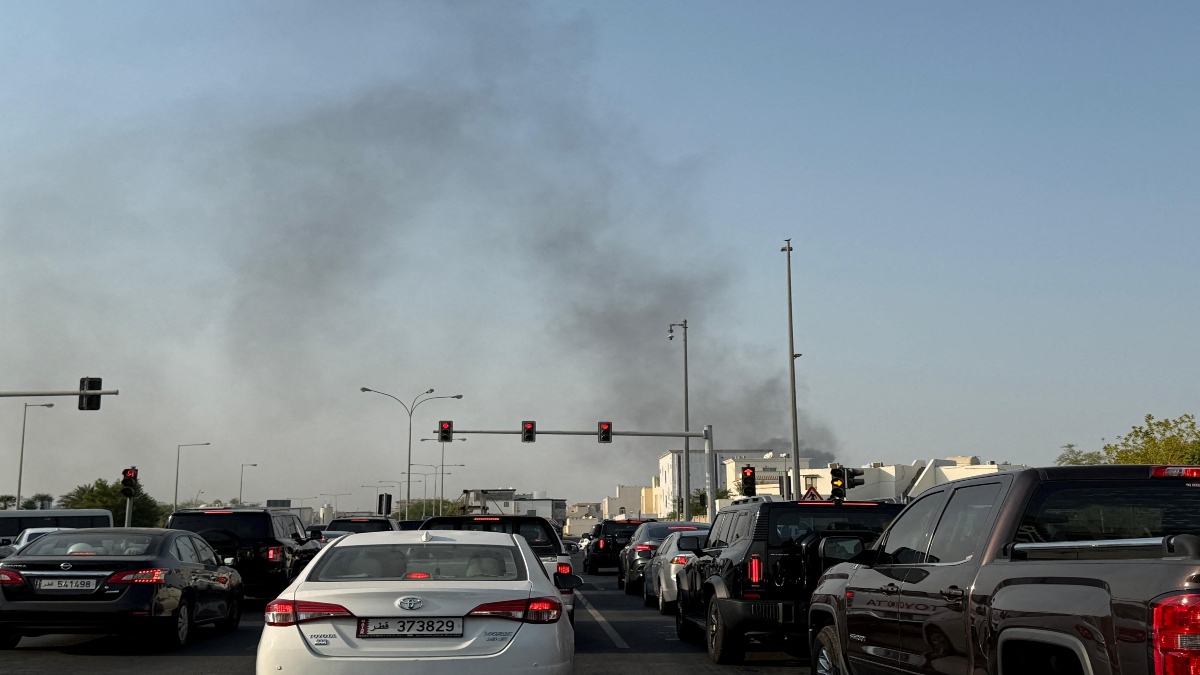 "Israel targets top Hamas leaders in Doha; Qatar, Iran condemn strike as violation of sovereignty")
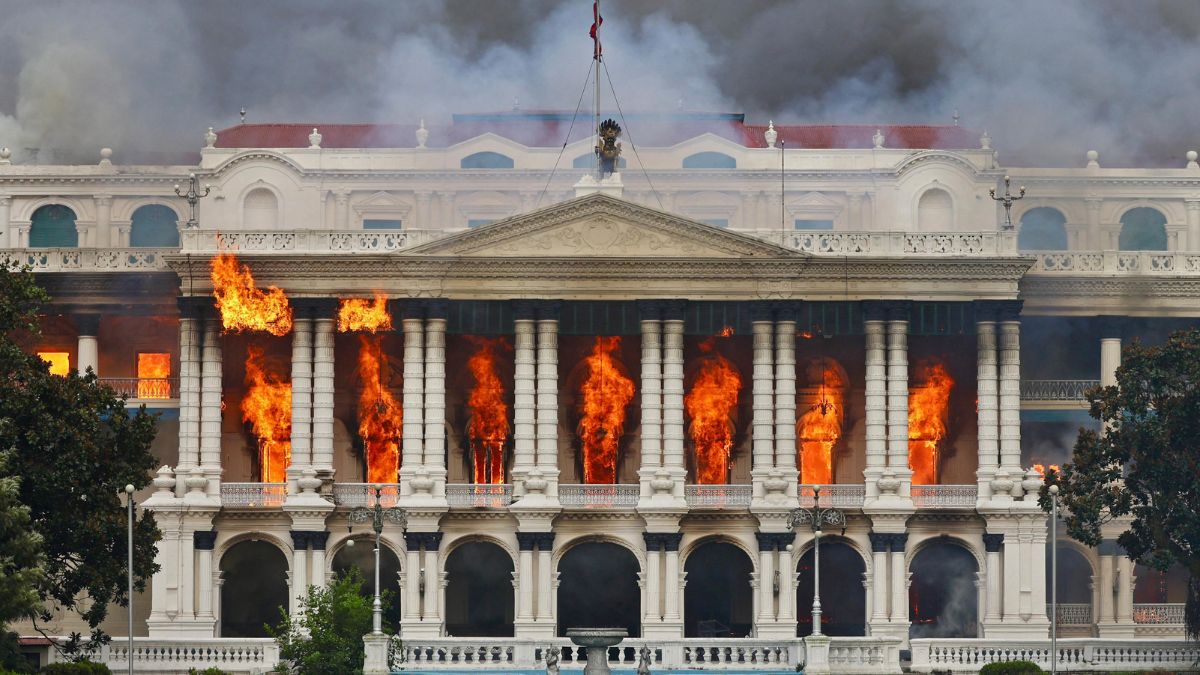 "Nepal: Oli to continue until new PM is sworn in, nation on edge as all branches of govt torched")
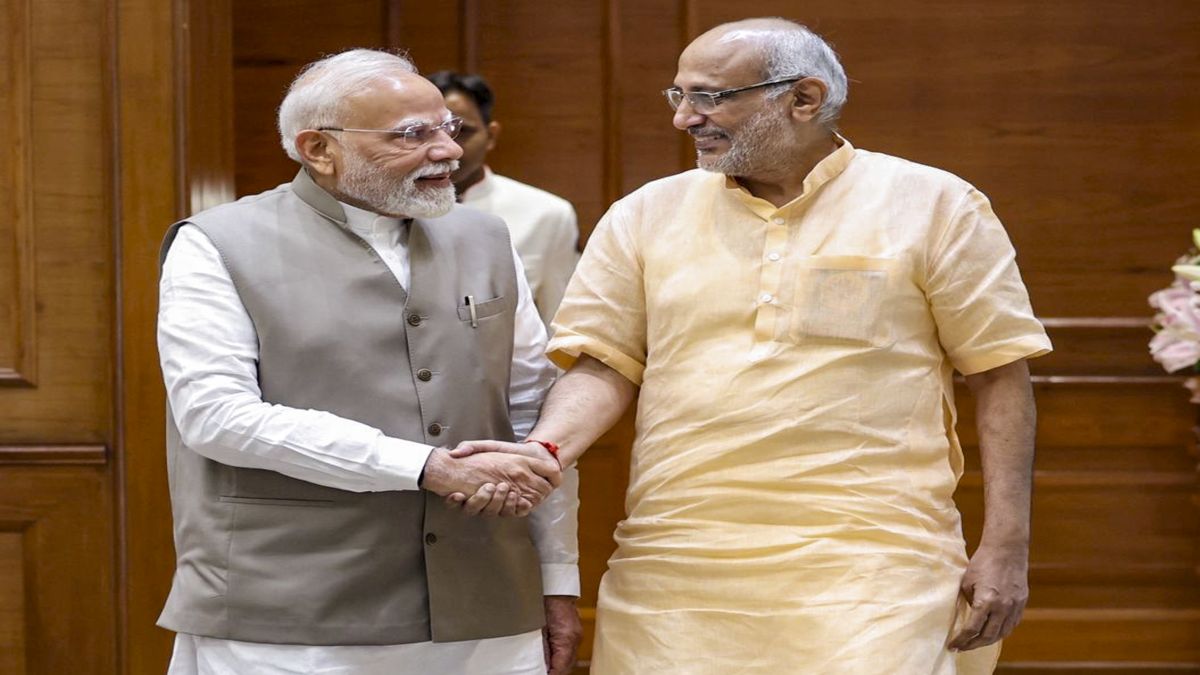 "Who is CP Radhakrishnan, India's next vice-president?")
 "Israel informed US ahead of strikes on Hamas leaders in Doha, says White House")
 "Israel targets top Hamas leaders in Doha; Qatar, Iran condemn strike as violation of sovereignty")
 "Nepal: Oli to continue until new PM is sworn in, nation on edge as all branches of govt torched")
 "Who is CP Radhakrishnan, India's next vice-president?")
 "Israel informed US ahead of strikes on Hamas leaders in Doha, says White House")



](https://images.firstpost.com/wp-content/uploads/2012/06/subbaraoandpranab.jpg)