

 "Bleak future for Sri Lankan Tamils: Gordon Weiss")
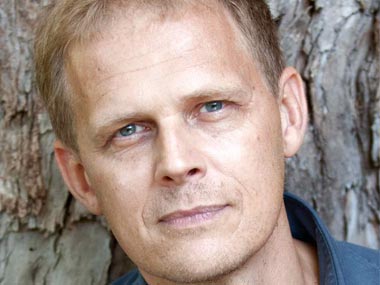
Eleven months after the bloody war in Sri Lanka that led to the complete rout of the LTTE amid intense civilian suffering, a great piece of journalism shook the conscience of the world: The Cage, authored by Gordon Weiss who was the UN spokesperson in the country at the time. Written with arresting clarity of purpose and a racy style, The Cage unequivocally overturned the Sri Lankan government’s stand that there were no civilian deaths in the final days of the war. Besides the vivid description of the final phase of the war with chilling details of brutality, suffering and deaths, it provided an incredible perspective of the genesis, evolution and the culmination of the deep-rooted rift between the Tamil and Sinhala sentiments in Sri Lanka, that found violent expression in the decades long civil war. The extensive references, meticulous documentation, the bold way of directly naming people like the Rajapaksas, and the unrestrained narration of the unique instruments of oppression in Sri Lanka make the book a gripping, but tormenting experience. It was The Cage along with a sensational Channel Four Documentary (The Killing Fields) that exposed the veil of secrecy behind the war. The book also provided context for the UN Panel report and has been accepted as a reliable account of what exactly happened during the final days of the war in 2009, when a tiny piece of piece of land in the North of Sri Lanka was under siege by military forces. It is prescribed reading in many universities. Weiss has worked as a journalist and with international organisations, particularly in several conflict and disaster hotspots for two decades now. Committed to a non-partisan stand, he is equally severe in his views on the LTTE. So much so that a Tamil nationalist group recently disrupted the launch of the Tamil version of his book in Chennai, prompting Arundhati Roy, who was present at the event, to say “annihilation of debate is annihilation of politics.” Firstpost spoke to Gordon Weiss in Sidney last week. Excerpts from the interview: It has been seven months since The Cage was published. What was the aftermath of the book? What happened in these seven months? [caption id=“attachment_185140” align=“alignleft” width=“380” caption=“Gordon Weiss was the UN spokesman for Sri Lanka in 2009: Firstpost”]  [/caption] The book was released a month after the UN Panel report. So it provided the broader description of the whole Sri Lankan conflict on which the report sat. The UN report was a technical report. Since then, it was published in Australia, and the UK and was distributed in Sri Lanka and India. There is now a Tamil version in India. Next year it goes in for a vintage edition in the UK, a US/Canada edition and so on. The book has been picked up widely. Accordingly to a number of a people I spoke to, it is generally an accepted version of what happened in Sri Lanka. That was my intention - that this draft of history should be laid down at this point in time. Was there a formal or informal reaction from Sri Lanka? There was no formal reaction. There was only an informal reaction in the sense that that I have generally been damned by the establishment in Sri Lanka and its proxies in Australia. That was always anticipated, no surprise about that. You had told me earlier that this book was written with a narrow purpose of overturning the false notion that no civilians had been harmed during the final phase of the war. The book established there were deaths of innocent people. Are you satisfied with the impact of the UN panel report, your book and the Channel Four documentary? Are you satisfied with the efforts of redress by the international community? One thing was to overturn the notion that nobody died, or at least that the government was not responsible for anybody dying. But another thing was to imagine what the future of Sri Lanka is, and how that might be best served. The alternative, which was the government version, that there has been no deep suffering of those civilians in Sri Lanka, is not a recipe for moving forward successfully. That is my personal and professional take on it. That a great many people died is at least the basis for taking the reconstruction and healing forward in Sri Lanka. Many oragnisations and observers inside Sri Lanka have critiqued the Lessons Learnt and Reconciliation Commission (LLRC) process and said that it effectively is a whitewash, even though it is well constructed and well argued. So, quite what the next step would be remains to be seen. But I am certainly satisfied with the fact that this book successfully took head-on, the erroneous notion that only a few civilians had died and that the government was not responsible for any of those deaths. Do you think there will be some international process to take this forward? Because Sri Lanka has been resisting it all this while saying that they are competent enough to handle this. I think that it would be foolish to lay any bet on what will happen next. I think the ground clearly exists, for any basis of fairness and equivalence with other similar international situations, for an international investigation, but I think it would be foolish for anybody to bet on whether there will be one. I say this because international affairs are inherently political, and even more so, than domestic affairs. The international judicial process is a far more unreliable creature at this point in time than any domestic legal process. I think it will be foolish for anybody to bet on precisely on what’s going to happen in the next six months, or a year, or two years. You have referred to the record of the UN Human Rights Council on the issue. Nothing has happened in the Council largely because of China, India and the countries which Sri Lanka is friendly with. Do you think anything could have been done differently or anything can happen now? Absolutely! And I think its very clear to people who were saying a year and half ago that nothing was going to happen without India or China saying so. It is now very clear to most people that those positions are subject to political evolutions. India has clearly moved its position. It has been explicit in some sense that there ought to be real progress from Sri Lanka in examining what happened. There is a lot of evolution around China as well. China expects to be taken to be a statesmanlike global player and a part of that statesmanship is its role and function in international hotspots. We have seen this evolution in its position in the Arab Spring. So China shows some considerable signs that those people who feel that its historical position of noninterference is monolithic and unmovable are mistaken because there is plenty of room for evolution in China. It will have a knock-on effect on Sri Lanka as well. Continues on the next page That is an interesting observation. So could we expect something positive happening in the Human Rights Council? I think so. I think that is the next possible step. I think people will wait for that. My personal view of this when I left Sri Lanka, was that any process of any sort would take a very long time. So I think there has been a lot of anxiety from a lot of quarters about how quickly this process will come about, if there is going to be a process at all. I never thought that a process like this will be fast. I always thought that if there was going to be any movement of an internationally led examination in Sri Lanka, it would take between five and ten years. So I continue to hold to that position. But I have been rather surprised at how swiftly things moved along in some sense. The Channel Four documentary took me by surprise. Channel Four obviously put considerable resources into conducting careful examination of available evidence. I hadn’t expected that when I started writing my book. When I left Sri Lanka, it was all bathed in confusion on as to what precisely had happened in the siege zone in 2009. Now a year and half down the track, after the publication of my book, when I read newspaper reports I see that it is generally accepted that there were very high civilian deaths. You said there is political evolution happening and China itself is changing. Can you expand on that a bit, because Sri Lanka’s trade and political ties with China are very strong. India, although a long-term ally of Sri Lanka, is struggling to catch up with the Chinese influence. I can only try and detect signs of movement. What I tried to sketch out in the book was the influences that impelled that movement in one way or another. The examples of Beijing Consensus playing out will not stop. But I think anyone who assumes that what happened in 2009 was because of China’s role in Sri Lanka is an open cheque is mistaken, because I don’t think China’s cheque is ever open or blank. It is always conditional. And it is always a matter of where China’s interests lie at any given time. So, any examination of Sri Lanka is going to play out in terms of interests. And that is a very complex calculation to figure out. The movement changes in the UN human Rights Council all the time - it changes between the players all the time and it changes according to domestic developments. India is a democracy, its position is based on what happens domestically. In terms of healing and reconciliation, at the core of the problem is this vicious ideology, the heady mixture of religion, politics, nationalism, irrational fear and xenophobia. In your opinion, how is the process of reconciliation and healing moving? Will there be a fair reconciliation? I don’t see things changing in Sri Lanka in the short to medium term. I think that my prognosis for Tamils is a reasonably gloomy one. A great deal has happened both in terms of the security situation and economic colonisation of the North to make the movement between Tamils and Sinhalese relations more difficult. At the same time, from what I have read, there is a detectable acceptance amongst a broader segment of the thinking Sinhalese community that the government version of what went on is not the accurate version or the true version. [caption id=“attachment_185148” align=“alignleft” width=“380” caption=“There have been reports of torture during the last days of the war: AFP”] 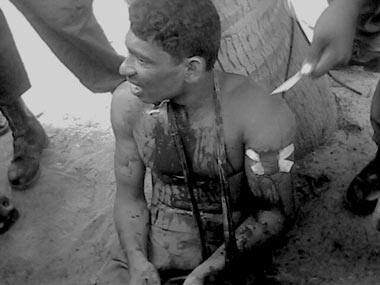 [/caption] There are a lot of very decent people in that segment who I think are questioning the cost of that final phase of the war, or at least or second-guessing the cost of the final phase of the war. There is a very broad space in which healing needs to take place. The kind of monolithic narrative of this great conquest of this terrible terrorist organisation of 2009 with almost no blood spilled, as the greatest refugee rescue operation in history - thats been pretty much thrown out of the window by now. That at least creates a better basis for whatever form of healing or whatever form of reconciliation is going to take place in Sri Lanka. Not ideal, but a better basis. But, this is all guesswork in a sense because I have not been to Sri Lanka since 2009. It is only what i am reading from afar. It is essentially unlikely to change in the next 5-10 years. I have heard reports of “heterogenisation” of the Tamil areas, perhaps to change the demography. That is one of the things that I guessed in my book. That there would be a lot of militarisation of the north, which they have done, and that they would encourage, particularly military families, to move up into the north. Verifying these kinds of subtle changes in land holdings, the establishment of businesses, in influence of economic life and in control of public services is very difficult. You can see the complexity of it in the Israeli-Palestinian situation. My guess is that “Sinhalisation” is going on, and yes that would make it very difficult for Tamils to have any increased political leverage in the short term Your informed view on how should the international community move on in terms of a credible enquiry into the alleged war crimes in Sri Lanka? I think the LLRC gave the answer themselves when they said they were unable to arrive at any conclusions on some of the most important aspects of the final phase of the war. The aspects over which there are big question marks. So, they have never said they were not capable of arriving at any conclusion. Instead, they have argued that the evidence has just disappeared. I think a number of outside observers will say that there is evidence. It is just that the international inquiries being conducted in Sri Lanka have a long history of internal inquiries that don’t go anywhere very much particularly given the fact that there is no witness protection in Sri Lanka. One thing is what happens there, and the second thing is the progress of the international legal framework that restrains governments from carrying out an unhindered war on their internal population. That is the health of international treaties around the wars of law and humanitarian law as well as the Rome statute of governing the International Criminal Court The last few days of the war are still unclear. You also didn’t pursue that much in the book. Post the book, or even while writing the book, did you you have some clearer idea of what had happened in the last few days? I am sure some of the people, not only in the command positions, but also outside them knew what happened. Well, one thing is what happened to the bulk of the civilians there, and I stand by the descriptions that I gave in the book of what might have happened because there was extremely fierce fighting going on over a very small area where there were tens of thousands of civilians. The second thing is what happened to people during the so called “white flag incidence” and there seems to be mounting evidence that there were executions. I myself have seen incontestable evidence of executions. So, I think it is pretty obvious that there was wrongdoing in terms of the capture of some senior elements of Tamil tigers, and the disposal of those people. But, there is a long way to go before we have sufficient evidence of the full picture of what happened to the civilians in those days. It is clear that there were a lot of civilian deaths. It is also reasonably clear that there was some attempt for the LTTE leadership to surrender but all of them were executed. As you mentioned, it might never come out, unless somebody in the establishment comes out with some revelations. Is there any chance of some evidence or conclusion coming out on that? I don’t know. As I said, the latest evidence I saw, which was a video showing one particular leader alive in custody and later dead, is sort of incontestable evidence that there was foul play in relation to some captives at least. So, if then one extends that to this story of dozens who were said to have been surrendered and then executed, I think there is very compelling circumstantial evidence to show that it happened. But evidence coming out is one thing and having that evidence presented, tested and assessed to obtain a proper judicial conclusion of that evidence is quite a separate matter. Continues on the next page What do you think about the regrouping of the extreme Tamil elements, the LTTE in different forms? I could see some of that in poetry because there is some fantastic poetry indicating very strong sentiments out there. We can see this happening all the time in different parts of the world and in India, for instance in Tamil Nadu, we have very strong supporters of the LTTE. What do you think is the possibility of this movement regrouping and assuming a different form? What do you think is the future of the whole ideology that was behind the LTTE? The ideology has been given a fertile ground on which to thrive as a result of 2009. I don’t think the LTTE has just melted away. I think precisely the same LTTE elements play out in the diaspora, a lot angrier, a lot more convinced of the arguments that they always made about genocide in Sri Lanka. I think there is a vastly increased sense of anger out there. Their ability to wage a war in Sri Lanka has been absolutely crushed. I don’t think they have that ability at all. Instead, I imagine what they are doing now is that they are turning their attention to soft forms of undermining the government in Sri Lanka. One way is through encouraging the international investigation and the so called war crimes trial. Another way is in using relatively sophisticated propagandising, and reaching out to the media and government representatives in countries where they are based. And it ought not to be a surprise given what went on in Sri Lanka in 2009. [caption id=“attachment_185340” align=“alignleft” width=“380” caption=“Weiss was bold enough to point fingers at even the Rajapakse’s in his book: AFP”] 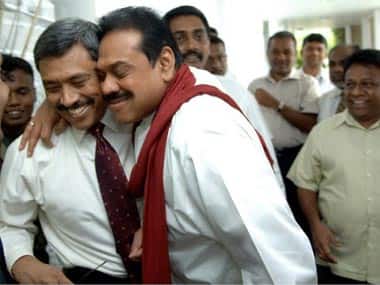 [/caption] I think that one of the arguments that I make in the book is that a lot of the wind might have been taken out of the sails of this resurgence of activity, but if there had been an acknowledgement of what happened at the end of the war, if there had been a frank investigation that said: look this was a terrible war, very bloody, this is what happened, this is why it happened and this is our defence of that position, it would have helped the reconciliation considerably. If there had been a genuinely good intentioned effort to settle differences between the Tamils and the Sinhalese, the moment was in 2009. They could have said: look a lot of civilians have died in this unavoidable war, we bear our unfortunate responsibility, this is what happened. If there had been a full and frank discussion in Sri Lanka on what had happened, the position would have been different. But since the end of the war there has been a consistent, clever and rather cynical covering up by the government. And that has only served to enrage the LTTE remnants and inflame the Tamil diaspora which supports them. I don’t think I am any surprised. I think that only makes the case stronger for an international investigation. About six months ago Firstpost interviewed Pathmanathan, the LTTE’s financial and arms man. He appeared to be justifiably pro-establishment and had said: we have to move forward, forget about the past etc. Do you have, at any point in time, any inkling as to what was his role and how he was brought back to Sri Lanka? Also, any idea about his role now and what happened to all the money and assets that he was supposed to handle? I really don’t have any idea. I wish I knew. It’s an interesting and rather fascinating facet of the collapse of the LTTE, but I really don’t know. They must have been sitting on a lot of assets. I imagine so, they must have been sitting on a lot of money, a lot of intelligence and a great deal of expertise, and I think a complex and very smooth running organisation. But, it was centered around a small number of some very competent people and with the death of the military leadership and with the sweeping up of some elements of the diaspora it has been weakened. But I don’t think it by any means has gone away. Here in Australia, I look at the Armenians, I look at the Assyrians, I look at the Palestinians, at the Jews and Bosnians. Everyone has their historic memories and they pass it on from generation to generation. They don’t just fade away. I am meeting with the Armenians and looking at them - and although it is almost a 100 years after what happened in Turkey, for them the wrongdoing is still fresh. It may not have been a good thing. It may have been a marvelous thing if they had got on with their lives and forgotten what could have changed years ago. But the reality is that these memories are passed down from generation to generation. So I don’t think that’s going to go away or disappear for the Tamil population. Whether it is going to matter very much for Sri Lanka in the future is really an open question. I think its not going to matter because the facts on the grounds have changed considerably and it will continue to change considerably. But I doubt that the anger that exists in the Tamil community would disappear for many years to come. I am curious about the heroes of the book, for example the Bangladeshi UN security specialist. Where are they now, what are they doing? People tend to disappear and get on with their lives. Going through some experience like that in Sri Lanka has a very profound effect on all the people who were involved. People want to forget about it, partly because they don’t want to deal with it, partly because they want to just go away and lick their wounds. A number of people they will carry it with them for a number of years. Are you also going through the same emotions? I am reminded of the experience of Lt. Gen Romeo Dallaire who was the Commander of the UN Assistance Mission in Rwanda during the genocide in the early 1990s. His riveting account of what happened in Rwanda in his Shake Hands With The Devil was a mechanism to deal with his anguish and depression. I think so. It doesn’t leave you. A part of it is left inside you, that is normal. This idea that people who go through awful events somehow heal themselves and get on is patently absurd. We are formed by our experiences, we are changed by our experiences. It was a very intense effort. I collected materials and wrote at the same time. I didn’t do much when I was in Sri Lanka and it all happened when I was in Australia. So, it was just a solid 11 months before I delivered the final text, including three months for editing. It was an emotionally and physically demanding period. I am still getting my legs back after putting myself there. I didn’t do it out of some desire to write a book, but I have to say that despite being a very costly exercise personally on a whole number of fronts, I still haven’t regretted one moment, my decision in sitting down and writing the book. I am glad I did it.
Gordon Weiss, who was the UN spokesman in Sri Lanka during the end days of the civil war wrote an arresting book responsible for debunking government propaganda on what happened in the final siege. He describes what happened during that time, and what may lie ahead for post-war Sri Lanka.
Advertisement
End of Article

 "Israel targets top Hamas leaders in Doha; Qatar, Iran condemn strike as violation of sovereignty")
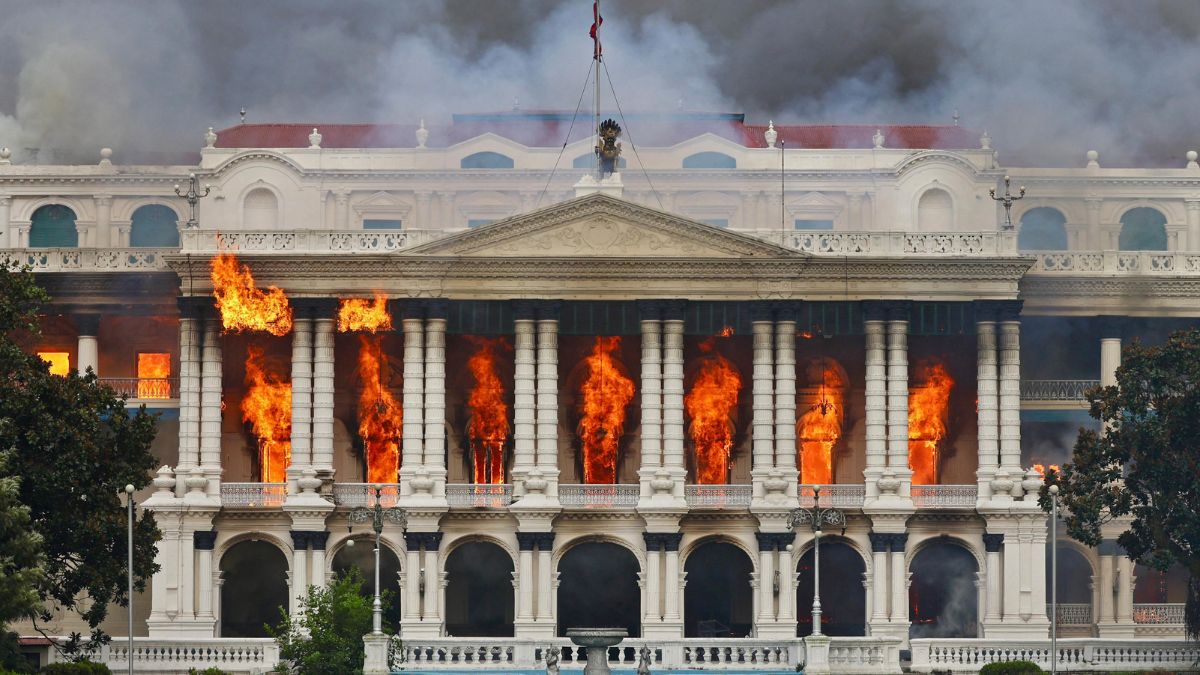 "Nepal: Oli to continue until new PM is sworn in, nation on edge as all branches of govt torched")
 "Who is CP Radhakrishnan, India's next vice-president?")
 "Israel informed US ahead of strikes on Hamas leaders in Doha, says White House")
 "Israel targets top Hamas leaders in Doha; Qatar, Iran condemn strike as violation of sovereignty")
 "Nepal: Oli to continue until new PM is sworn in, nation on edge as all branches of govt torched")
 "Who is CP Radhakrishnan, India's next vice-president?")
 "Israel informed US ahead of strikes on Hamas leaders in Doha, says White House")



](https://images.firstpost.com/wp-content/uploads/2012/01/Weiss1.jpg)
](https://images.firstpost.com/wp-content/uploads/2012/01/Torture.jpg)
](https://images.firstpost.com/wp-content/uploads/2012/01/RajapakseBrothers.jpg)