

 "Lagaan did not impress me, it was a stereotype: Dalit leader in US")
Benjamin P. Kaila, a Christian Dalit, grew up in poverty in a village near Tenali in Andhra Pradesh. Now a software professional in Southern California, he rallies donors across the world to support the Dalit community in five Indian states. Since 2003 his non-profit Friends for Education International has distributed more than $120,000 in the form of microloans, scholarships and aid to victims of violence. On 20 August, it will celebrate the eighth anniversary of its Ambedkar Scholarship for Dalit children and give out another $20,000. As Aarakshan opens in India amidst controversy about its subject matter, Kaila who has lived in the US since 1999 discusses his view on reservation, US-style affirmative action and whether movies can bring social change. Your foundation started with scholarships for Dalit children. How did that start? [caption id=“attachment_59571” align=“alignleft” width=“380” caption=“School children waiting for their midday meal. Reuters”] 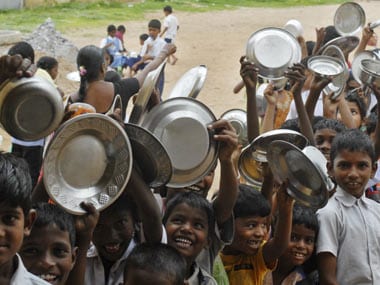 [/caption] I am a Dalit and I grew up in a small village. I lived all my life poor. I experienced a lot of discrimination in school, workplace, and in society. I was doubly discriminated because I am Christian and Dalit. I have a belief that only education can bring us from that limbo, the state we are in as Dalits. Because my parents were teachers, they gave me a good foundation at an early age. But very few people in my community could aspire to do anything; most were illiterate. Only a few people can afford private education, the rich people. After I graduated from college, I could still not speak a single sentence in English. But I came to learn about Dr. B. R. Ambedkar. I got inspired a lot by him. I started studying about society. That is how I improved my English, by reading books, and by listening to the radio. After reading Dr. Ambedkar, I wanted to start a school in my native place for Dalit children. I came to the US in 1999 on a H-1B visa, and sitting in the US, it is easier for me to monitor a smaller thing versus a school. So in 2003, I started two scholarships in the name of my mother and father, one for a girl and one for a boy. I distributed Rs 5,000, a big amount for Dalit students. After coming to the US, I interacted with Dalits outside of India online, and I became one of the vocal people in those groups. In an email, I said, “I want to do this.” People started coming to me saying, “We will help you.” Slowly, it started, and now we are giving away every year about 10 lakhs. Did you face discrimination when you were living in India? At the age of 10, I experienced a very bad incident. My father was my first teacher and when I was at his school, a school inspector came to my school and he was a so-called upper-caste man. For some reason, I touched him. I don’t know how, but I touched him. He took a cane from my father and in front of him, he beat me like an animal. But my father couldn’t open his mouth because he would lose his job. That is when I came to know we were untouchables. In school, I was not the top-most student but I was one of the best students in the class. But some teachers discouraged me from coming to school. When I worked in Hyderabad, I was a programmer, a respectable position, but it was very difficult for me to get accommodation if I said my caste. In the university, we all look the same, but you are recognised by your surname or your religion. In Andhra Pradesh, most Dalits are Christian so if you say you are Christian, they will say, “He is a Dalit,” and they will start doing their nonsense. What do you think of reservation? India has beautiful laws on the books but they are never implemented. Ambedkar helped write the constitution; he helped enact so many laws that are anti-discriminatory. But still, because the people who are ruling the country don’t want to discourage discrimination, they have never been implemented properly. If the Indian government and Indian leaders implemented the already-enacted laws, these problems will be (solved) easily, but that is not happening. How does American affirmative action compare to reservation? The difference is that American affirmative action is not in the Constitution. In India, Ambedkar put it in the constitution because he knew that the high-caste people don’t want these people to come up. So he instituted reservation. The problem is, who is implementing them? I am a Dalit Christian. If I were a good student and I wanted to go to an engineering college, I could not go because reservation is only for Hindu Dalits. But in our area, Hindu Dalits are labourers and cannot get to college. When I applied for college, I could not get that seat, but there were no other people from my community to apply. So what happened? Those seats are given back. Reservation has not been implemented properly so far. They have not been implemented in the way that Ambedkar imagined, when he enshrined them in the Constitution for 10 years. What he expected was that within 10 years, leaders would see to it that Dalits received education, discrimination would be gone, and we would be on par with others and there would be no more need for reservation. What the current leaders are doing is they are not implementing them in the proper way but they are extending them forever. Continues on the next page What policy reforms do you suggest? [caption id=“attachment_59701” align=“alignleft” width=“380” caption=“Benjamin Kaila on his visit to India. Photo from the Friends for Education International website.”] 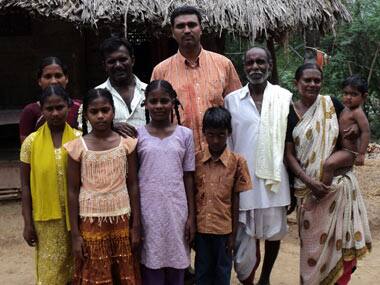 [/caption] A lot of things can be done. Right now, there are two types of education: private and government. If you are poor, you go to a government school and afterward, you can’t read or write to standard. What I say is give them equal opportunity. Provide hostel facilities where they can live and study, and financial aid to people who are from below the poverty line, so that there are incentives for parents to send their children to school instead of going to earn money. These are resource intensive, but still, if the government wants to, there are so many things it can do. Who would ask for reservation if we were all given an equal education? Do you think reservation should end? I don’t want to be called a reservationist. I don’t want to beg anyone for a seat. Reservation should go, but before it goes, they should be implemented properly and after a certain time, you can eliminate them. But if reservation goes now, they will have to go back to the fields and to beg because that is all there is. What do you think of the critiques that reservations are unfair because society should be based on merit? Merit can only happen between equals. If a person doesn’t have food and has to go to the field to feed its family, and goes to school only for the midday meal, you cannot compare that person with another person who has everything, who can go to school and to college. You have to give both of them equal opportunities, and then you can talk about merit. Do you support reservation in the private sector in India? Because, in India they don’t give us any other opportunity, we are looking for reservation; it is the only way a few people can come up in life. After liberalization, government jobs are eroding. There is only reservation for government jobs, but there are no jobs, so what is the use of reservation? Especially the Manmohan Singh government is selling the public sector to the private sector, and there is no other way for us than to ask for reservation in the private sector. A critique of US affirmative action is that it sometimes benefits those who don’t need the help the most. Do you think the same is happening in India with reservation? Yes. Reservation is being used by the top-level of people. That is not correct. Once you come up in life and you are a managing director or an IAS officer and your children are going for reservation, that is not good. It is limiting the people who really require reservation. There are a few seats reserved for Dalits, and most Dalits are illiterate. If you take, for example, some of these fields like the financial sector or journalism, you don’t see a single Dalit. So whoever is attempting to enter into these positions are the children of top-level Dalit executives. In India it is called the creamy layer. But if we eliminate the creamy layer, what happens is all of those seats go vacant and they are converted back to a general category. It’s a very confusing thing. So what I say is, there should be a balance. The creamy layer should get the seat in certain situations, but if you are from the creamy layer, and there is someone below you, then they should be given preference. Is there caste-based discrimination within the Indian-American community? Caste is luggage we always carry. Some people feel proud that they are of the same caste. Some feel inferior, like Dalits here, we try to hide our caste. Once it’s exposed, we can be discriminated against among other Indians. Don’t misunderstand me—there are good people here, and all are not like that. As we have the second generation and third generation here, they will be more tolerant. Do you think films like “Aarakshan,” which touches on the issues we’ve been talking about, will help spark more dialogue? Everybody goes to the movie theater. If social things are projected in a proper perspective, there will definitely be a lot of change. But again, filmmakers, who are they? They are from the upper-caste communities, therefore they show whatever they want, according to their ideologies. In some movies, Dalits are ridiculed. “Lagaan,” which competed for an Oscar, did not impress me. It was a stereotype of Dalits. There may be a different person, a progressive person who will take it in a different way but so far, I have never seen Dalits projected in a positive way. But if you have good intentions, and want real change, movies are one of the best mediums to get to the masses. Correction: A previous version of this article misstated the state in which Kaila attended university. It is Andhra Pradesh, not Uttar Pradesh. Firstpost regrets the error.
Aarakshan is taking on the touchy subject of reservations in India. The US has its own program of affirmative action for minorities. A Dalit activist in the US says there’s a key difference between the two.
Advertisement
End of Article

 "Israel targets top Hamas leaders in Doha; Qatar, Iran condemn strike as violation of sovereignty")
 "Nepal: Oli to continue until new PM is sworn in, nation on edge as all branches of govt torched")
 "Who is CP Radhakrishnan, India's next vice-president?")
 "Israel informed US ahead of strikes on Hamas leaders in Doha, says White House")
 "Israel targets top Hamas leaders in Doha; Qatar, Iran condemn strike as violation of sovereignty")
 "Nepal: Oli to continue until new PM is sworn in, nation on edge as all branches of govt torched")
 "Who is CP Radhakrishnan, India's next vice-president?")
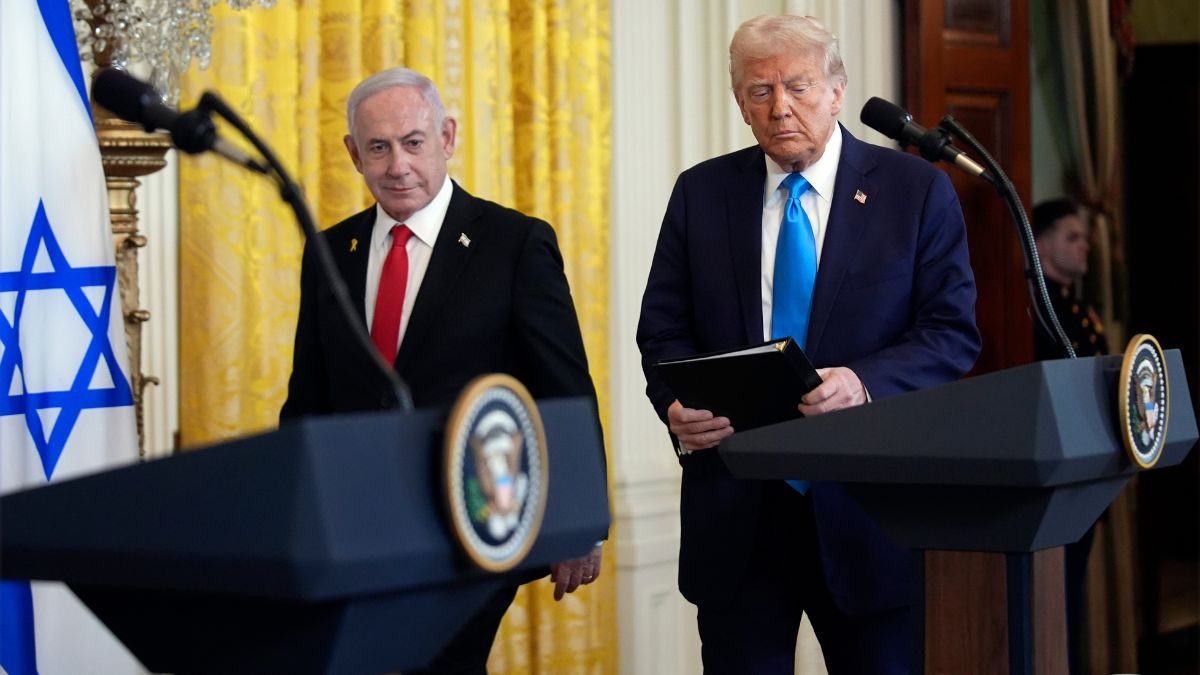 "Israel informed US ahead of strikes on Hamas leaders in Doha, says White House")



](https://images.firstpost.com/wp-content/uploads/2011/08/dalit_reuters.jpg)
](https://images.firstpost.com/wp-content/uploads/2011/08/benjamin.jpg)