

 "Why surrogacy doesn't need a celebrity 'role model'")
“Aamir has done a great job bringing the procedure into the mainstream. A lot of our patients who were uncertain have now decided to go ahead with it,” says Dr Nandita Palshetkar in the Hindustan Times. She is just one of the many voices in the media praising Aamir Khan as a “ mascot of surrogacy” for creating “much-needed public acceptance” of a cutting-edge infertility procedure. The reaction is both predictable and unwarranted. Now, there is no doubt that the birth of this child is indeed a joyous occasion. As Khan himself noted, “This baby is especially dear to us because he was born to us after a long wait and some difficulty.” And we are all delighted for the happy couple. Let’s also give them due credit for their refreshing and bold honesty in an industry known for its penchant for secrecy and double-talk. There is no need, however, to celebrate the rush for IVF surrogacy evoked by his announcement, or treat it as a courageous social statement, as does adman Prahlad Kakkar: “By not hiding the fact that they have used a surrogate, Aamir becomes a role model. It will make people think that if Aamir can do it, so can we.” [caption id=“attachment_151861” align=“alignleft” width=“380” caption=“Do we really need a “role model” for surrogacy? AFP Photo”]  [/caption] But do we really need a “role model” for surrogacy? The very phrase implies that some greater societal interest is served by encouraging an infertility procedure; an assumption that doesn’t hold up when we take a closer look at surrogacy itself. Surrogacy satisfies the natural urge for a biological child that is genetically our own. Medical science now offers surrogacy as a last resort option for couples who may have remained childless. More importantly, it is also becoming a choice for couples who would have otherwise chosen to adopt. The number of surrogacy-assisted births are growing worldwide even as the numbers for adoption are on the decline. In recent years, responding to cases of child trafficking and kidnapping, governments across the world have cracked down on inter-country adoptions. This laudable effort, however, has had an unintended effect, as reproductive health expert Karen Smith Rotabi notes:
With this new system, combined with problems like the recent adoption scandals in Russia and other nations, inter-country adoption has undergone radical decline and it is no longer the opportunity it once was for building families. In the US, the practice peaked in 2004 with 22,990 children sent to the nation as adoptees as compared to only 12,753 in 2009. As adoption has become more difficult, the global surrogacy industry has begun to surge to meet the fertility demands of individuals and couples seeking to secure healthy infants.
As a result, nations like India and Guatemala are instead becoming surrogacy destinations, where it is now far easier to rent a womb than to adopt a child. Add to this the strict adoption procedures in the West, and you have increasing numbers of foreigners turning toward surrogacy as a quicker, less burdensome option. Last month in the Independent, Alice Jolly described the herculean efforts required to adopt a child:
A one-to-one meeting with a social worker follows. It’s a scene from The Trial, by Kafka. We have to convince her we want a child, but we must not appear to want one too much. We tell our story: a stillbirth, four miscarriages, failed IVF. The social worker thinks we have too much baggage – but surely the truth is that most people who adopt do so because other plans have failed? … We are guilty until proven innocent. Everything is a problem – the fact that we’ve lived abroad, that we have an existing child, that we both went to boarding school, that once every two months Stephen might smoke a cigarette in a bar.
The Jollys in the end succumb to the inevitable: they hire a surrogate in the United States and return with a baby girl named Hope. It is a happy ending but not for all, as Jolly notes, “But still I am left with questions about why we couldn’t have given a home to an existing child instead of creating a new one. And some part of me will always be haunted by that baby who we might have adopted – and who is probably still waiting for a family and a home.” Continues on the next page And that’s the hidden, unspoken opportunity cost of new reproductive technologies in a political landscape where governments have taken on a negative role in adoptions. They are keen to prevent unlawful adoptions, but do little to create systems that will place children in genuine, loving homes. As a result, even couples looking to adopt are being pushed toward surrogacy instead. The Jolly story also underlines the difference between adoption and surrogate births, which is summed up by Bill Muehlenberg: “In adoption, a family sought a child in need of a family. In surrogacy, you are creating children for adults’ needs.” [caption id=“attachment_151868” align=“alignleft” width=“380” caption=“We are in greater need of an Angelina Jolie not Aamir Khan. Reuters”] 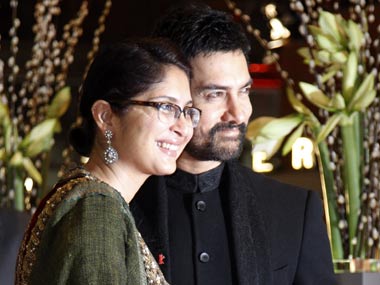 [/caption] Unlike Christian conservatives like Muehlenberg (or those closer to home in Kerala), I do not view surrogacy as unethical – as long as there is legal protection and adequate compensation for the birth mother. He is right however, in observing that adoption – unlike surrogacy – promotes a greater good. It is indeed “a community response to the necessitous circumstances of a child already conceived and born, which differs markedly to the circumstances of a child conceived and born for the purpose of transfer to another couple.” There is nothing immoral about surrogacy, but it serves no greater societal interest – satisfying, instead, entirely the personal desire to have biological child. Wider public acceptance of surrogacy may also unintentionally buttress the social stigma against adoption in India. While the Khans did little other than announce a happy event, we seem to be drawing exactly the wrong lesson from their decision:
Experts are also hopeful that this will help shed some myths around the procedure. “Unlike traditional surrogacy, in IVF surrogacy the child has no genetic contribution from the surrogate. Aamir’s case has helped explain that clearly,” says Dr Rita Bakshi of Adiva Centre.
We already have a poor record of adoption in this country given our cultural obsession about lineage. Surrogacy offers the more affluent among us new incentive to remain as squeamish as ever. Why adopt some stranger’s child when you can have a baby that is ‘purely’ yours. On the one hand, India’s rapidly becoming the surrogacy destination of the world, and yet tens of thousands of our children remain abandoned and unloved. We run the danger of becoming a society that is indifferent to our children, and yet is eager to create them for profit. The bottomline: Baby Khan is indeed a bundle of joy but when it comes to celebrity role models, we are in greater need of an Angelina Jolie not Aamir Khan. And as our ambassador for UNICEF, I suspect Aamir himself would agree.

 "Israel targets top Hamas leaders in Doha; Qatar, Iran condemn strike as violation of sovereignty")
 "Nepal: Oli to continue until new PM is sworn in, nation on edge as all branches of govt torched")
 "Who is CP Radhakrishnan, India's next vice-president?")
 "Israel informed US ahead of strikes on Hamas leaders in Doha, says White House")
 "Israel targets top Hamas leaders in Doha; Qatar, Iran condemn strike as violation of sovereignty")
 "Nepal: Oli to continue until new PM is sworn in, nation on edge as all branches of govt torched")
 "Who is CP Radhakrishnan, India's next vice-president?")
 "Israel informed US ahead of strikes on Hamas leaders in Doha, says White House")



](https://images.firstpost.com/wp-content/uploads/2011/12/aamir.jpg)
](https://images.firstpost.com/wp-content/uploads/2011/12/Aamir380reuters.jpg)