

 "From Tagore to Gandhi: India is a nation of holy cows")
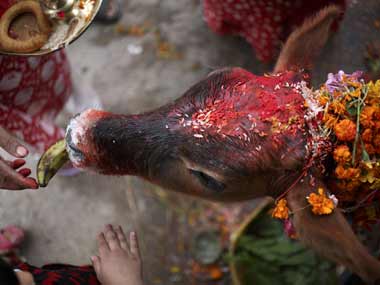
Two-thirds of the way through Kolaveri Di, Dhanush sings a few words which you notice if you are the kind who listens to the lyrics of song very carefully. He sings “cow-cow holy cow, I want to hear now”. These few words can be used to best describe the situation which prevails after Girish Karnad said “Tagore was a great poet but a mediocre and second-rate playwright.” Not surprisingly the Bengali bhadralok are up in arms. There are five holy cows that the bhadralok have and it’s best that people stay away from criticising or critiquing them. Here is the list. Mohun Bagan is the best football club: This is not much of a holy cow now but in the eighties and till the mid nineties any criticism of this football club could have got you lynched. Then came ESPN-Star Sports and Bengal realised that their football is a slow motion version of the real football played in Europe. Rossogulla/Sondesh is the best sweet: This can lead to minor battles especially if you have a bong girlfriend who loves her food. She will never come around to appreciating the pleasures of eating Mysore Pak. Another version of this debate is whether the Hilsa is the best mach i.e. fish in the world? [caption id=“attachment_521623” align=“alignleft” width=“380”]  The backlash on Karnad’s comments raises several questions. Is any creative person above criticism? Reuters[/caption] Sourav Ganguly is the best cricketer: I realised how strong this holy cow was when in the late nineties India was struggling to find a good wicket keeper and a Bengali colleague of my father suggested that “Sourav se wicket keeping kyon nahi karata hai?(why don’t we get Sourav to keep wickets?” In a land of few heroes Sourav could do no wrong. Manika Da is the best director: Manik Da was the daak naam or nickname of the great Satyajit Ray. I have watched almost all of what Ray directed and watching his movies has been a brilliant experience. But Pather Panchali isn’t my favourite Ray movie (Now did I do a Karnad here?). In fact I loved the sequels Aparjito and Apur Sansar much more. My favourite Ray movies are the ones he made in the seventies. The Calcutta trilogy of Pratidwandi (1970), _Seemabaddha (_1971) and Jana Aranya (1976), and _Aranyer Din Ratri (_1970) remain perennial favourites. And I can watch Shatranj ke Khiladi (1977) over and over again. Ray was a rare director whose movies were much better than the books and stories he based them on. Anyone who has read Sunil Gangopadhyay’s Pratidwandi and Aranyer Din Ratri and watched Ray’s movies based on the books would realise that. The same is true for Sankar’s Seemabadha and Jana Aranya, and Prem Chand’s short story Shatranj ke Khiladi. Also I am not getting into the debate of whether Ray’s Charulata was better than the original novel written by Rabindranath Tagore. Nevertheless, a lot of what Ray directed after Hirok Rajar Deshe in 1980 was very mediocre and nowhere near his best. But I wouldn’t recommend you say anything like that in and around Kolkata. Rabindranath Tagore is the foremost intellectual: This is the holiest of holy cows for the Bengali bhadralok. Tagore cannot be criticised. Any criticism of Tagore, reasonable and unreasonable, is totally unwelcome. Girish Karnad is finding that out now. A stream of Bengali intellectuals and politicians have queued up to criticise Karnad. The basic argument is that what does Karnad know of Bengal? Even the criticism on Twitter and Facebook has been scathing. A struggling actor who happens to be a Bengali had this to say on his Facebook page “Karnad calls The tagore a second rate playwright!!coming from a mediocre actor and a boring playwright..I have said it..!moving on..” Another interesting comment that I came across on my Facebook page was “Even Poonam Pandey and Sherlyn Chopra know how to seek attention. Girish Karnad would do better in taking a lesson from them.” The backlash on Karnad’s comments raises several questions. Is any creative person above criticism? Even Tagore. Also Tagore was not a one dimensional intellectual. He was a poet. A novelist. A playwright. A musician and even a painter. His interests were not limited to one particular domain. But that does not mean he was the best at all the things he did. And that’s precisely the point that Karnad was trying to make. As he said, “He was a great poet certainly, one of our greatest. And he got the Nobel Prize in 1913 when most of our modern literature was still in the state of formation. His greatness as a poet is there, his greatness as a thinker is there… he wrote plays, he certainly was a pioneer in breaking away from the unexciting commercial plays…he didn’t direct great plays. The point is he was a mediocre playwright.” And Karnad does know a thing or two about writing plays, having written several plays himself. He also won the Jnanpith award in 1998, which is the highest literary award conferred in India. Tagore was a great poet. But whether he was a great musician, painter or playwright remains debatable. And this debate or discussion one cannot have with the Bengali bhadralok. As George Soros’ Theory of Reflexivity states “People’s understanding is inherently imperfect because they are a part of reality and a part cannot fully comprehend the whole.” Given this it is highly unlikely that the Bengali bhadralok will ever be able to look at Tagore objectively enough. But why blame only the Bengalis. India as a nation is full of holy cows who cannot be critiqued. And here are some of the bigger holy cows whose criticism can get you into trouble. Narendra Modi is the best leader: There are three ways to get people to read things on the internet in India. Criticise the Congress party and the UPA. Praise Narendra Modi (or NaMo as his fans like to call him). And the third and the best way is to criticise NaMo. That will unleash a barrage of negative comments on the website, with a lot of them bordering on abuse. But yes the website will get a huge number of hits, something that it has never seen before. The broader point being that any criticism or even an objective evaluation of his persona is immediately run down. But there are chinks even in NaMo’s armour starting with an abandoned wife and the fact that he doesn’t really come across as a team man and likes operating on his own most of the time. Mahatma Gandhi: The father of the nation was a great man. But he had his weaknesses. The Mahatma did not have a great family life. And his eldest son Harilal converted to Islam. His opinions on sex for a family man were slightly weird. As an article in The Independent points out “It was no secret that Mohandas Gandhi had an unusual sex life. He spoke constantly of sex and gave detailed, often provocative, instructions to his followers as to how to they might best observe chastity. And his views were not always popular; “abnormal and unnatural” was how the first Prime Minister of independent India, Jawaharlal Nehru, described Gandhi’s advice to newlyweds to stay celibate for the sake of their souls.” [caption id=“attachment_521626” align=“alignleft” width=“380”] 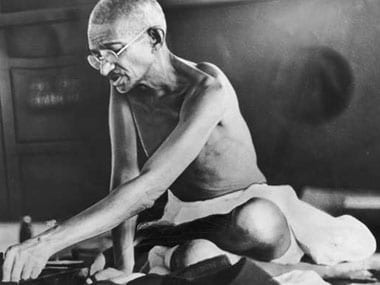 Any discussion or debate which does not show Gandhi in positive light is likely to create trouble.[/caption] But any discussion or debate which does not show Gandhi in positive light is likely to create trouble. Jawahar Lal Nehru and his relationship with Edwina Mountbatten: As Ramachandra Guha wrote in The Hindu a few years back “The Indian public in general, and the Indian press in particular, has shown a keen and perhaps excessive interest in the relationship between Jawaharlal Nehru and Edwina Mountbatten. That they were intimate is not to be doubted — but did the bonds ever move from the merely emotional to the tellingly physical?” Universal Studios was supposed to make a movie on the relationship but they later shelved the project. As The Telegraph reported “The Indian government had given permission for the movie, Indian Summer, starring Cate Blanchett and Hugh Grant, to be filmed on location there but only if physically intimate scenes were removed.” This is another holy cow which cannot be questioned. Shivaji Maharaj: In the state of Maharashtra any critique of the great king who fought the Moghuls like no one else did can get you into a lot of trouble. As James Laine who wrote the book Shivaji: Hindu King in Islamic India found out a few years back. Those who wanted the book banned felt that the book insulted Shivaji. Those who read the book felt that it was not a book about Shivaji but more a book about how Shivaji’s legacy has been hijacked by various castes and communities in Maharashtra to further their own ends. [caption id=“attachment_521624” align=“alignleft” width=“380”] 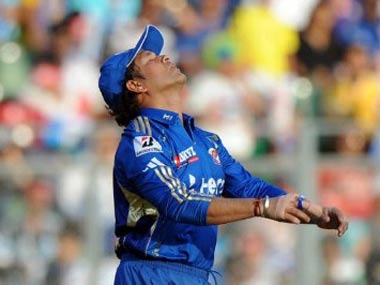 Any criticism of the great man was likely to attract trouble irrespective of the fact whether you were in Mumbai or Muradabad. AFP[/caption] Sachin Tendulkar is the best cricketer: This for a very long time was even holier than the holy cow. Any criticism of the great man was likely to attract trouble irrespective of the fact whether you were in Mumbai or Muradabad. But things have changed over the years and people are more open to the God being criticised. Nevertheless, any criticism of Sachin can get you a lot of abuse, as I found out when I wrote this. Islam: Any criticism of the religion can create major trouble as Salman Rushdie found out. Salman Rushdie’s The Satanic Verses was released on September 26, 1988 in the United Kingdom. Madhu Jain, a journalist working for India Today reviewed the book for the magazine. As she wrote in a recent column in the Open magazine “It all began with my review of The Satanic Verses, published on 15th September 1988 in India Today (probably the first review of the novel.)…Unfortunately, the editor of the books pages of the magazine at the time, who later went on to edit a national daily, plucked some of the more volatile extracts from the novel—those about the Prophet’s wives—and inserted them into the book review. Not too long after the IFS bureaucrat-turned-politician Syed Shahabuddin read the excerpts (not the book as he admitted ) and demanded that The Satanic Versesbe banned. Protests erupted in India and Pakistan. In Karachi, a few protesters died when they were fired upon. It is believed that Ayatollah Khomeini watched this on television and ordered the fatwa.” India became the first nation to ban the book on October 5, 1988, after Syed Shabbudin, a member of parliament, petitioned the government to ban the book. Rajiv Gandhi, the political novice that he was, banned the book immediately. Khomeini of Iran issued a fatwa on Feb 14, 1989, Valentine’s Day. Rushdie had to go into hiding after that and his been unwelcome in India since then. He had to pull out of the Jaipur Literature Festival last year. MF Hussain: This is an interesting story. Hussain had to live a large part of his later life in exile given the large number of court cases pending against him in various parts of the country for hurting the sentiments of Hindus through his paintings. This included drawing several Hindu gods and goddesses in the nude. Those in his favour say that artists need to have their freedom of expression, which is true. But let me reproduce a paragraph from a piece that _Shobhaa D_e wrote on him in The Times of India during his exile in Qatar. “Dressed in traditional Emirati gear, the painter is wearing socks , but no shoes. Mustafa, his handsome third son explains this is to respect local sensibilities regarding bare feet,” wrote De. Hussain had always walked bare foot but he was respecting the local sensibilities in Qatar and wearing socks. If he could respect local sensibilities in Qatar, couldn’t he do that in India as well? But any criticism of Hussain can get the so called intellectual class in Delhi and Mumbai ganging up against the person who dares to criticise Hussain. The Gandhi family: During her peak any criticism of Indira Gandhi was unwelcome. Nayantara Sahgal, her first cousin, wrote a book on Indira Gandhi: Tryst with Power, which was very critical account of Indira’s tenure as India’s Prime Minister. The book written in 1982 was only released in India earlier this year. This trend has continued and any criticism of the Gandhi family is largely unwelcome. Arvind Kejriwal recently broke this trend by taking on Robert Vadra, Sonia Gandhi’s son-in-law headon. Rajinikanth: Try criticising India’s highest paid actor anywhere south of the Vindhyas and see what happens. Manu Joseph the editor of Open wrote a column on the superstar in which he said “He has no talent, an unremarkable body, and has had no hair for much longer than we realise. When he puts his right elbow on his left palm and the left elbow on the right palm, he demands that everyone accepts it as dance. And his ability to toss a cigarette in the air and grab it with his mouth is attainable even to my mother. Have no doubts, even to Tamilians he looks grotesque in leather shirts and pants and previously unseen shoes. I have watched his films in the cheapest theatres in Madras and know exactly what happens when he makes his grand entry, boots first. The screams and whistles in the theatre are not the awe of respect, but an expression of love for a beloved clown. Nobody in those theatres knew why they were reacting in that manner to him.” Almost all of what Joseph wrote is true but read the comments that followed his article to see how the people reacted to his critique of the star. Ambedkar and reservation: BR Ambedkar and the reservation policy first initiated first by VP Singh and then carried forward by the UPA government is a bigger holy cow than even Rajinikanth. You might get away by criticising Rajinikanth but expect no such mercy if you get around to criticising Ambedkar or the reservation policy. Arun Shourie, wrote a book titled Worshipping False Gods in which he challenged. Ambedkar’s contribution to Indian Independence. As Shourie wrote “There is not one instance, not one single, solitary instance in which Ambedkar participated in any activity connected with that struggle to free the country. Quite the contrary–at every possible turn he opposed the campaigns of the National Movement, at every setback to the Movement he was among those cheering the failure.” Of course this did not go down well with people. As Rediff reported “Some Congress MPs did, however, burn copies of the book outside Parliament House, and called for a ban.” The Holy Cow: Yes. The holy cow is the ultimate holy cow in the country. And every few years close to the elections the issue is resurrected with demands to ban their slaughter. Ironically enough India is set to emerge as the largest exporter of beef in the world. The moral of the story is that India as a country has too many holy cows that one cannot critique and criticise. We make heroes, we worship them but we never get around to analysing them. As the Channel V ad went in the good old days, we are like this only. Vivek Kaul is a writer and can be reached at vivek.kaul@gmail.com
There are five holy cows that the bhadralok have and it’s best that people stay away from criticising or critiquing them. Here is the list.
Advertisement
End of Article

 "Israel targets top Hamas leaders in Doha; Qatar, Iran condemn strike as violation of sovereignty")
 "Nepal: Oli to continue until new PM is sworn in, nation on edge as all branches of govt torched")
 "Who is CP Radhakrishnan, India's next vice-president?")
 "Israel informed US ahead of strikes on Hamas leaders in Doha, says White House")
 "Israel targets top Hamas leaders in Doha; Qatar, Iran condemn strike as violation of sovereignty")
 "Nepal: Oli to continue until new PM is sworn in, nation on edge as all branches of govt torched")
 "Who is CP Radhakrishnan, India's next vice-president?")
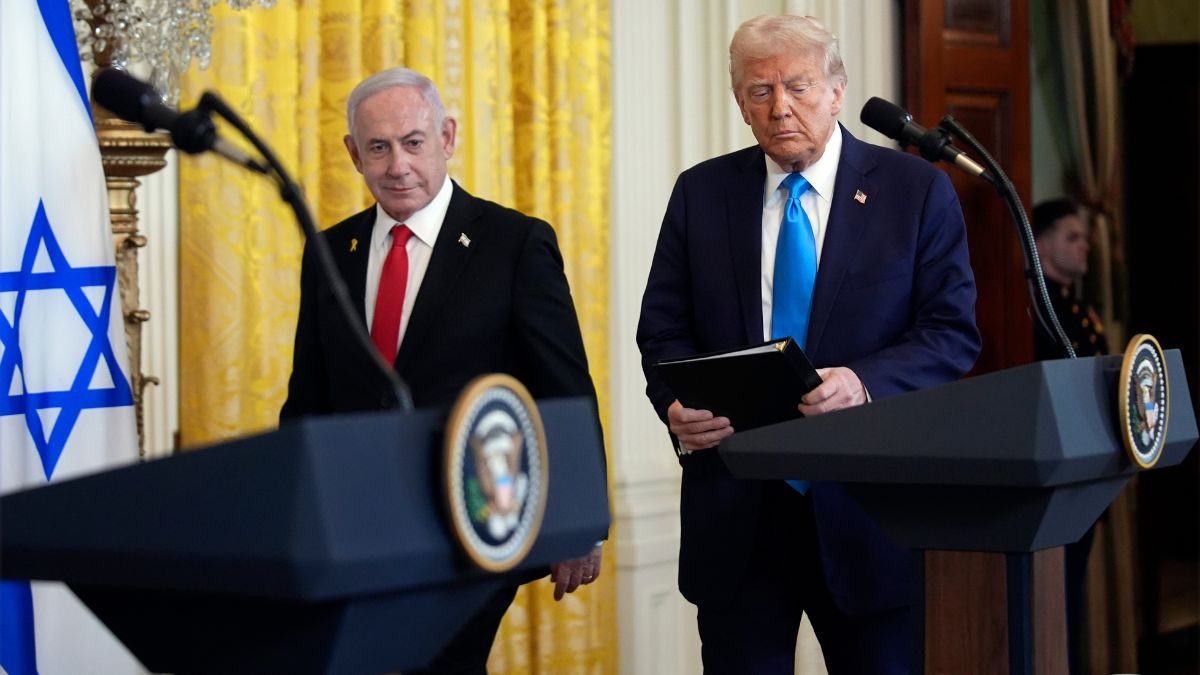 "Israel informed US ahead of strikes on Hamas leaders in Doha, says White House")



](https://images.firstpost.com/wp-content/uploads/2012/11/cow_reuters1.jpg)
](https://images.firstpost.com/wp-content/uploads/2012/11/mahatma-gandhi-3801.jpg)
](https://images.firstpost.com/wp-content/uploads/2012/11/SachinTendulkar_AFP_New.jpg)