

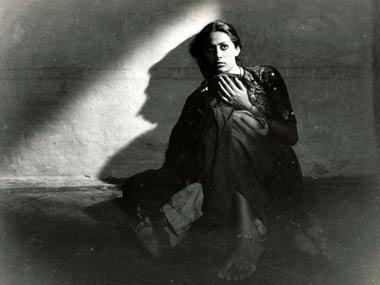
 "I never prayed again after Smita's death: Remembering Smita Patil 25 years later")
by Deepa Deosthalee I can’t put a finger on exactly when I fell in love with her. I must have been 10, or thereabouts. Memories only come back as random scraps, the kind I once gathered on the pages of a diary from a year gone by. Painstakingly, relentlessly, lovingly. The dates had lost their relevance, but that thick book — it’s ugly brown cover adorned with the logo of a tin manufacturing company — was the sole repository of my obsession. An unremarkable poster procured from a street vendor outside my school was stuck on the door of my room. Unremarkable, because she wasn’t my Smita in the strictest sense. A pink (or was it off-white?) silk blouse, matching jacket, frozen in mid-shot, her face caked with more make-up than it ever needed; a touch of awkwardness to the body language, the smile stiff and unyielding. Only the big black eyes gave her away. Her unwavering gaze was fixed on me every time I walked into the room. I’d sit at my table plodding through my math homework and look at it through the corner of my eye to make sure she was still around. I’d carve her initials on my desk or scribble them on school notebooks and get my ears boxed for it. Clippings from the raddiwala It wasn’t easy going to the movies those days. Not because there weren’t any cinemas in town — I lived in Bombay, for God’s sake — but because parents like mine didn’t believe girls of impressionable minds should indulge in such frivolous activities. That didn’t dent my enthusiasm though, because there was always a steady supply of benevolent uncles, aunts and older cousins who obliged. So we went one time to see this film in which she was dancing in the rain in a white saree with a red border, the hero thrusting himself on her in a manner only Hindi film heroes do to express love. I didn’t understand much about these things back then. It was a blissful innocence, watching my favourite stars dancing together to a foot-tapping number in a darkened hall. And the memory of the song which stayed with me for months on end — with very little television on offer and film outings few and far between, it was my imagination that scripted most daydreams. [caption id=“attachment_155021” align=“alignleft” width=“380” caption=“In my head, she had a life of her own — a fulfilling one. Image courtesy: Film Impressions”] 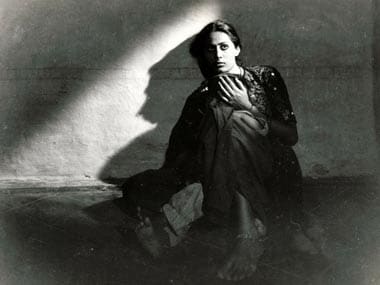 [/caption] And magazines helped flesh them out. They could to be purchased from the raddiwala at throwaway prices. Buying fresh copies was out of the question —the concept of pocket money was unheard of, at least in resolutely middle-class households like ours (yes, this was that long ago). Hours had to be spent at the corner shop browsing through magazines looking for her interviews and photographs, even small ones on the snippets pages. She wasn’t the kind of glamorous star who made it to the cover page on a regular basis — she probably danced in the rain with that superstar just to change that! But they held retrospectives of her films in foreign lands. France, I think it was. It got written about in a Gujarati magazine, accompanied by colour photographs — what a treat! Some time was spent cajoling a friend to read and describe the details of Smita’s Parisian sojourn in great detail; the only recollection now, that she had an opportunity to sample good wine. Years later, I got my hands on a French poster of one of her celebrated films, and it still hangs on the wall of my study. In my head, she had a life of her own — a fulfilling one. A beautiful apartment overlooking the sea, tastefully done up with little furniture and lots of love. Later in a magazine interview, there was a huge photo-spread shot in her house, she and her lover proudly posing in co-ordinated yellows and whites, she beaming in the flush of pregnancy, leaning against her man, framed on the threshold of, what I imagined, must have been her drawing room. A black & white picture in another magazine, possibly a still from a film, with a caption, ‘My rock of Gibraltar’. Then, a few months later, another one of the same man sitting disheveled under a tree. Must have been taken just after the funeral… And many dreadful stories thereafter of what may have been and what should have been. The two Smitas One time, I dragged my grandmother (who rarely, if ever, watched a film) to one of Smita’s family melodrama-type adventures. She played a neglected homemaker whose philandering husband disowns her for her more glamorous cousin. Too much make-up and an uncharacteristically histrionic acting style apart, it was hugely cathartic for a girl firmly fed stories of virtue and redemption to watch her claw her way back. She gets successful, her ex-husband goes bankrupt and down on his knees begging her for forgiveness, while her friend and bulwark of several years finally marries her — the crowning glory of any Indian woman’s life! Even if the actor who plays the man is twice her age. Smita did a bunch of these corny films dressed in bright-coloured sarees; red lipstick, a big round red bindi on her forehead and the mandatory sindoor and thick long mangalsutra to signify her matrimonial purity. Usually the wronged woman, she suffers and gets humiliated repeatedly before being rescued from her miserable fate. And then I remember the smouldering, kohled eyes of the same woman on posters of those other films — the kind where she doesn’t mope or get pushed around. She battles valiantly on different fronts — to uphold her dignity, to find her purpose in life, to take on the male establishment, to break barriers of caste and class, or to merely survive — a true trailblazer. And suddenly, she seemed so much more sure-footed in dusty sarees and weatherworn chappals against defiantly unromantic backdrops — slums, villages, mountains, whorehouses and busy city streets — hardly a spot of make-up on, a picture of undiluted intensity and rare intuition. Continues on the next page I want that conversation back Finally, we got a telephone at home. With it came a directory, which I read diligently like a prescribed text for a very important exam, scouring for numbers of my favourite movie stars. While many weren’t listed, the one that mattered most fortunately was. And so I’d come back from school, pick up the phone and dial tentatively — my body shivering in nervous anticipation. Obviously she wasn’t sitting by the phone waiting for my call and it took many, many failed attempts to finally connect. One boring October afternoon, across a maze of endless copper wiring, via a dull green plastic contraption, I got through to my goddess. With shaky hands I clung to the receiver and in a tentative voice introduced myself as a schoolgirl who liked her a lot. For once, I couldn’t picture her sitting in the house I’d designed for her. This was for real. Here was the subject of my adoration telling me she was happy to hear from me and promising to meet soon after her baby was born a couple of months later. That’s all I remember of that three-minute chat (this fact could also be the subject of scrutiny, but Smita isn’t around to testify). A vital, nay critical part of the tape in my head has been permanently erased, like so many things I wish I could hold on to and access at will. I want that conversation back. It’s the only tangible thing I have of her. Praying for a miracle And then I remember 12 December. The evening news and announcement of her getting hospitalised in a critical condition. The little temple in our kitchen stood nailed to the wall and like anyone who’d been raised with the naïve belief that heartfelt prayers fix just about anything, I stood before it, hands folded, head bowed down, tears streaming down my face, begging whoever it was that ran the circus, to save her. Then, since we’d booked tickets to watch a late-night show of a new film (and that never fails to lift my spirits), we proceeded to the cinema on the other side of the railway tracks. Outside the cinema hall, people were standing around talking of her deteriorating condition. I strained my ears to catch any fragment I could, useless and unreliable as it may have been. We saw the film, a mediocre drama about a woman with a broken leg who gets an artificial foot and becomes a famous dancer. [caption id=“attachment_155028” align=“alignleft” width=“380” caption=“I never prayed after Smita’s death. Image courtesy: Film Impressions”] 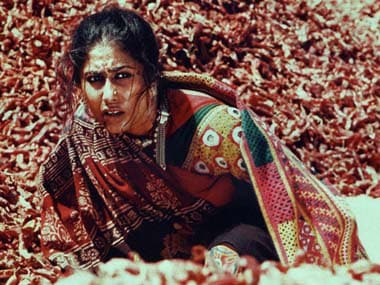 [/caption] It took us close to half-an-hour to walk back home after the show. Later, I was to learn, it was the exact same time that she was counting her last breaths. I’ve spent many long hours over the years, trying to be with her through those final moments. To no avail. She was alone. That’s how it’ll always remain. My scrapbook filled up very quickly after that. Pictures and reports of the funeral. The memory of that bedecked, bloated body impossible to forget. Magazine covers and special booklets, personal articles and reminiscences, photographs, television interviews — everyone who was ever touched by her had a story to tell. As is always the case, nobody has an unkind word to say about the deceased. I wasn’t looking to them to validate her for me. I was a scavenger picking on every word, every line, to see if there was some way I could know her better. It was impossible to share my loss with anyone. Who’d understand the pain of losing a movie star I’d never met? You mourn your loved ones — family, friends, acquaintances even. But not actors who perform tricks on screen to regale you. Even if they were young and talented and beautiful and unique. Even if, in your childish, inexplicable way, they meant the world to you. I never prayed after Smita’s death. I kept watching the same films over and over again on television and video cassettes and later, DVDs. That’s all I had of her. They continued to move me to tears. Still do. Sometimes more easily than those closest to me. I look for clues to the person she must have been through the women she played on screen. Was she honest? Compassionate? Loving? Brave? Stubborn? Free-spirited? Loyal? Or whimsical and crazy just like me? I don’t know. Never will. But she had within her the power to reach out to me from across a white screen and singe my soul with her fiery eyes. I saw a replica of those eyes a couple of years ago. They didn’t burn me down. But they did light up the room with their innocence. Smita is no more. Only her eyes live on. The writer is co-founder of the cinema appreciation website Film Impressions. Another version of this story appears there.
Smita Patil’s death was a huge loss to films but it also shattered one Bombay schoolgirl’s world. On the 25th anniversary of Smita’s death today, Deepa Deosthalee remembers how their lives had briefly touched.
Advertisement
End of Article
Written by Film Impressions
Why FILM IMPRESSIONS? Because we believe film lovers deserve better. The quality of film criticism in India has been steadily deteriorating, losing its credibility and intellectual rigour. Instead of informed and unbiased opinion we have been subjected to publicity-driven writing, often manipulated by vested interests. We wish to offer well-argued criticism, insightful interviews, historical perspective... and celebrate cinema in all its glory see more

 "Israel targets top Hamas leaders in Doha; Qatar, Iran condemn strike as violation of sovereignty")
 "Nepal: Oli to continue until new PM is sworn in, nation on edge as all branches of govt torched")
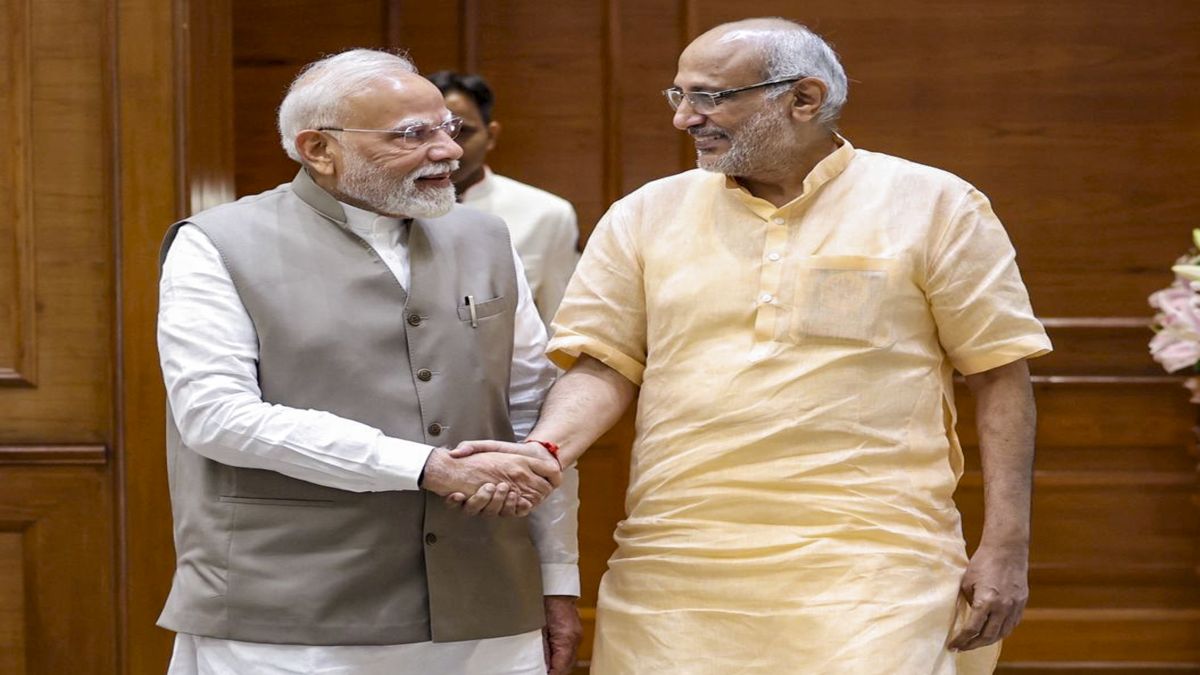
 "Who is CP Radhakrishnan, India's next vice-president?")
 "Israel informed US ahead of strikes on Hamas leaders in Doha, says White House")
 "Israel targets top Hamas leaders in Doha; Qatar, Iran condemn strike as violation of sovereignty")
 "Nepal: Oli to continue until new PM is sworn in, nation on edge as all branches of govt torched")
 "Who is CP Radhakrishnan, India's next vice-president?")
 "Israel informed US ahead of strikes on Hamas leaders in Doha, says White House")



](https://images.firstpost.com/wp-content/uploads/2011/12/smita380.jpg)
](https://images.firstpost.com/wp-content/uploads/2011/12/smita2_3801.jpg)