

 "Is the final CBI case on Aarushi too reliant on speculation?")
Editor’s note: Firstpost is running a series on the bizarre contradictions in official investigations into the Aarushi-Hemraj double murder case that has gripped the nation since 2008. The contradictions we highlight are based entirely on the CBI’s own reports, and applications submitted to the special CBI court during the course of the investigation. Today we look at how the second CBI crime scene report uses circumstantial evidence to disregard the findings of a 7-member medical team in the immediate aftermath of the murder . Read the first story in the series here . On 9 September 2008, about three-and-a-half months after 14-year-old Aarushi Talwar and 45-year-old domestic help Hemraj Banjade were murdered at the Talwar residence in Noida, a seven-member board set up by the All India Institute of Medical Sciences (AIIMS) submitted its report on the murder case to the CBI. The board, which included experts on forensic medicine drawn from AIIMS and the CBI, gave its expert opinion on a series of crucial questions posed by the investigating agency relating to the cause of murder, and recreating what could have taken place at the scene. According to the findings of the board, the assailant may have first killed Hemraj and then come down to kill Aarushi. It also opined that the injuries to both victims seemed to have been caused by both a sharp-edged weapon and a blunt weapon, thus giving credence to the theory that they could have been inflicted by a heavy weapon like the khukri which has both a sharp and blunt edge. It further said that the blood splatters on the wall in Aarushi’s bedroom and the wall of the terrace, where Hemraj’s body was found, could have been “either due to spurting of blood on cutting of a major artery or from the weapon already soaked with blood while in movement for a blow.” [caption id=“attachment_186215” align=“alignleft” width=“380” caption=“The second CBI medical report relies heavily on circumstantial evidence: Screen grab from CNN IBN”] 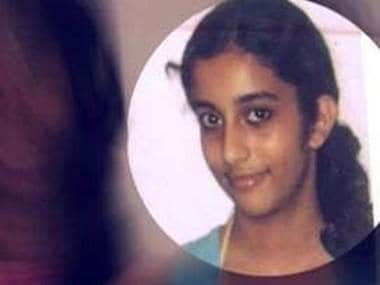 [/caption] Further observations made on the basis of the pathology report of the vaginal smear of the victim, her post-mortem report, and photographs of the scene of crime,concluded that that there was no evidence to prove sexual assault. Interestingly, each one of the above conclusions were contradicted or overruled by a fresh crime scene analysis that was sought by the second CBI team led by Neelabh Kishore which took over the investigation in September 2009. Titled ‘Crime-Scene Analysis (CSA) based on photographs of the scene of crime, post-mortem reports and other records of the Aarushi-Hemraj murder case’, the report by a one-man team from the Gandhinagar-based Directorate of Forensic Science contradicted the findings of the AIIMS report. Furthermore, it revived the Uttar Pradesh police’s (who were the first to investigate the case) explanation of motive – on which now rests the CBI’s case against the Talwars. That being: the murders were committed due to grave and sudden provocation on finding Aarushi in “a compromising position with Hemraj.” The author places on record his reliance on circumstantial evidence given the absence of material proof at his disposal. “At the outset, it may be pointed out that the available record (in the form of photographs, CDs, post-mortem reports) cannot be a perfect substitute for the real site visit immediately after the crime…to overcome this difficulty, reliance has to be placed on circumstantial evidence as well.” Taking on the seven-member AIIMS board head-on, he observes: “It has been attempted to be projected that Hemraj was assaulted and killed on the rooftop of the flat of the Talwars. The presence of the blood of Hemraj on the pillow in the bedroom of Aarushi, however, negates that plea conclusively.” But most interesting, is the fact that he then goes on to contradict the CBI’s own admission made previously to the AIIMS board, by saying, “there is no impact splatter (of blood) anywhere on the roof-top (terrace or walls) corresponding to the head injuries sustained by Hemraj.” But one of the questions by the CBI to the original AIIMS board was “Do the blood splatters found at the scene of the crime on the terrace where the body of the Hemraj was found, indicate any clues like for instance, the manner in which he was struck, the number of persons that attacked him, the probable time of first attack etc?”. What explains this contradiction? Either the author missed the blood splatters in the photographs of the crime-scene provided by the CBI, or the CBI did not provide all the photographs of the crime scene to the forensic expert. The author then, hard-pressed for material evidence, draws heavily on circumstantial evidence to recreate his own version of what happened that night: “It appears that someone very desperate to somehow avoid linking the two murders has to be behind this move (of concealing Hemraj’s body). Another possibility is that a plan of secret disposal of the dead body of Hemraj at a subsequent point of time and shifting of suspicion of Aarushi’s murder on Hemraj could be the objective behind this manipulation. Since Hemraj– a Gurkha, could be expected to have used a ‘khukri’ for perpetuating Aarushi’s murder, the slitting of throat of Aarushi and concealing of Hemraj’s dead body may have been planned by someone who happened to lose control over his anger after he found Aarushi and Hemraj together in the former’s bedroom at the dead of night….both the deceased were probably part of some transaction that was enough provocation to enrage the assassin(s) to kill both of them with equal brutality.” The author then goes on to contradict the AIIMS board assertion that there no record of any sexual activity or assault on Aarushi. He quotes the medical officer, who had conducted the post-mortem of the victim, as saying that “the hymen was ruptured and healed” and “her vaginal opening was found prominent.” Nevermind that the post-mortem report by the same doctor dated May 16, 2008, makes no record of any sexual activity or assault. On what basis did the doctor contradict his own findings? And finally, the murder weapon. The new report discards the khukri as a possible murder weapon. Continues on the next page “The triangular-shaped head injury suggests that the weapon of assault in all probability must have been a golf club…it can cause an injury that matches with the dimensions of injuries recorded in the present case.” The author also tries to explain the fact that the throats of both victims were slit saying, “It may not be out of place to mention that the weapon used to cause neck injuries to the deceased was noticed to be a very sharp-edged weapon, and the ready availability of surgical equipment of that sharpness with the Talwars by virtue of their medical profession, is another circumstantial factor weighing against them..” However there has been no mention or recovery or a specific description even of this mysterious ‘surgical equipment’ that has been allegedly used in committing the crime to date. The author also creates quite a detailed picture of how the assailants went about cleaning up the bloodstains in the house. “…the assassin(s) must have taken care to locate all such chance contacts with walls and other surfaces and to wipe them clean…the absence of blood stains inside the flat despite the assassin (s) having returned to the house after concealing the dead body of Hemraj on the rooftop, shows that they took full advantage of well-lit conditions inside the flat to carefully remove all chance prints." But why after meticulously scrubbing the floor and walls and making their blood-soaked clothes miraculously disappear, did the assassins leave a blood-stained Ballantine scotch bottle lying on the dining table? Alas, the author makes no mention whatsoever of this screaming piece of evidence that was seized from the Talwar residence on the morning of May 16, 2008. For the record, the CBI’s record that is, there is no evidence to explain the fingerprints on the scotch bottle (containing the blood stains of both victims). “In spite of best efforts, the fingerprints could not be identified.”
The second (and final) medical report into the Aarushi-Hemraj murder case, uses circumstantial evidence to disregard the findings of a 7-member medical team in the immediate aftermath of the murder.
Advertisement
End of Article

 "Israel targets top Hamas leaders in Doha; Qatar, Iran condemn strike as violation of sovereignty")
 "Nepal: Oli to continue until new PM is sworn in, nation on edge as all branches of govt torched")
 "Who is CP Radhakrishnan, India's next vice-president?")
 "Israel informed US ahead of strikes on Hamas leaders in Doha, says White House")
 "Israel targets top Hamas leaders in Doha; Qatar, Iran condemn strike as violation of sovereignty")
 "Nepal: Oli to continue until new PM is sworn in, nation on edge as all branches of govt torched")
 "Who is CP Radhakrishnan, India's next vice-president?")
 "Israel informed US ahead of strikes on Hamas leaders in Doha, says White House")



](https://images.firstpost.com/wp-content/uploads/2012/01/aarushi-talwar-new-630_271x1811.jpg)