

 "Without labour law change, there will be more Manesars")
The violence at Maruti’s Manesar plant last week - which indicates strong evidence of external instigation in view of the premeditated nature of the orgy - is yet another indicator of what can go wrong when government fails to do what is right: change labour laws to allow for more flexible hiring.
Companies which don’t have the right to hire and fire easily will tend to use contract labour - leading to lower worker loyalties and lousy pay, with all its attendant risks. Government agencies are already investigation to see if Maruti’s workers were influenced by Naxal ideologues.
The completely inflexible nature of labour laws in India - where companies cannot adjust employment to seasonal demand since it is almost impossible to lay off workers legally at short notice - forces companies to use contract labour. This means they have no control over the workers they are hiring - which is an essential condition for shopfloor harmony.
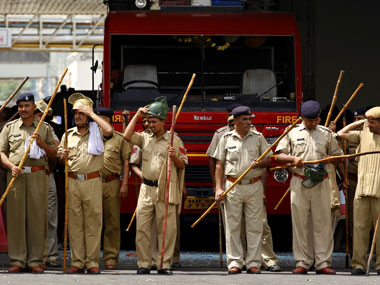
[caption id=“attachment_387106” align=“alignleft” width=“380”] 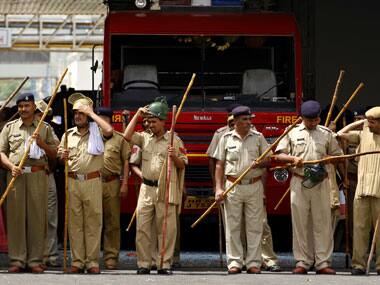 After the violence, the Maruti management is said to be planning to use less contract labour in core areas. AP[/caption]
Much has been made of the fact that while permanent workers at Maruti’s Manesar plant earn around Rs 17,000-18,000 a month while contract labourers get a pittance (around Rs 7,000-8,000). In other words, the underlying suggestion is that companies hire contract labour to pay them less.
This would be a wrong reading. Companies hire temporary (temps) and contract workers not only because they are cheaper, but because they can be laid off when they are not required. Flexibility is the key, not the cheapness. Not without reason is temping showing strong signs of growth when industry is slowing down.
Impact Shorts
More ShortsAfter the violence, the Maruti management is said to be planning to use less contract labour in core areas. At his news conference on Saturday, Maruti Chairman RC Bhargava announced two things: that the Manesar plant would be locked out till the police complete their enquiries, and that it will hire permanent staff in core operations.
A _Firstpost_ report on Saturday quoted Bhargava as saying that Maruti is giving up the practice of using contractors for hiring workers. “We are now hiring contract workers through company HR and not through a contractor. And these workers are being given priority in future recruitments. Other issues on leave, incentives, etc, have also been addressed”. By March 2013, no contractors will be used to hire temporary workers.
This again underscores the point that the whole idea of hiring contract staff is more for introducing flexibility than paying lower wages.
Put another way, the Manesar blow-up is as much the result of unreasonable labour laws as any mismanagement of HR by the company.
India’s labour laws were drafted in the licensing and control era, when companies did not produce to meet market demand, but to meet planned targets.
In the post-1991 liberalised era, companies have to adjust labour usage to demand. Consider how fast car demand is falling due to the economic downturn. This calls for quickly adjusting production and labour usage for lower levels of demand.
But current labour law does not allow this freedom to manufacturing companies.
In fact, the IT industry has flowered in India and become the fastest growing sector for good quality jobs thanks partly to the government’s decision to exempt them from such laws. Regrettably, one such law - the Industrial Employment (Standing Orders) Act, 1946, which had left the IT industry out of its ambit for 10 years, has now come back to bite the industry in the butt.
According to The Economic Times, the law could now be used to force IT companies - which work to tough international deadlines and specifications - to comply with “complicated and unnecessary procedures” and bring back inspector raj. This means paying off labour inspectors who come to collect bribes under the guise of checking for unfair labour practices.
Ante-diluvian labour laws have played a huge role in making contract employment the norm in sectors like construction and security services.
In Mumbai, and many other metros, building security is given out to contractors who then supply security staff at a huge discount. Most security personnel are thus paid a pittance, and end up working 12 hours a day - which is against labour laws - in order to earn enough to make ends meet.
Thus, even in the core area of security - where companies and commercial buildings cannot afford to have people with doubtful loyalties - contract labour is being used. This is a potential time-bomb, for it is only a matter of time before a section of contract staff could get influenced by radical ideologies. At some point, instead of securing an installation, they could end up jeopardising its security.
Once again, this is a recipe for disaster.
Thanks to labour law rigidities and corruption, organised sector employment is simply not growing. As _Firstpost_ noted before , between 1991 and 2010 India’s real GDP grew 450 percent - or four-and-a-half times its earlier size. But organised sector employment grew by a meagre 7.4 percent from 26.73 million to 28.70 million.
The future of better quality jobs - whether in manufacturing or services - lies in more flexible labour laws, which allow companies to hire and retrench depending on business conditions.
The alternative is more dependence on contractor-driven labour, of doubtful quality and even more doubtful loyalties. Laws meant to protect labour end up giving both labour and management less protection.
To have fewer Manesars, India needs to reform its labour laws where it is easier for companies to hire temporary staff, who can then be paid better and offered better compensation if they are laid off.


 "Israel targets top Hamas leaders in Doha; Qatar, Iran condemn strike as violation of sovereignty")
 "Nepal: Oli to continue until new PM is sworn in, nation on edge as all branches of govt torched")
 "Who is CP Radhakrishnan, India's next vice-president?")
 "Israel informed US ahead of strikes on Hamas leaders in Doha, says White House")
 "Israel targets top Hamas leaders in Doha; Qatar, Iran condemn strike as violation of sovereignty")
 "Nepal: Oli to continue until new PM is sworn in, nation on edge as all branches of govt torched")
 "Who is CP Radhakrishnan, India's next vice-president?")
 "Israel informed US ahead of strikes on Hamas leaders in Doha, says White House")



](https://images.firstpost.com/wp-content/uploads/2012/07/maruti_ap_380.jpg)