

 "SpiceJet not to be a trend unless govt changes policy")
New Delhi: SpiceJet returning to profitability in the December quarter had analysts swooning over the airline’s ability to rise above the morass of losses yesterday.
But don’t celebrate just yet. First, the ongoing March quarter is typically lean, with less load factors (percentage of occupied seats per aircraft) than the December quarter and analysts are predicting that SpiceJet may remain operationally profitable but would report a marginal loss in the current quarter.
Other airlines may also find it difficult to sustain the yields and load factors seen in the December quarter, with some returning to the red.
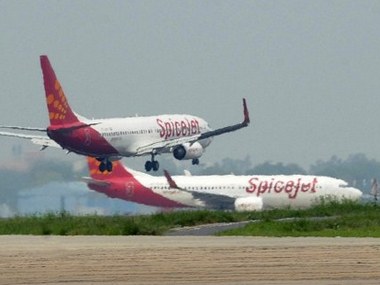
[caption id=“attachment_597727” align=“alignleft” width=“380”]  The decline in fuel costs means SpiceJet was able to lower fuel costs as percentage of sales to 46 percent against 51 percent earlier. AFP[/caption]
Also, actual number of passengers flying domestically has already declined sharply by over 18 lakh in calendar 2012 and analysts are expecting traffic growth of just 6-7 percent in the current year. This means, unless regulatory environment changes and aviation turbine fuel becomes cheaper, long-term profitability for the Indian aviation sector may remain a mirage.
A host of positives have ensured that the December quarter was a healthy one for India’s two listed airlines SpiceJet and Jet Airways (the only other listed airline, Kingfisher, has been grounded since 1 October last year). Fuel costs were marginally down, airlines were able to hold on to higher ticket prices and international operations for both airlines continued to do well - for SpiceJet, rapid international expansion actually brought in added benefits in terms of much lower fuel costs.
Impact Shorts
More ShortsEven so, SpiceJet which is India’s fourth largest airline (by number of passengers carried) swung from net profit in one quarter to a loss in the next between April and December of this fiscal. Rashes Shah at ICICIDirect points out the December quarter was beneficial for SpiceJet for two reasons: 1) Prices of aviation turbine fuel (ATF) were down from Rs 74 per litre to about Rs 70 a litre in the last three-four months 2) The rupee has been strengthening against the dollar which helps in international operations.
The decline in fuel costs means SpiceJet was able to lower fuel costs as percentage of sales to 46 percent against 51 percent earlier. Shah said this was possible because of higher yields (revenue per passenger) which rose by a whopping 29 percent and also because the airline expanded internationally which meant access to cheaper jet fuel.
SpiceJet reported Rs 102 crore net profit in October-December against a net loss of Rs 39.26 crore in the year ago period and Rs 164 crore a quarter ago. The airline said average passenger yields rose 29 percent in the latest quarter, a period that saw Kingfisher Airlines grounding its fleet. A rise in passenger yields reflects higher airfares. Its revenue stood at Rs 1,602.6 crore compared with Rs 1,207 crore a quarter ago. SpiceJet told CNBC TV18 that revenue per passenger during the quarter stood at Rs 4,412 and load factors at 75 percent (80 percent a year ago). It said higher contribution from global business aided profitability.
The company itself cautioned that the fourth quarter is likely to be a challenging quarter and that it expected lower demand.
Not just SpiceJet, even Jet Airways is expected to post a net profit for the December quarter. Analysts like Shah have predicted Rs 32 crore net profit for Jet in a quarter where revenues are expected to rise 22-23 percent.
Jet’s improved performance in the last quarter would come on the back of profitable international operations and ability to increase yields in the domestic market.
For calendar 2013, analysts predict actual air traffic growth of 6-7%. On its own, this kind of growth may not generate much comment but since it is coming after a couple of very high growth years (2010 and 2011), the market is seen as stagnating.
In this scenario, the regulatory environment will play a bigger role in boosting the performance of airlines. The Government has already indicated that with continuous monitoring of ATF pricing within the Petroleum Ministry, prices could fall by 10-15%. If, in addition, the Centre manages to bring ATF under ‘declared goods’ category so that sales tax falls to about 4%, it would be a much needed sop for airlines.
But till these changes happen, airlines will continue to bleed.


 "Russian drones over Poland: Trump’s tepid reaction a wake-up call for Nato?")
 "As Russia pushes east, Ukraine faces mounting pressure to defend its heartland")
 "Why Mossad was not on board with Israel’s strike on Hamas in Qatar")
 "Turkey: Erdogan's police arrest opposition mayor Hasan Mutlu, dozens officials in corruption probe")
 "Russian drones over Poland: Trump’s tepid reaction a wake-up call for Nato?")
 "As Russia pushes east, Ukraine faces mounting pressure to defend its heartland")
 "Why Mossad was not on board with Israel’s strike on Hamas in Qatar")
 "Turkey: Erdogan's police arrest opposition mayor Hasan Mutlu, dozens officials in corruption probe")



](https://images.firstpost.com/wp-content/uploads/2013/01/spicejet-afp8.jpg)