

 "Puzzle: Did NREGA also kill 25 million jobs in the economy?")
Here’s an economic riddle that can emerge only in India.
In the five years between 1999-00 and 2004-05, years that broadly correspond to the NDA regime, the economy grew at 6 percent on an average. In the next five years to 2009-10, broadly corresponding to the initial UPA years, the economy revved up to 8.6 percent.
Any reasonable person would thus conclude that the UPA performed better on the economic front than the NDA. Any reasonable person would also presume that all this growth would have brought more jobs and higher incomes for Indians.
Not quite. An analysis by Crisil Research of the National Sample Survey Office’s (NSSO’s) latest jobs data found that the second half of the decade created all of 2.2 million additional jobs while the first half - during the NDA regime - created as many as 92.7 million new jobs.
[caption id=“attachment_63334” align=“alignleft” width=“380” caption=“The drop in the employment generating potential of the rest of the sectors, says Crisil, has been reduced because labour laws are simply too rigid to allow for job expansion.Reuters.”] 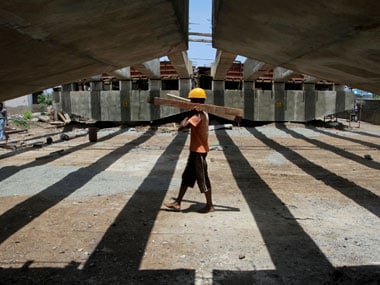 [/caption]
How did slower growth create more jobs? And why did faster growth do the opposite? What’s going wrong?
The Crisil study, looking at the numbers more closely, says both five-year periods created around 27 million new jobs - 27.2 million between 1999-00 and 2004-2005, and 27.7 million in the five years after that.
Impact Shorts
More ShortsBut here’s what happened. The NDA period saw a huge expansion of entrepreneurship with 65.5 million people joining the category of self-employed persons. (A caveat: this is less grand than it sounds, for it merely underscores that more people had to create their own means of livelihood).
On the other hand, the UPA period actually saw a shrinkage in entrepreneurship, with the category of self-employed falling by a dramatic 25.5 million.
That’s how the jobs growth of 27.7 million during 2004-05 to 2009-10 got scaled down to a measly 2.2 million after the decline in self-employment by 25.5 million. When economists first saw the numbers, they couldn’t believe the numbers and said maybe, the numbers were all wrong (Read this) .
Sure, something doesn’t ring true. The UPA could not have come back to power if its policies were delivering higher growth and fewer jobs, even while destroying self-employment entrepreneurship.
What was so different between the 1999-00 and 2004-05 period and the five years after that?
The main divergences were in growth, and it can be no one’s case that growth destroyed self-employment.
The key difference was the UPA’s huge social spends in rural areas, especially the Mahatma Gandhi National Rural Employment Guarantee Act (MNREGA, or just NREGA), which is creating around 25 million jobs in NREGA-based projects annually. In 2010-11, NREGA provided 257 crore person-days of employment. At a maximum of 100 person days of work per head, it means 2.57 crore (or 25.7 million ) people got to work under NREGA.
This 25.7 million is uncannily close to the 25.5 million people who stopped being self-employed during the UPA years.
Put two and two together, and it appears as if NREGA has something to do with the shift of people from self-employment to the sarkari social security net.
The Crisil study also makes this connection obliquely. It says “The fall in self-employment between 2005 and 2010 can majorly be attributed to a fall in self-employment in agriculture. Some of those who were self-employed in agriculture could avail (themselves) of the limited employment opportunities in other sectors (mainly in construction)… Some of the people who have moved from agriculture to construction could have secured employment through social schemes like NREGA…”.
The Crisil report points to another factor - the huge growth in construction jobs - to make the NREGA link again. “Construction was the only sector in which net addition to employment was higher in the second (half) of the decade (18.2 million) as compared to the first half (10.2 million). The construction sector, which accounted for 8 percent of India’s GDP in 2009-10, therefore raised its share in employment to 9.6 percent in 2010 from 5.5 percent in 2005. It appears that in rural areas social sector schemes such as NREGA and rural road programmes have substantially increased construction jobs.”
The drop in the employment generating potential of the rest of the sectors, says Crisil, has been reduced because labour laws are simply too rigid to allow for job expansion. The report says for growth to be really inclusive, “the employment intensity of production will have to increase. Employment intensity - the number of employed persons per lakh of real GDP - declined to 1.05 in 2010 from 1.71 in 2005.”
Three conclusions emerge:
One, while NREGA improved wages and incomes in rural areas, it appears to have prompted more people to drop out of self-employment and increased dependency on the state dole.
Two, the lack of labour market reforms - both under NDA and UPA - suggests that the seeds for long-term jobs growth are not being sown at all.
Three, a separate study is required to understand the full consequences of NREGA and its economic impact - both good and bad.
The next few years may see more jobless growth if existing policies are not assessed correctly.
The CRISIL report


 "Israel targets top Hamas leaders in Doha; Qatar, Iran condemn strike as violation of sovereignty")
 "Nepal: Oli to continue until new PM is sworn in, nation on edge as all branches of govt torched")
 "Who is CP Radhakrishnan, India's next vice-president?")
 "Israel informed US ahead of strikes on Hamas leaders in Doha, says White House")
 "Israel targets top Hamas leaders in Doha; Qatar, Iran condemn strike as violation of sovereignty")
 "Nepal: Oli to continue until new PM is sworn in, nation on edge as all branches of govt torched")
 "Who is CP Radhakrishnan, India's next vice-president?")
 "Israel informed US ahead of strikes on Hamas leaders in Doha, says White House")



](https://images.firstpost.com/wp-content/uploads/2011/08/EconomyConstructionReuters.jpg)