

 "Power package is a bailout for politicians, not discoms")
The power bailout package announced on Monday by the Union government is an important move to rescue the sector from imminent bankruptcy. But it is by no means a “reform” or even a solution to the power industry’s crisis. There can be no solution without bringing in good economics based on good politics - of which there is an acute scarcity.
In fact, the entire energy sector - ranging from oil to gas, coal and nuclear energy - is a minefield precisely because politicians have used it as a milch cow for bankrolling their re-election, not to speak of generating black wealth for themselves and their business cronies.
This is why even after the bailout, it is highly unlikely that the power sector will be rescued. Except for a brief while.
The main gainers will be Rajasthan (losses of Rs 39,710 crore), UP (losses of Rs 25,934 crore), Tamil Nadu (Rs 19,146 crore) and Punjab, says The Times of India. Politicians (past or present) in these states have successfully run their power companies into the ground. More than a bailout for the power companies, the package is a bailout for politicians. It is intended to protect them from the consequences of bad, or even malafide, power pricing decisions.
If there was no bailout, the power sectors in these states would come to a grinding halt - resulting in a huge popular backlash against politicians. The bailout will delay their day of reckoning.
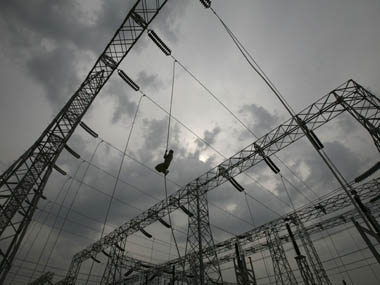
[caption id=“attachment_467625” align=“alignleft” width=“380”]  The plan is that state governments will take over 50 percent of the accumulated losses/debts of their power distribution companies.Reuters[/caption]
Let’s see how the bailout is supposed to work in the first place. The plan is that state governments will take over 50 percent of the accumulated losses/debts of their power distribution companies (discoms, which currently owe over Rs 1,90,000 crore), guarantee repayment of the other half - which will be rescheduled by banks - and then agree to keep raising tariffs every year and trim transmission and distribution (T&D) losses.
Impact Shorts
More ShortsThree things are obvious.
One, this is not quite a central bailout. The Union government is not writing a cheque for Rs 1,90,000 crore - it is merely providing transitional short-term financial accommodation to enable the states themselves to find the money for it.
Two, to get even this transitional finance, states will have to reduce the gap between average revenues and costs by 25 percent - which means raising tariffs steeply. In 2009-10, the gap was as wide as Rs 1.45 paise per unit. It could be more now. This means raising tariffs by nearly 40-50 paise per unit every year, assuming costs do not rise at all.
Three, the only money discoms will actually get is grants linked to reduction in transmission losses. Every 1 percent cut in transmission losses will fetch a grant of Rs 1,500 crore to all discoms put together from the centre. Individual states will obviously get much less.
If this is to work, it means reinventing Indian politics and political morality. As Utpal Bhaskar, writing in Mint, notes: “Apart from the obvious difficulties in its implementation, given the states’ inability to acquire the debt as this would breach their fiscal responsibility and budget management limits…the plan is based on the premise that the same set of stakeholders that have earlier landed the sector in this mess will behave in a rational way after signing agreements.”
Consider why power companies are in such a mess.
State politicians want to subsidise electricity for farmers - since this is where they get their votes - and segments of the urban middle class.
This leads to overpricing power for industrial use. But not all industrial consumers like paying the full price. So they steal the power to bring overall costs within reasonable range. This is why T&D losses tend to be high. It is not just lost in transit.
Power stealers usually share the savings with their political masters - who, in turn, protect them from scrutiny and harassment.
At the discom level, since the political pressure is not to collect dues from power stealers or from farmers and other subsidised consumers, there is thus no need for managerial competence. Just an ability to say yes to your political bosses is good enough. Incompetence and stealing are two reasons why northern and eastern India faced such a huge grid collapse last July.
So we have incompetent power companies, crooked politicians and huge constituencies that simply do not pay a reasonable price for power.
So how will the bailout play out in the states? States which are close to elections will take the short-term money and continue subsidising their favoured constituencies. Over the next one year, this means states like Rajasthan, Madhya Pradesh, and Chhattisgarh, among others. States which do not face elections - like Tamil Nadu, Uttar Pradesh and West Bengal - may push some tariff hikes through. Some have already done so.
According to a compilation by Business Standard, the figures for 2012-13 are telling. While Tamil Nadu (tariffs up 37 percent), Bengal (36 percent) and Kerala (30 percent) have pushed through huge hikes as their elections are behind them, Gujarat (1.53 percent), Madhya Pradesh (7.17 percent), Chhattisgarh (17.5 percent), Himachal (13 percent) and Rajasthan (18.58 percent) have managed to raise tariffs by minuscule or moderate amounts. One hopes they will raise tariffs after their elections later this year and in mid-2013.
But this is still not the whole story. The real issue is whether the hike in tariffs will make more industries unviable without stealing power. So will states really go after power stealers with a vengeance, especially if the stealers are politically connected?
The jury is out on whether the power sector can be reformed without reformed politicians who will not play ducks and drakes with power companies’ viability. The Economic Times notes in an editorial today that this is the second effort to reform the power sector in a decade and “underlines, yet again, the sheer bankruptcy of the politics of free power, repressed tariffs and patronage of power theft.”
But the problem goes beyond power to the entire energy sector, which is the motherlode of scams and rent-seeking behaviour. Whether at state or centre, politicians congregate around the energy sector because this is where money can be made, and largesse distributed to achieve narrow political ends.
Consider the oil sector. The losses of the power sector (Rs 1,90,000 crore) were accumulated over several years, but the losses of the oil sector will be topping this amount in this year alone (over Rs 1,90,000 crore, before the diesel price hike).
Once again, it is the same power sector game being played out at the central level. To sustain the losses on diesel, LPG and kerosene (again justified in the name of the poor), India pays among the highest pump prices in the world for petrol, aviation fuel and even diesel. And money is transferred from both the exchequer and the oil and gas producing companies (ONGC, Oil India and GAIL) to the oil marketing companies.
Thus aviation is in a tailspin, and SUV owners are happy to use subsidised diesel.
This game, like that in power, is also about to kaput. Thanks to the loot of public sector oil companies, they simply do not have enough money to invest in finding more oil and gas. The ONGC chief has already warned that due to the ever-rising subsidy bill, in two years he will be bled dry.
The chances are that in two years - probably just around the time of the next general election - the oil sector will be in as big a mess as the power sector in terms of being able to sustain its financing needs.
As for gas, thanks to price controls - this time to subsidise fertiliser and power plants - gas output is steadily falling. While public sector gas producers are still pumping it up, Reliance is busy reducing output. Gas, once considered India’s answer to oil dependency, is now on a downswing, thanks to the same thinking that is killing the power sector.
The last element in the power pentagon - coal and nuclear - are mired in their own controversies: environmental clearances and safety. Kudankulam, despite being ready, is unable to come into production due to populist scaremongering by NGOs in the wake of the Fukushima nuclear disaster. As for coal, Coal India is imply unable to raise output for the same reasons, and the policy of handing over coal mines for free to private sector producers has produced not coal, but Coalgate - the coal blocks allocation scam.
What is it that connects the entire energy sector mess?
Here it is: energy production needs land (where politicians make money), mining rights (where both politicians and businessmen make money), environmental clearances (where lobbies make it tougher to make money, and hence extract their own price), and correct pricing (which is why politicians make money by pricing energy higher or lower, depending on their political and business interests).
Whether it is coal or power or nuclear energy or oil or gas, there are so many opportunities for politicians and businessmen to corner favours and illegal benefits that true reform calls for an entirely different breed of politician.
Where are we going to find them? Organising occasional rescues is not the answer. The systemic reform we need calls for an integrated view of the entire energy sector, not occasional bailouts and price increases.
Look closer, and this is what the power bailout is really about: rescuing politicians from their malafide economic decisions. Maybe, only the courts will be able to force systemic reform.

 "Israel targets top Hamas leaders in Doha; Qatar, Iran condemn strike as violation of sovereignty")
 "Nepal: Oli to continue until new PM is sworn in, nation on edge as all branches of govt torched")
 "Who is CP Radhakrishnan, India's next vice-president?")
 "Israel informed US ahead of strikes on Hamas leaders in Doha, says White House")
 "Israel targets top Hamas leaders in Doha; Qatar, Iran condemn strike as violation of sovereignty")
 "Nepal: Oli to continue until new PM is sworn in, nation on edge as all branches of govt torched")
 "Who is CP Radhakrishnan, India's next vice-president?")
 "Israel informed US ahead of strikes on Hamas leaders in Doha, says White House")



](https://images.firstpost.com/wp-content/uploads/2012/09/Electricity_Reuters1.jpg)