

 "Budget 2015: Why Jaitley shouldn't increase public spending until fiscal deficit is in control")
When it comes to ideas to revive an economy which is not doing well, economists are essentially two trick ponies. They will first suggest that the central bank should cut interest rates. At lower interest rates people will borrow and spend more, businesses will benefit and the economy will grow faster as a result. QED. And if that is not happening they will suggest that the government should increase public expenditure. As the government spends more money, that money will land up as income in the hands of people who will in turn and spend that money. The money that they spend will land up as income in the hands of other people, who will also spend that money. And so the multiplier effect will work, first leading to spending, and in turn creating economic growth. [caption id=“attachment_2083105” align=“alignleft” width=“380”] 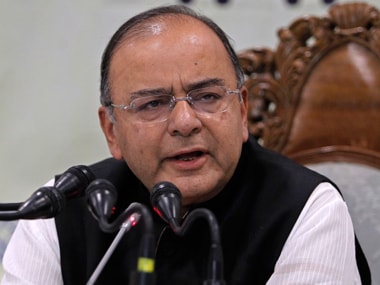 Union Finance Minister Arun Jaitley. Reuters[/caption] The second trick seems to be dominating the debate currently in India. The mainstream view now seems to be getting around to the idea that the government should forget about the fiscal deficit, during the next financial year and spend more money, in the hope of creating more economic growth. Fiscal deficit is the difference between what a government earns and what it spends. The difference is made up for through borrowing. Union Finance Minister Arun Jaitley had said in his Budget speech in July 2014: “My road map for fiscal consolidation is a fiscal deficit of 3.6 percent for 2015-16 and 3 percent for 2016-17.” It’s now being suggested that the finance minister should abandon these targets for the time being. The logic offered is very straightforward. The combined fiscal deficit of the Central government and the state governments has fallen dramatically over the last few years. In 2009-2010, the number was at 9.33 percent of the gross domestic product(GDP) of India. By 2013-2014 this had fallen to 6.78 percent of the GDP. During this financial year (i.e. 2014-2015) it is expected to fall to 6.03 percent of the GDP. Along with this the total liabilities of the Central government have also gone down over the years from 48.8 percent of the GDP in 2009-2010 to 46.3 percent in 2013-2014. This number is expected to fall further to 45.7 percent of the GDP in 2014-2015, as per the government debt status paper released by the Ministry of Finance in December 2014. So, what this seems to suggest is that the finances of the Indian government(s) are well placed at this point of time and given that, the Central government can easily spend more. But is that really the case? Rajiv Shastri makes a very interesting point in a column he wrote for the Business Standard in December 2013: “In reality, quantifying deficit and accumulated debt only as a percentage of GDP has the potential to misguide. In isolation it distorts both, the true scale of fiscal profligacy and the government’s debt-servicing ability.” What Shastri is effectively saying here is that the government does not have access to the entire GDP to repay its debt. It repays its debt only out of the money that it makes every year through taxes and other sources of revenue. How is the Central government doing on that front? In 2007-08, revenue receipts stood at 10.87 percent of the GDP. By 2013-2014, they had fallen to 9.06 percent of the GDP. As far as tax collections are concerned, they have fallen from 8.81 percent of the GDP to 7.36 percent of the GDP. This year tax collections are expected to be at 7.59 percent of the GDP. This number is unlikely to be achieved given that the shortfall in tax collections is expected to be around Rs 1,05,084 crore or around 0.84 percent of the GDP. The non-tax revenues of the government have also fallen from 2.05 percent of the GDP to 1.70 percent of the GDP between 2007-08 and 2013-14. During this financial year the number is expected to be at 1.65 percent of the GDP. Interestingly, the interest that the government pays on its accumulated debt was at 3.43 percent of the GDP in 2007-08. It has jumped to 3.79 percent of the GDP in 2013-2014. An increase in interest payments means lesser money gets spent on other important things. As economists Taimur Baig and Kaushik Das of Deutsche Bank Research point out in a recent research note: “India’s Central government spends nearly a quarter of its total spending on servicing the large debt burden…Bringing this down would create valuable space for other far more important expenditures.” What these numbers clearly tell us is that the ability of the government to service the debt that it has accumulated has been coming down over the years, which is clearly not a good sign. Also, when compared to other emerging market countries, India has one of the highest government debt levels in the world, as can be seen from the following table. 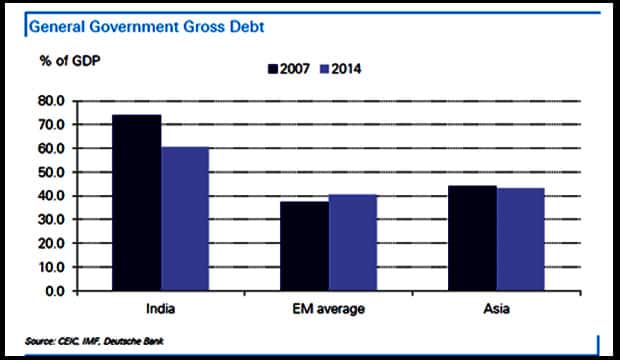 Further, it is also worth remembering that a lot of other emerging market countries have already tried increased public spending in the aftermath of the financial crisis (as I said at the very beginning, economists have basically got only two ideas) and the results haven’t been great. As Ruchir Sharma of Morgan Stanley points out in a column in today’s edition (16 February 2015) of The Times of India: “Many big emerging nations including China, Russia and Brazil just tried a full-throttle experiment in stimulus spending, and it failed. The average growth rate for emerging economies excluding China has fallen to 2.5% today, from more than 7% at the height of the spending campaign in 2010. That is the lowest growth rate in four decades, outside of a global recession.” Any government looking at increasing its spending in order to boost growth should keep this in mind. Also, at the end of the day what matters is not the quantity of spending but the quality of spending. As Baig and Das point out: “Recent budgets have routinely allocated close to 5% of GDP in capital spending, a non-trivial amount by any measure. But these generous allocations have not materialized in a discernible pick up in the investment cycle…If the authorities aim at high quality, high multiplier projects worth 4-5% of GDP as opposed to simply ramping up the rate of spending, they will handily achieve the goal of providing a boost to the economy, in our view.” Also, increasing public spending by the government takes away attention from economic reforms. Both can rarely be executed together. As Sharma points out: “A stimulus mindset is the opposite of a tough reform mindset, and governments can rarely do both as the contrasting experience of the 1990s showed. By the end of that decade, most emerging nations had no money to burn, no lenders they could turn to.” Given these factors, increasing public spending by the government may not be the best way to go about reviving economic growth. (Vivek Kaul is the author of the Easy Money trilogy. He tweets @kaul_vivek)
The mainstream view now seems to be getting around to the idea that the government should forget about the fiscal deficit, during the next financial year and spend more money, in the hope of creating more economic growth.
Advertisement
End of Article

 "Israel targets top Hamas leaders in Doha; Qatar, Iran condemn strike as violation of sovereignty")
 "Nepal: Oli to continue until new PM is sworn in, nation on edge as all branches of govt torched")
 "Who is CP Radhakrishnan, India's next vice-president?")
 "Israel informed US ahead of strikes on Hamas leaders in Doha, says White House")
 "Israel targets top Hamas leaders in Doha; Qatar, Iran condemn strike as violation of sovereignty")
 "Nepal: Oli to continue until new PM is sworn in, nation on edge as all branches of govt torched")
 "Who is CP Radhakrishnan, India's next vice-president?")
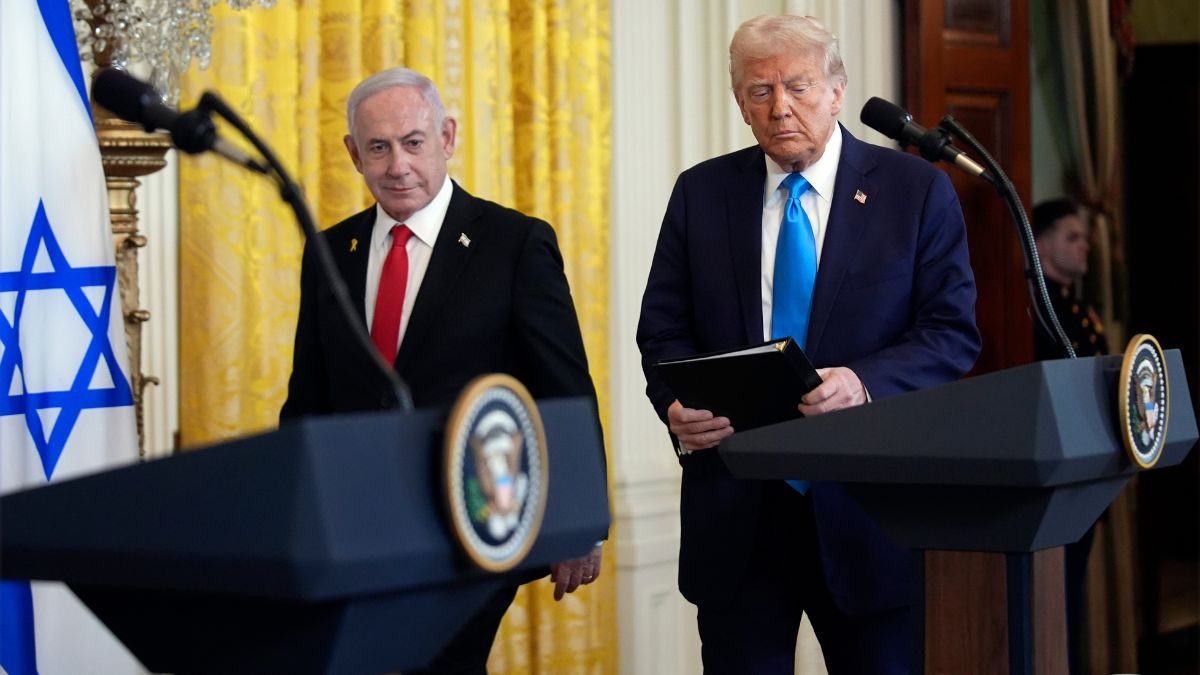 "Israel informed US ahead of strikes on Hamas leaders in Doha, says White House")



](https://images.firstpost.com/wp-content/uploads/2015/02/Arun-Jaitley3_reuters.jpg)
](https://images.firstpost.com/wp-content/uploads/2015/02/DebtTable.jpg)