

 "The corruption gene: Are Indians culturally wired to be corrupt?")
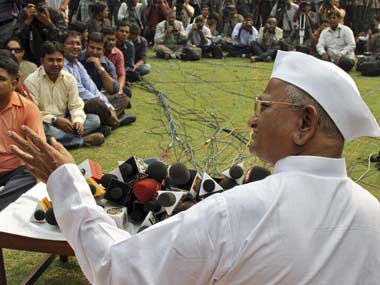
“The problem with cancer is they are the very same cells that allow us to grow,” said Siddharth Mukherjee on a Thinkfest panel, “the same genes that allow normal cells to grow — if you disrupt these very same genes, you unleash cancer.” Cancer raises not just medical but profoundly philosophical questions about the line that separates life and death, good and evil. The remark gains unexpected meaning several days later when I hear Tehelka editor Tarun Tejpal raise a different question: Is corruption coded into our very cultural DNA? “Maybe this has to do with Hinduism’s slippery version of morality which has no dos and don’ts?” he asks, “Everyone from Gandhi to the mafia don can use the Gita to justify their actions.” To reframe the question at a broader level, have the very same cultural traits that define us – and even enable us to rise and shine – produced a cancerous proliferation of venality and greed. Have environmental shifts of the past 20 years, like the liberalisation of markets, greater upward mobility, and expansion of democracy disrupted certain cultural genes, triggering destructive growth processes that now require intervention? We often say corruption is a cancer on our society. What if this is literally true? Take, for instance, our sense of duty to our own, be it our family, community, or caste. In a number of ways, these have been powerful engines of shared prosperity, a way to leverage the success of an individual member to create opportunities for many others – for our relatives, our native village etc. It’s the biradiri version of trickle-down economics that has long served as an unofficial social welfare net for the vast majority of Indians. We take care of our own. [caption id=“attachment_125997” align=“alignleft” width=“380” caption=" “Don’t expect moral human beings to end corruption.” Reuters"] 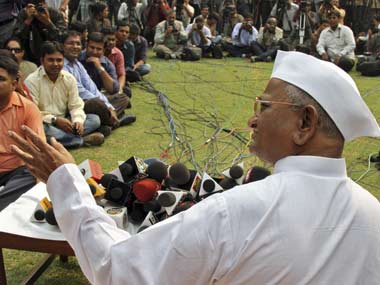 [/caption] Yet this same parochialism has also created a system based on narrow caste loyalties and dynastic politics. And the entry of new stake-holders into the system has not changed but exacerbated the distortions. “Democratic governance has become a liability,” explained well-known academic Ashis Nandy at the same panel, “A poor person brought into power immediately has his family, community waiting to share the benefits of that power.” They demand it as their traditional right, which in turn puts even greater pressure on that individual to remain in power. Add to this the greater insecurity of a new India where money and power are no longer assured. The old feudal guarantees of status have disappeared, and inherited privilege is under siege. “So, he becomes insecure. If he loses the election, then he’s back where he started. He becomes desperate to make money by whatever means possible,” Nandy said. The decades of crony capitalism – itself a form of elite parochialism – offer added justification. As Tejpal pointed out, “The Madhu Kodas and Rajas were born on the wrong side of the tracks,” but corruption is hardly limited to the new stakeholders in our democracy. “The elite is very smooth, sophisticated; their wealth is far, far greater by any measure. They just don’t get caught.” The new forms of corruption then become a “tool to level the playing field” that has far too long remained skewed in favour of the feudal elites. The instability of status in new India exacerbates the problem. Columnist Pratap Bhanu Mehta pointed to the identity crisis created when societies become more open and egalitarian: “Traditional hierarchies have broken down. So what is the measure of self-worth and achievement now?” Money becomes seductive precisely because it is unambiguous and objective. “All the things that make equality exciting also create these pathologies,” he argued. Money is, however, an unstable measure in the new economy: here today, gone tomorrow. And this “collective and individual hysteria of insecurity”, in Pavan Varma’s words, heightens the impulse to do whatever it takes to climb up that ladder, and more importantly, stay put. Continues on the next page But that requires buying into the idea that the sole end of individual achievement is to attain money and power. To become a card-carrying member of the elite. Surely this single-minded pursuit of Lakshmi, the goddess of the good life, is new – a part of the wholesale rejection of old Nehruvian ideals. Or is it? Critics would like to blame this ‘greed is good’ mentality on the evils of globalisation, but Varma offers a less comforting thesis on the effects of liberalisation. “The year 1991 removed the stigma associated with the pursuit of wealth,” he writes in Being Indian. “Most importantly, it made policies congruent with the temperament of the people.” The crass materialism of New India is less a tragic loss of national virtue than “an exultant escape from [the Gandhian] emphasis on austerity, and a smug—more confident—return to tradition.” Part of that tradition is the inclination to fudge the rules. We’re a nation always in search of the loophole. We call it jugaad these days, a quintessentially Indian term for our willingness to do whatever it takes to get what we want. Pull a connection, pay that bribe, cut a red light or in line. Our ability to hustle is what makes India great – but also ensures little respect for the rule of law. “Krishna cheated six times over the course of the Mahabharatha,” points out Varma, “And each time someone objected, he asked, ‘Do you want to win?’” When new opportunities to get ahead exacerbate our innate parocialism in a system with gaping deficits of enforcement, we end up with exactly what we have: unfettered, widespread corruption. So what is the answer? The remedy for this cancerous mutation of aspiration into greed? Anna Hazare insists it is the creation of a Lokpal. But without a sea-change in our cultural mindset, will this institution just result – as Nandy warns – in “new beneficiaries of the coercive state”? Or perhaps deterrence is indeed the answer, as Varma argues. “Don’t expect moral human beings to end corruption,” he says, “What we need is strict enforcement to ensure compliance.” If the Mahabharata is indeed our moral legacy, then we need to stop trying to change our goals – however narrow or materialistic — and tackle the means: “The question should be: Can we make more honourable means to achieve the same end?” If we are not able to do so, he warns, we will remain trapped in this “twilight zone” of incomplete democracy. The recent wave of middle class outrage – however blind to its own failings and flawed in its methodology – carries the seeds of a “second revolution” that India requires to “sit at the high table of the world”. A revolution that shifts the focus from personal gain to public good, if only for the most selfish reasons. We will always remain who we are – and who would want it otherwise! — but as all cancer patients, we will have to learn to change how we live.
We often say corruption is a cancer on our society. What if this is literally true? Have the very same cultural traits that define us – and even enable us to rise and shine – produced a cancerous growth of venality and greed?
Advertisement
End of Article
Written by The Ideas Blog
Sandip Roy and Lakshmi Chaudhry are Firstpost editors. They take a wide angled view on society, popular culture and books, offering counter-intuitive views on a wide range of subjects. Chaudhry has worked and written for a number of publications both in the United States and India, including Salon, the Nation, Wired, Vogue, Elle and Open magazine. Roy is also a commentator for National Public Radio in the US, and has written for Huffington Post, New America Media, San Francisco Chronicle, India Abroad among others. see more

 "Israel targets top Hamas leaders in Doha; Qatar, Iran condemn strike as violation of sovereignty")
 "Nepal: Oli to continue until new PM is sworn in, nation on edge as all branches of govt torched")
 "Who is CP Radhakrishnan, India's next vice-president?")
 "Israel informed US ahead of strikes on Hamas leaders in Doha, says White House")
 "Israel targets top Hamas leaders in Doha; Qatar, Iran condemn strike as violation of sovereignty")
 "Nepal: Oli to continue until new PM is sworn in, nation on edge as all branches of govt torched")
 "Who is CP Radhakrishnan, India's next vice-president?")
 "Israel informed US ahead of strikes on Hamas leaders in Doha, says White House")



](https://images.firstpost.com/wp-content/uploads/2011/11/annanew380.jpg)